


Please Leave Us A Message
Privacy statement: Your privacy is very important to Us. Our company promises not to disclose your personal information to any external company with out your explicit permission.


A 6 fiber cable is a specialized telecommunications medium designed to house six individual optical strands within a single protective jacket. This configuration strikes an optimal balance between bandwidth capacity and physical manageability, making it a preferred choice for structured cabling systems in commercial buildings and residential complexes.
Unlike bulkier cables that can be difficult to terminate in tight spaces, the 6-strand design allows for efficient use of conduit space while providing enough connectivity points for multiple devices or network segments. The fibers are typically arranged around a central strength member, ensuring structural integrity during installation.
For procurement managers, choosing the right fiber count is critical. A 6 fiber cable offers sufficient redundancy and expansion capability for small-to-medium networks without the waste associated with larger, multi-strand cables. It serves as the backbone for Fiber to the Home (FTTH) deployments and enterprise LAN upgrades.
Our state-of-the-art production facilities utilize precision SZ stranding and central tube technologies. This ensures consistent geometric performance and low attenuation, reducing signal loss over distance and lowering your total cost of ownership.
Every 6 fiber cable undergoes rigorous testing according to international standards. Our ISO 9000 quality management system guarantees batch-to-batch consistency, minimizing the risk of field failures and costly rework.
Our materials comply with EU directives and international regulations. This simplifies your compliance workflow when importing into strict markets like North America, Europe, and Southeast Asia, avoiding customs delays and regulatory hurdles.
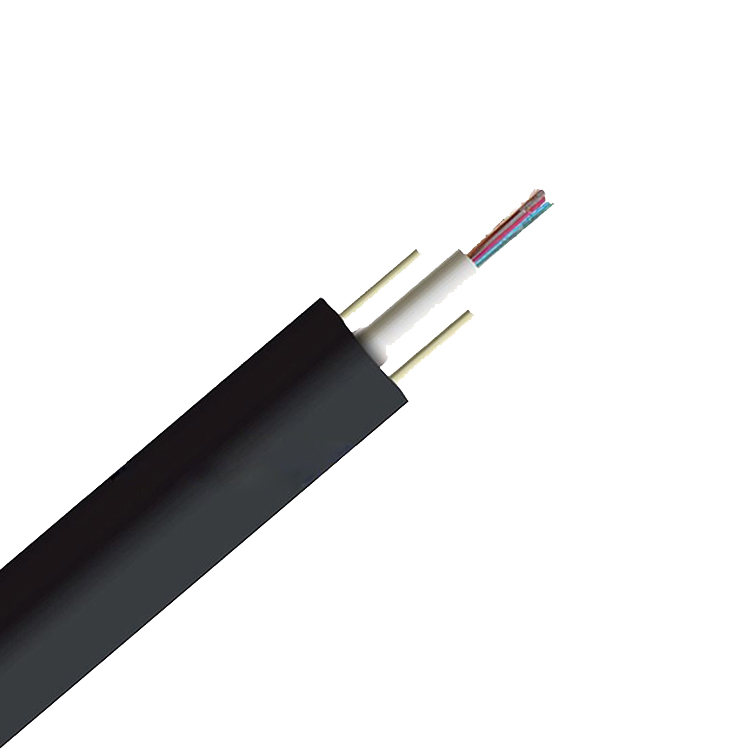
We employ advanced SZ stranding and central tube cable technologies to manufacture our 6 fiber cables. This precise engineering ensures that each fiber maintains its position under tension and temperature variations, protecting your investment in long-term network stability.
Before shipment, every batch of 6 fiber cable undergoes strict optical and mechanical testing. We verify attenuation levels, tensile strength, and crush resistance to ensure the cable meets industry specifications for both indoor and outdoor applications.
Our cables use high-grade, flame-retardant jackets and environmentally safe materials. This not only ensures safety in building installations but also extends the lifespan of the cable, reducing maintenance costs for facility managers.
Selecting the correct cable type depends on your deployment environment. For indoor FTTH runs, choose loose tube or tight-buffered cables with low-smoke zero-halogen (LSZH) jackets for fire safety. For outdoor aerial installations, consider all-dielectric self-supporting (ADSS) options that can withstand weather and tension without metallic strength members.
The jacket material determines the cable's resistance to moisture, UV radiation, and physical abrasion. PVC is suitable for controlled indoor environments, while PE (polyethylene) is essential for direct burial or underground duct installations. Ensure the jacket rating matches your site conditions to prevent premature degradation.
Verify that the 6 fiber cable diameter is compatible with your existing termination hardware. Standard LC, SC, and ST connectors require specific cable diameters. Mismatched cables can lead to difficult terminations and poor connection performance, increasing labor costs.
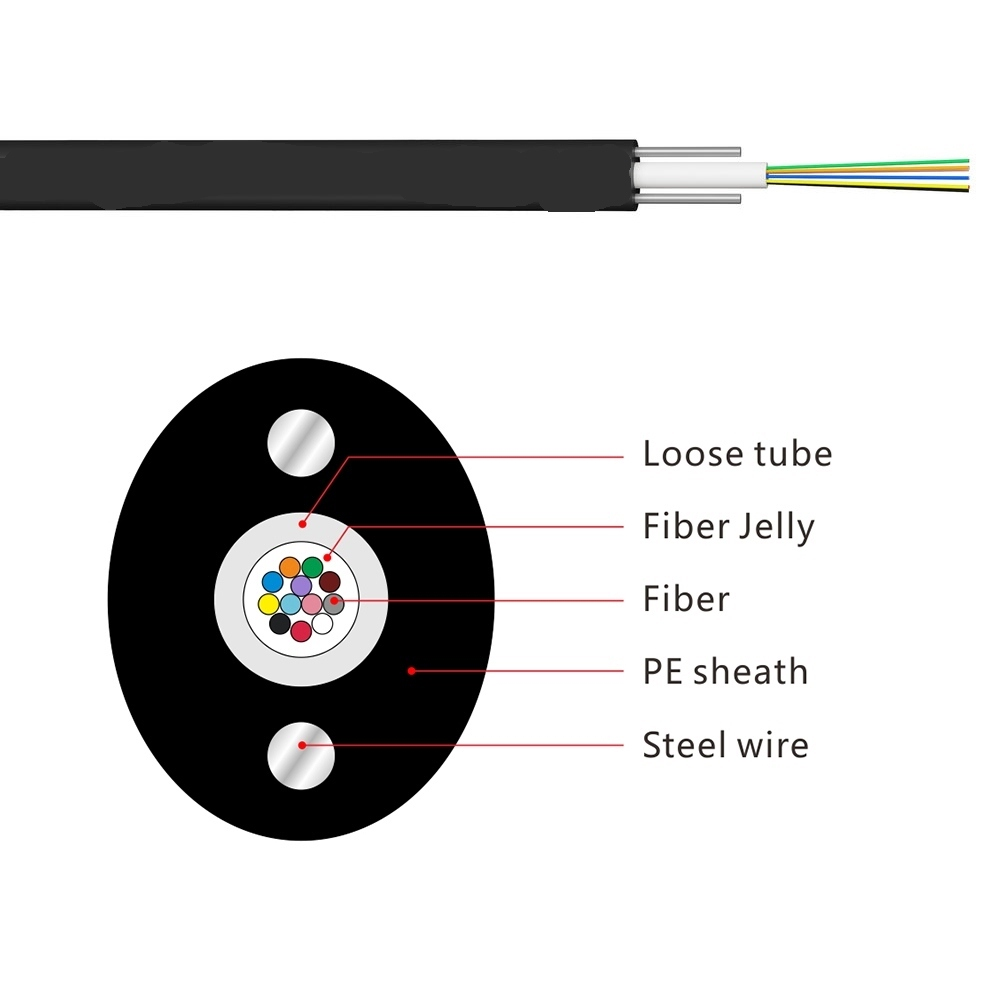
Established in 2010, GT-Optical specializes in R&D and production of fiber communication products. Their facility includes advanced test equipment for various fiber cable types, including SZ stranded, central tube, and ADSS cables.
Key Advantage: Integrated manufacturing process allows for strict quality control from raw material to finished 6 fiber cable, ensuring consistency and competitive pricing for bulk orders.
With a strong presence in America, Europe, the Middle East, and Southeast Asia, GT-Optical has proven experience in handling international logistics and compliance requirements.
Key Advantage: Familiarity with global standards reduces the risk of import issues and provides reliable support for international distributors and contractors.
Ideal for last-mile connections in Fiber to the Home networks, providing reliable bandwidth for modern internet, TV, and voice services in residential communities.
Used in data centers and office buildings for backbone cabling, connecting servers, switches, and patch panels with high-density efficiency.
Supports metropolitan area networks (MAN) and local loop extensions, offering durable solutions for both aerial and underground installations.
Low-quality cables may exhibit varying signal loss across different strands, leading to network instability. Always request factory test reports for attenuation data before placing large orders.
Using indoor-rated cables outdoors can lead to rapid degradation from UV exposure and moisture. Verify the jacket material (PVC vs. PE) matches your installation environment to avoid premature failure.
Cables with inconsistent outer diameters can cause issues during connectorization, increasing labor time and cost. Choose manufacturers with precise extrusion controls to ensure uniform dimensions.
Unreliable suppliers may miss lead times, delaying your entire project. Vet suppliers based on their production capacity and historical on-time delivery rates, especially for urgent infrastructure projects.
Indoor 6 fiber cables typically use LSZH (Low Smoke Zero Halogen) or PVC jackets for fire safety and flexibility, suitable for building interiors. Outdoor cables feature rugged PE (Polyethylene) jackets for protection against moisture, UV rays, and physical damage, often including gel filling to block water ingress.
Yes, a single strand of single-mode 6 fiber cable can easily support 10Gbps, 40Gbps, or even 100Gbps Ethernet over appropriate distances. Using a 6-strand cable provides ample capacity for current and future network upgrades, making it a cost-effective long-term solution.
Always adhere to the manufacturer's specified bending radius (typically 10x the cable diameter during installation) and maximum tensile load. Use proper pulling grips and lubricants to reduce friction. Avoid kinking or crushing the cable, which can cause micro-bends and signal loss.
Look for ISO 9000 certification for quality management, CE marking for European compliance, and UL listing for North American fire safety standards. Additionally, verify that the manufacturer conducts routine third-party testing for optical performance and mechanical durability.
Absolutely. 6 fiber cables are commonly used in data centers for patch cords and backbone cabling. Their compact size allows for high port density on patch panels, while the multiple strands provide redundancy and flexibility for complex network architectures.
Privacy statement: Your privacy is very important to Us. Our company promises not to disclose your personal information to any external company with out your explicit permission.
Fill in more information so that we can get in touch with you faster
Privacy statement: Your privacy is very important to Us. Our company promises not to disclose your personal information to any external company with out your explicit permission.