


Please Leave Us A Message
Privacy statement: Your privacy is very important to Us. Our company promises not to disclose your personal information to any external company with out your explicit permission.


A 7way microduct pipe is a specialized high-density polyethylene (HDPE) conduit designed to house seven individual sub-ducts within a single outer sheath. This configuration allows telecommunications operators to pull multiple fiber optic cables through a single borehole, significantly reducing civil engineering costs while maximizing bandwidth capacity.
For network planners, the primary benefit of using 7way microduct pipes is scalability. You can install a single duct now and expand your network later by pulling additional fibers without breaking ground again. This future-proofing capability protects your infrastructure investment against rising data demands.
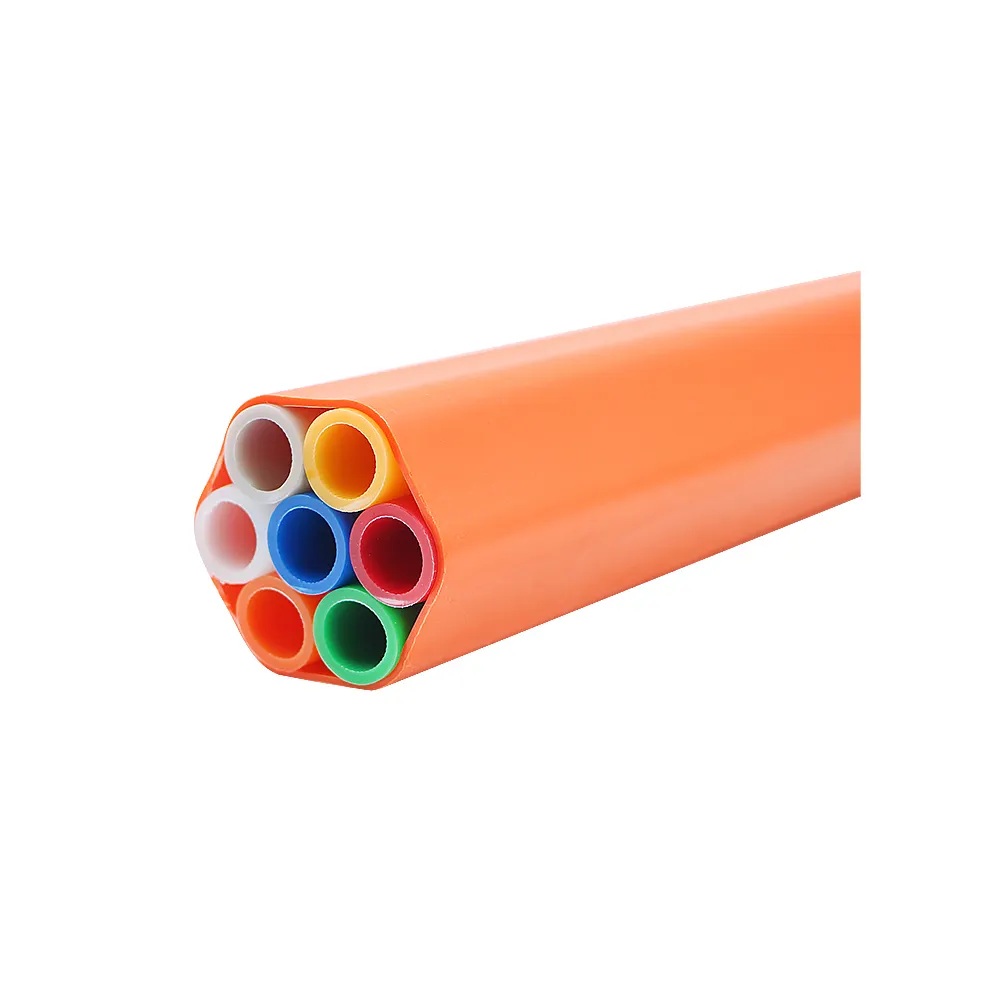
Our manufacturing adheres to ISO 9001 quality management systems, ensuring every batch of 7way microduct pipe meets rigorous dimensional tolerances and material purity standards for consistent performance.
Constructed from virgin HDPE materials that resist corrosion, chemicals, and harsh environmental conditions. This durability ensures long-term reliability for underground fiber optic installations.
The inner walls of our microducts are engineered for ultra-low friction, allowing for longer pulling distances and higher speeds during air-blowing fiber installation processes.
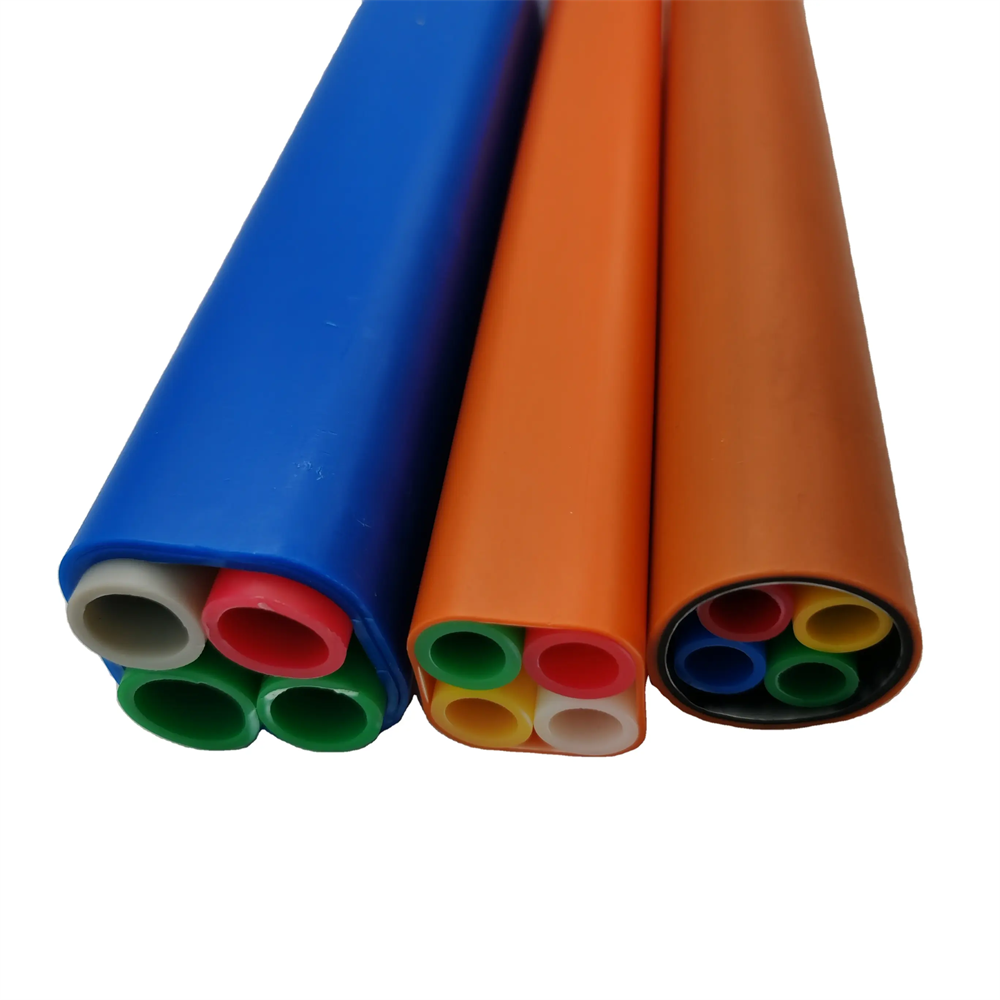
Ensure the supplier uses 100% virgin HDPE material rather than recycled mixtures. Virgin materials provide superior tensile strength and resistance to cracking under pressure, which is critical for deep-bore installations.
Check for uniform wall thickness across all seven sub-ducts. Inconsistent walls can cause airflow turbulence during air-blown cable installation, leading to jams and costly project delays.
Look for manufacturers who offer OEM services to customize outer diameters, colors, and printing requirements. Custom solutions ensure better identification and compatibility with your existing network infrastructure.
Verify that the product complies with international standards such as IEC and ISO. Compliance guarantees that the microduct pipe has undergone necessary testing for mechanical strength and environmental resistance.
Confirm if the 7-sub-duct layout matches your current fiber density needs and projected growth over the next 5-10 years.
Assess the soil conditions and temperature ranges at your installation site to select the appropriate HDPE compound rating.
Evaluate the manufacturer's history in exporting similar telecom products to ensure they understand global logistics and compliance.
Always request physical samples for laboratory testing before committing to a large bulk order to verify dimensional accuracy.
Discuss realistic production timelines with the factory to avoid project bottlenecks caused by delayed duct deliveries.
Ensure the supplier uses robust packaging to prevent deformation or damage to the microducts during ocean freight transport.
As a high-tech company founded in 2010, GT-Optical specializes in R&D and production of fiber communication products. They utilize advanced production lines to ensure strict adherence to ISO 9000 quality systems.
Key Advantage: Their comprehensive product range, including ADSS cables and FTTH solutions, allows for integrated procurement of complete fiber optic networks.
When looking beyond specific partners, focus on industrial clusters known for HDPE extrusion excellence. Verify their export volume to regions like Southeast Asia or Europe to gauge their experience with international shipping standards.
Key Advantage: Sourcing from established hubs often provides access to more competitive pricing due to concentrated supply chains.
One of the most frequent issues is inconsistent inner diameters across the seven sub-ducts. This variation makes it difficult to pull standard fiber units smoothly, leading to installation failures.
Using low-grade recycled plastics can lead to brittleness over time. Ensure your supplier explicitly states the use of virgin HDPE to prevent premature cracking during backfilling.
Microducts are prone to crushing if not stacked correctly on pallets. Work with suppliers who use reinforced palletizing to maintain structural integrity during transit.
Some suppliers provide the product but lack the expertise to advise on optimal blowing pressures. Choose a partner who offers technical guidance to streamline your deployment process.
Standard outer diameters typically range from 33mm to 50mm, depending on the required wall thickness and sub-duct sizes. The most common configuration for municipal networks is a 33mm OD, which balances capacity with ease of installation in crowded conduits.
Yes, most manufacturers offer OEM customization for the outer sheath color. Color-coding is highly recommended to differentiate between various fiber types or network zones, simplifying maintenance and troubleshooting for your engineering teams.
Request samples and perform a simple visual inspection for surface smoothness and uniformity. For a more rigorous test, conduct a static load test to check crush resistance and an inner diameter measurement to ensure consistency across all seven channels.
Absolutely. 7way microducts are specifically designed for direct burial in non-rocky soils. The HDPE material provides excellent resistance to moisture, chemicals, and soil stresses, making it an ideal choice for long-distance underground fiber deployments.
Standard lead times usually fall between 15 to 25 days for container-sized orders, depending on the quantity and any custom specifications. It is advisable to plan your procurement schedule around these timelines to avoid project delays.
Privacy statement: Your privacy is very important to Us. Our company promises not to disclose your personal information to any external company with out your explicit permission.
Fill in more information so that we can get in touch with you faster
Privacy statement: Your privacy is very important to Us. Our company promises not to disclose your personal information to any external company with out your explicit permission.