


Please Leave Us A Message
Privacy statement: Your privacy is very important to Us. Our company promises not to disclose your personal information to any external company with out your explicit permission.


A Fiber to the Home (FTTH) distribution box is a critical component in modern optical networking infrastructure. Serving as the termination point for fiber optic cables, these boxes protect splice connections and provide organized access points for end-users.
For procurement managers, selecting the right FTTH distribution box ensures reliable last-mile connectivity while minimizing maintenance costs. Guangtong Optical's FTTH boxes are engineered to meet international standards, providing robust protection against environmental factors like moisture, dust, and temperature fluctuations.
Our solutions support various deployment scenarios, from wall-mounted installations to pole-mounted configurations, ensuring flexibility for diverse network architectures.
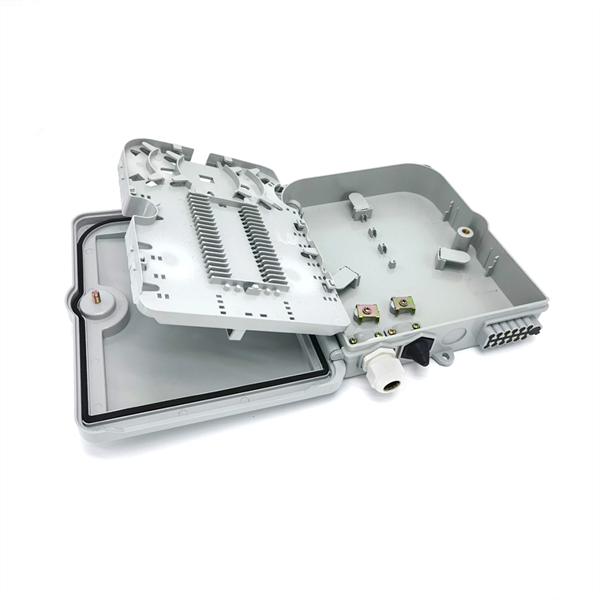
Our facility utilizes state-of-the-art production lines and precision testing equipment, ensuring consistent quality across all fiber optic drop cable accessories.
Strict adherence to ISO 9000 quality management systems guarantees that every FTTH box meets rigorous performance standards for durability and reliability.
Materials comply with EU directives and international regulations, making our products suitable for export to America, Europe, Middle East, and Southeast Asia.
At Shenzhen Guangtong Optical Co., Ltd, quality begins with raw material selection. Our FTTH boxes are manufactured using high-grade, UV-resistant materials that withstand harsh outdoor environments.
The production process involves:
This commitment to quality reduces your risk of field failures and costly post-installation repairs.
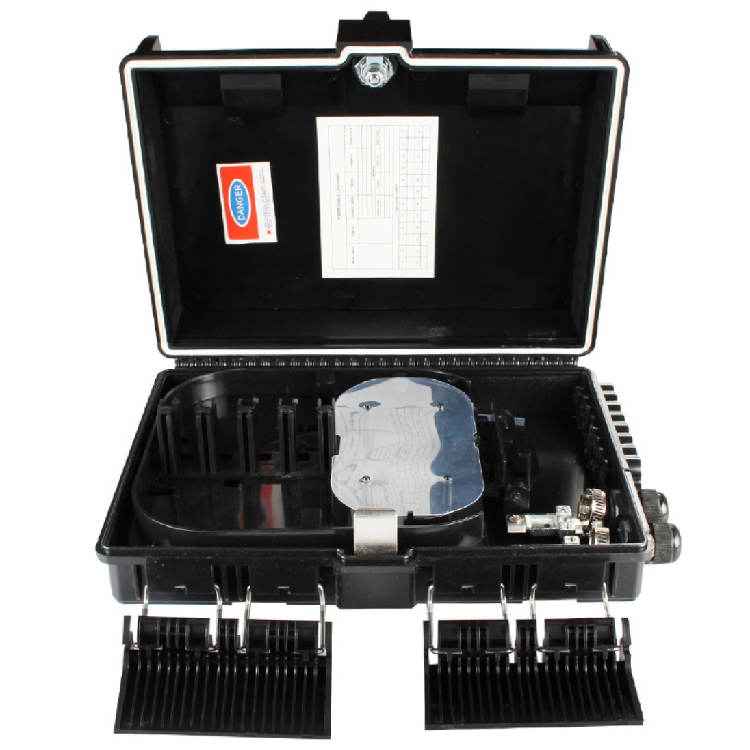
Assess the number of fibers you need to terminate. Common configurations include 2-way, 4-way, 6-way, 8-way, and 12-way splits. Choosing the right capacity prevents over-provisioning costs while ensuring future scalability.
Determine whether the box will be installed indoors, outdoors, or on poles. Outdoor units require higher IP ratings (IP65/IP68) and UV-resistant materials to withstand weather exposure.
Look for designs with integrated splice trays, strain relief clamps, and clear fiber routing paths. Efficient cable management simplifies installation and makes future maintenance easier.
Ensure the FTTH box is compatible with standard fiber optic connectors (SC, LC, FC) and drop cables. Modular designs offer greater flexibility for different network configurations.
With over a decade of experience since 2010, GT-Optical specializes in comprehensive FTTH solutions. Their integrated approach from R&D to production ensures consistent quality and competitive pricing for global buyers.
Key Strengths:
When evaluating FTTH box suppliers, prioritize partners who demonstrate:
Poorly sealed FTTH boxes allow moisture ingress, leading to signal degradation and fiber damage. Always verify IP ratings through independent testing reports before placing orders.
Underestimating fiber requirements leads to costly upgrades. Work with suppliers who offer scalable solutions and provide accurate capacity planning guidance.
Low-quality plastics become brittle under UV exposure. Specify UV-stabilized materials and request material certificates to ensure long-term durability.
Wall-mounted FTTH boxes serve individual homes and apartment complexes, providing reliable last-mile connectivity for residential broadband services.
Business districts and office buildings utilize larger capacity distribution boxes to support multiple tenants and high-bandwidth requirements.
Pole-mounted and underground FTTH boxes enable telecommunications providers to extend high-speed internet to rural and remote areas.
Heavy-duty FTTH distribution boxes support industrial facilities requiring robust, interference-free communication networks for automation and monitoring systems.
For outdoor installations, we recommend IP65 or higher ratings. IP65 provides complete protection against dust and resistance to water jets, while IP68 offers submersion protection for underground deployments. Higher IP ratings ensure longer service life and reduced maintenance costs.
Consider current subscriber count plus 20-30% growth buffer. For residential buildings, 12-way boxes are common per floor. Commercial projects may require larger capacities. Consult with your supplier for detailed capacity planning based on your specific deployment scenario.
High-quality ABS or PC+ABS blends offer excellent durability and UV resistance. These materials maintain structural integrity under temperature variations and resist degradation from sunlight exposure. Always request material certificates to verify composition.
Yes, many manufacturers including Guangtong Optical offer customization options for color, mounting brackets, and internal configurations. Customization helps optimize installation efficiency and ensures compatibility with existing infrastructure.
Look for ISO 9001 certification for quality management, CE marking for European markets, and RoHS compliance for environmental standards. Additional certifications may be required depending on specific country regulations.
Privacy statement: Your privacy is very important to Us. Our company promises not to disclose your personal information to any external company with out your explicit permission.
Fill in more information so that we can get in touch with you faster
Privacy statement: Your privacy is very important to Us. Our company promises not to disclose your personal information to any external company with out your explicit permission.