


Please Leave Us A Message
Privacy statement: Your privacy is very important to Us. Our company promises not to disclose your personal information to any external company with out your explicit permission.


Hybrid fiber cables are advanced telecommunications solutions that combine optical fibers with copper conductors within a single protective jacket. This dual-conductor design allows for the simultaneous transmission of high-speed data signals and electrical power over a single infrastructure.
For modern network engineers and procurement specialists, hybrid fiber optic cable technology eliminates the need for separate power and data cabling runs. By consolidating these requirements into one unified cable system, organizations can significantly reduce installation complexity, lower material costs, and simplify long-term maintenance workflows. Whether deploying FTTH networks or industrial IoT sensor arrays, hybrid cables provide a robust, scalable foundation for next-generation connectivity.
Shenzhen Guangtong Optical Co., Ltd has been manufacturing high-quality fiber communication products since 2010, ensuring that every hybrid cable meets rigorous international standards for performance and durability.
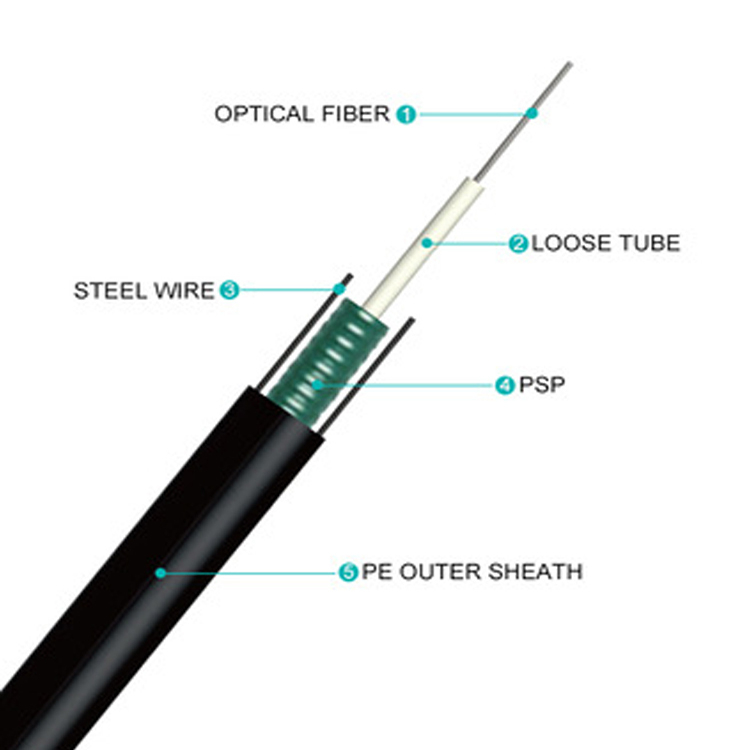
At Shenzhen Guangtong Optical Co., Ltd, quality is not an afterthought—it is embedded in every stage of production. Our state-of-the-art facility utilizes advanced SZ stranding, central tube, and all-dielectric self-supporting (ADSS) technologies to ensure consistent performance across all hybrid fiber cable models.
All hybrid fiber cables are manufactured under strict ISO 9000 quality management systems. This ensures batch-to-batch consistency, reducing your risk of field failures and minimizing costly warranty claims.
Materials comply with European Union directives and global environmental regulations. This simplifies your import compliance process and supports corporate sustainability goals when sourcing from China.
Every hybrid fiber cable undergoes comprehensive testing including attenuation measurement, tensile strength verification, and temperature cycling tests. This guarantees reliable operation in harsh environments worldwide.
Products have been successfully exported to America, Europe, Middle East, Southeast Asia, and Pacific states. This global track record demonstrates our ability to meet diverse regional standards and shipping requirements.
Selecting the optimal hybrid fiber cable requires careful evaluation of your specific application requirements. Different industries demand different combinations of fiber count, conductor gauge, and jacket materials. Follow this structured selection process to ensure you specify the correct hybrid cable for your project.
Identify the required number of optical fibers based on your bandwidth needs. Common configurations include 2-fiber, 4-fiber, 12-fiber, and 24-fiber hybrid cables. Single-mode (OS2) fibers are standard for long-distance applications, while multi-mode options may suit shorter indoor runs.
Calculate the electrical power demands of your connected devices. Hybrid cables typically include 2-core, 4-core, or 6-core copper conductors ranging from 18 AWG to 12 AWG. Undersizing conductors leads to voltage drop issues; oversizing increases cost and cable diameter unnecessarily.
Indoor, outdoor, or aerial installations each require different cable constructions. Outdoor hybrid fiber cables need moisture-resistant gel filling and armor protection. Aerial deployments require ADSS (All-Dielectric Self-Supporting) variants with aramid yarn strength members for span support without metallic conduits.
Ensure the manufacturer provides relevant certifications including ISO 9001, CE marking, RoHS compliance, and fire-rated jacket options (LSZH, PVC, PE). These certifications are essential for regulatory approval in commercial, industrial, and government projects.
Before finalizing your hybrid fiber cable purchase, use this comprehensive checklist to verify that your supplier and product selection meet all technical, commercial, and logistical requirements. This systematic approach protects against common procurement pitfalls.
Choosing the right manufacturing partner is as critical as selecting the right cable specification. Below are key recommendations for evaluating potential suppliers, with insights on why Shenzhen Guangtong Optical Co., Ltd stands out as a reliable source for hybrid fiber cable procurement.
Prioritize suppliers with in-house production capabilities rather than trading companies. Guangtong Optical operates its own factory equipped with advanced SZ stranding machines, central tube extrusion lines, and comprehensive testing laboratories. This vertical integration ensures tighter quality control, faster turnaround times, and more competitive pricing compared to intermediaries.
Verify the supplier has proven experience exporting to your target market. Guangtong Optical has established export channels across North America, Europe, the Middle East, Southeast Asia, and Pacific nations. This global experience means they understand regional certification requirements, packaging standards, and logistics coordination needed for seamless delivery.
A supplier offering a complete range of fiber optic solutions—including armored cables, ADSS cables, FTTH drop cables, and fusion splicers—can serve as a single-source partner. This simplifies your procurement workflow, reduces vendor management overhead, and enables bundled shipping to lower your landed cost per unit.
Guangtong Optical adheres to a philosophy of "integrity management as the basis, attractive quality and standard management as guarantee." This commitment translates to transparent communication, accurate order fulfillment, honest lead time estimates, and responsive after-sales support—reducing your procurement risk significantly.
Hybrid fiber optic cables serve diverse industries where simultaneous data and power delivery is essential. Understanding these application scenarios helps procurement teams identify the exact cable configuration needed for their specific use case, avoiding over-specification or under-performance.
In Fiber-to-the-Home deployments, hybrid cables deliver both internet data and PoE (Power over Ethernet) to ONTs, IP cameras, and smart home devices from a single conduit. This eliminates duplicate trenching and reduces last-mile installation costs by up to 40%.
IP camera networks benefit enormously from hybrid cabling, as each camera requires both high-bandwidth data transmission and continuous power supply. Hybrid fiber cables enable long-distance camera runs (up to 10km+) without signal degradation or voltage drop concerns.
Smart factories deploy hybrid cables to connect sensors, PLCs, and edge computing devices across large facilities. The combination of fiber's immunity to EMI/RFI interference with copper's power delivery capability makes hybrid cables ideal for electrically noisy industrial environments.
Urban deployments including smart streetlights, traffic monitoring systems, and public Wi-Fi access points use hybrid fiber cables to consolidate municipal infrastructure. This reduces road disruption from multiple cable pulls and simplifies city-wide network management.
5G small cell and macro base station backhaul often employs hybrid cables to provide both high-capacity fiber backhaul and remote power feeding to antennas. This configuration supports compact tower designs and reduces dependency on local electrical grids.
Within data centers, hybrid cables connect rack-mounted servers to upstream switches while simultaneously delivering power to active optical components. This consolidation frees valuable rack space and simplifies cable management in high-density computing environments.
Common questions from procurement professionals about hybrid fiber cable specifications, ordering processes, and technical considerations.
Standard fiber optic cables contain only optical glass or plastic fibers for data transmission. Hybrid fiber cables combine optical fibers with copper electrical conductors within the same protective jacket. This dual-conductor design allows simultaneous data and power delivery over a single cable run, eliminating the need for separate power wiring and reducing overall installation complexity and material costs.
Hybrid fiber cables are commonly available in 2-fiber, 4-fiber, 6-fiber, 12-fiber, and 24-fiber configurations. The fiber count depends on your bandwidth requirements and the number of connected devices. Guangtong Optical can also produce custom fiber counts upon request to match specific project specifications.
Yes, hybrid fiber cables designed for outdoor use feature moisture-resistant gel filling, steel wire armor or corrugated steel tape, and polyethylene (PE) outer jackets that protect against soil chemicals, rodents, and moisture. These cables meet direct burial specifications and can be installed underground without additional conduit protection in most soil conditions.
Standard hybrid fiber cable configurations typically ship within 7-15 business days depending on order quantity. Custom configurations requiring special fiber counts, conductor gauges, or jacket materials may require 15-25 business days. Guangtong Optical maintains inventory of common configurations to support urgent project timelines.
Samples are available for quality verification before placing bulk orders. Sample lead time is typically 3-5 business days, and samples are shipped via express courier. Sample fees apply but are fully refundable upon conversion to a formal purchase order. This allows your engineering team to validate specifications before committing to large-scale procurement.
All hybrid fiber cables are manufactured under ISO 9000 quality management systems and comply with EU directives including RoHS restrictions on hazardous substances. Certifications include CE marking, fire safety ratings (LSZH, PVC, PE), and IEC 60794 performance standards. Additional certifications such as UL, TÜV, or specific national standards can be arranged based on destination market requirements.
Privacy statement: Your privacy is very important to Us. Our company promises not to disclose your personal information to any external company with out your explicit permission.
Fill in more information so that we can get in touch with you faster
Privacy statement: Your privacy is very important to Us. Our company promises not to disclose your personal information to any external company with out your explicit permission.