


Please Leave Us A Message
Privacy statement: Your privacy is very important to Us. Our company promises not to disclose your personal information to any external company with out your explicit permission.


Indoor fiber optic cable is the backbone of modern high-speed networking infrastructure, designed specifically for controlled environments where data transmission reliability is paramount. These cables utilize advanced optical fiber technology to deliver exceptional bandwidth over short to medium distances within buildings, data centers, and office spaces.
Unlike outdoor cables that must withstand harsh weather conditions, indoor fiber cables prioritize flexibility, low smoke emission, and fire safety compliance. They are engineered with tight-buffered fibers that protect delicate glass strands while maintaining signal integrity across various network configurations.
Shenzhen Guangtong Optical Co., Ltd has been manufacturing premium indoor fiber cables since 2010, combining cutting-edge production technology with rigorous quality standards. Our cables meet international specifications and have been successfully deployed in telecommunications networks across America, Europe, the Middle East, Southeast Asia, and Pacific regions.
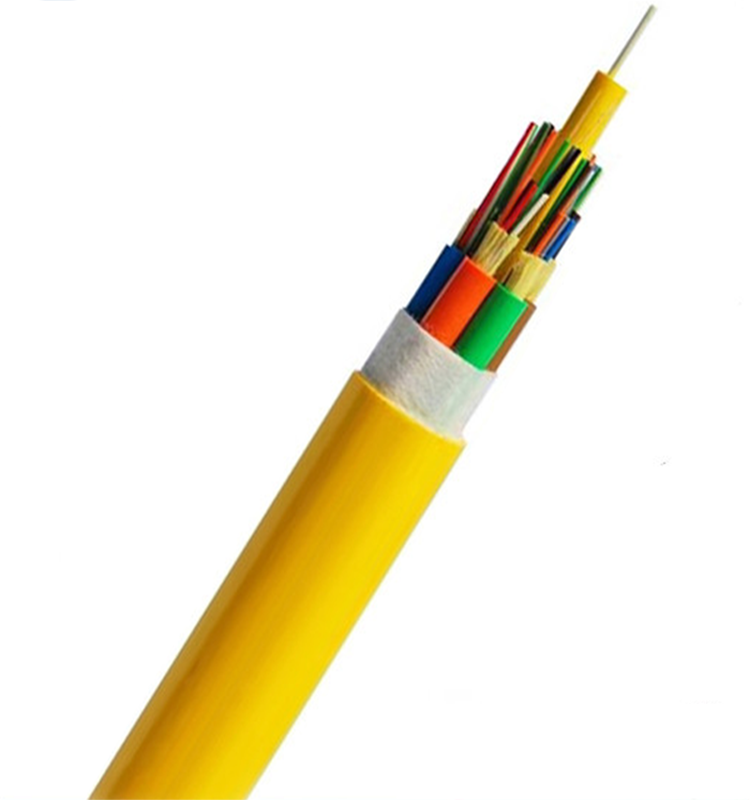
GT-Optical employs state-of-the-art production and testing equipment for all fiber cable types, including SZ stranded cables, central tube cables, ADSS cables, and drop cables. This investment ensures consistent quality across every meter of indoor fiber cable we manufacture.
Our manufacturing processes are strictly controlled according to ISO 9000 quality management systems. Every batch undergoes comprehensive testing to verify optical performance, mechanical properties, and environmental resistance before reaching your facility.
All materials comply with European Union directives and relevant international regulations. Our low-smoke zero-halogen (LSZH) compounds ensure safe operation in enclosed spaces, meeting strict fire safety standards for indoor installations.
With extensive export experience to America, Europe, the Middle East, Southeast Asia, and Pacific states, GT-Optical understands diverse market requirements and regulatory standards. Your indoor fiber cable orders benefit from this global expertise.
Selecting the right indoor fiber optic cable requires careful consideration of your specific application requirements, installation environment, and future scalability needs. The wrong choice can lead to premature failure, excessive maintenance costs, or inadequate performance as your network grows.
Single-mode fiber offers longer distance capability and higher bandwidth for future-proofing your infrastructure, while multi-mode fiber provides cost-effective solutions for shorter runs within buildings. Consider your current bandwidth requirements alongside projected growth over the next 10-15 years.
Tight-buffered cables provide superior protection for indoor environments and are ideal for patch cords and distribution applications. Loose-tube designs offer better environmental protection but may be unnecessary for controlled indoor settings. Match the construction to your specific installation method and termination requirements.
Ensure your indoor fiber cable meets local fire codes with appropriate ratings such as OFNP (Optical Fiber Non-conductive Plenum) or OFNR (Riser). These ratings indicate the cable's smoke generation and flame propagation characteristics in building spaces.
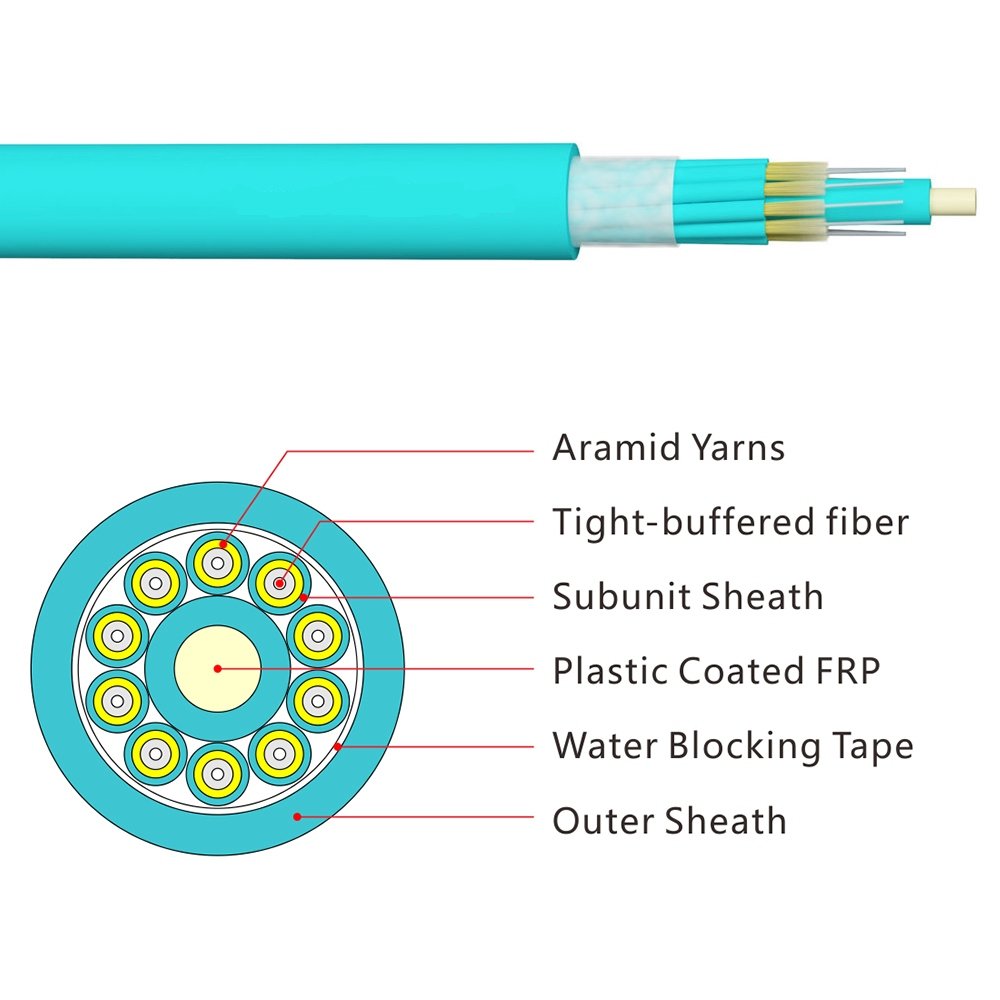
Verify fiber count, type (single/multi-mode), attenuation values, and bend radius requirements match your network design specifications exactly.
Confirm LSZH rating and appropriate fire code compliance (OFNP/OFNR) for your specific installation location and local building regulations.
Check tensile strength, crush resistance, and temperature operating range to ensure the cable can handle your installation conditions and long-term durability requirements.
Validate manufacturer experience, ISO certification status, export history, and references from similar projects to reduce procurement risk.
Request factory test reports, optical performance data sheets, and material composition certificates to verify quality claims independently.
Assess supplier's ability to meet your delivery timeline, packaging standards for indoor cable protection, and track record for on-time shipments.
Different batches from the same supplier may show varying optical performance due to inconsistent manufacturing controls. Request batch-specific test reports and establish clear acceptance criteria before placing orders.
Some suppliers misrepresent LSZH ratings or use misleading terminology. Always request official certification documents from recognized testing laboratories rather than relying on supplier claims alone.
Low initial pricing may hide additional costs for special packaging, expedited shipping, or rework due to specification mismatches. Evaluate total landed cost including logistics, customs, and potential warranty claims.
Cross-border suppliers may have language barriers causing specification misunderstandings. Establish detailed technical documentation in writing and confirm understanding through sample testing before bulk production.
Production delays can disrupt project timelines significantly. Work with suppliers who maintain adequate raw material inventory and have proven track records for meeting delivery commitments.
Poor technical support when issues arise can increase downtime costs. Verify supplier's warranty terms, response time commitments, and availability of replacement products for defective batches.
When evaluating indoor fiber cable suppliers, prioritize manufacturers with proven track records, certified quality systems, and transparent communication practices. The right partner reduces procurement risk while ensuring consistent product quality throughout your supply chain.
Indoor fiber cables are designed for controlled environments with fire safety as the primary concern. They typically use tight-buffered construction, low-smoke materials, and flexible jackets suitable for building interiors. Outdoor cables prioritize weather resistance, UV protection, and mechanical strength against environmental stressors like temperature extremes, moisture, and rodent attacks.
Indoor fiber cables are available in configurations ranging from 2 to 144+ fibers depending on your application requirements. Common configurations include 2, 4, 6, 8, 12, 24, 48, and 72 fibers. Higher fiber counts are typically used in backbone applications, while lower counts suit horizontal cabling and patch cord applications.
Yes, quality indoor fiber cables use flame-retardant materials and meet specific fire safety ratings. OFNP-rated cables are designed for plenum spaces with the lowest smoke generation, while OFNR cables are suitable for riser applications. All GT-Optical indoor cables comply with relevant fire safety standards and provide LSZH options for enhanced safety.
The minimum bending radius depends on whether the cable is under tension during installation or at rest after installation. Generally, the dynamic bending radius (during installation) should be at least 20 times the cable diameter, while the static bending radius (after installation) should be at least 10 times the cable diameter. Some specialized low-bend fiber options offer even tighter bending capabilities.
Yes, indoor fiber cables are specifically designed for building interior installations including ceilings, walls, conduits, and under-floor pathways. The key consideration is selecting the appropriate fire rating for your installation location. Plenum-rated cables are required for air handling spaces, while riser-rated cables are suitable for vertical shafts between floors.
Every batch undergoes comprehensive testing including optical attenuation measurement at multiple wavelengths, mechanical performance verification (tensile strength, crush resistance), environmental testing (temperature cycling, humidity resistance), and fire safety certification verification. Factory test reports are provided with each shipment to document compliance with specifications.
Privacy statement: Your privacy is very important to Us. Our company promises not to disclose your personal information to any external company with out your explicit permission.
Fill in more information so that we can get in touch with you faster
Privacy statement: Your privacy is very important to Us. Our company promises not to disclose your personal information to any external company with out your explicit permission.