


Please Leave Us A Message
Privacy statement: Your privacy is very important to Us. Our company promises not to disclose your personal information to any external company with out your explicit permission.


A 6 core fiber optic cable is a structured telecommunications cable containing six individual glass or plastic fibers within a single protective jacket. Each core operates independently, allowing simultaneous data transmission in both directions, making it an ideal choice for high-bandwidth applications where reliability and future scalability are paramount.
For network engineers and procurement specialists, choosing the right cable architecture is critical to minimizing long-term operational costs. The 6-core configuration strikes a perfect balance between capacity and manageability—providing enough strands for complex redundancy setups without the bulk and cost of higher-count cables like 12 or 24 cores.
Shenzhen Guangtong Optical Co., Ltd., established in 2010, specializes in manufacturing these precise fiber communication products. Our advanced production equipment ensures that every 6 strand fiber optic cable meets rigorous international standards for attenuation, tensile strength, and environmental resistance.
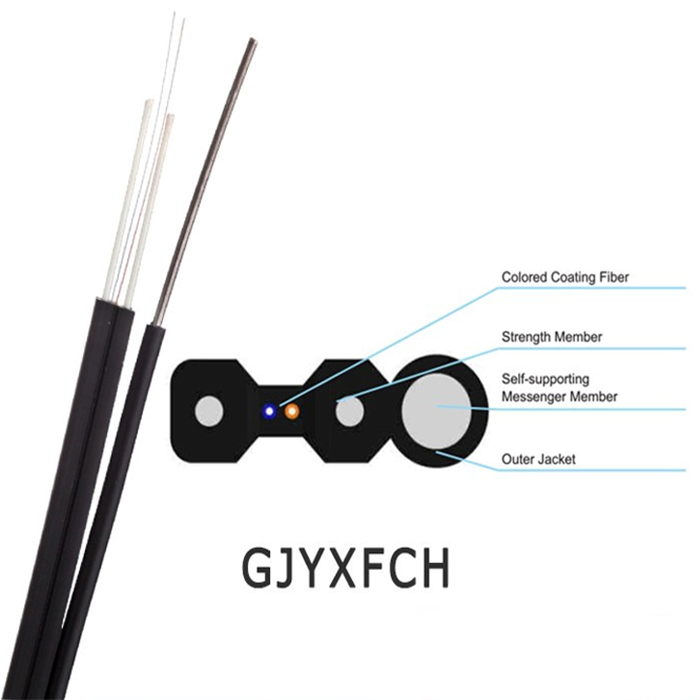
In the competitive B2B fiber optics market, sourcing from a verified manufacturer reduces risk and improves margins. Here is why leading telecom operators and system integrators choose Guangtong Optical for their bulk 6 core fiber cable orders.
Our facility in Shenzhen is equipped with state-of-the-art SZ stranding and central tube extrusion lines. This allows us to maintain consistent production output for 6 core indoor fiber optic cable and outdoor variants, ensuring you receive large volumes on schedule without compromising quality.
Every 6 core armored fiber cable we produce is controlled strictly according to the ISO 9000 quality management system. Materials comply with European Union directives and global safety regulations, giving your engineering teams confidence in performance durability.
With years of experience exporting to America, Europe, the Middle East, Southeast Asia, and Pacific states, we understand international logistics, documentation, and compliance requirements. We simplify your procurement workflow by handling export complexities seamlessly.
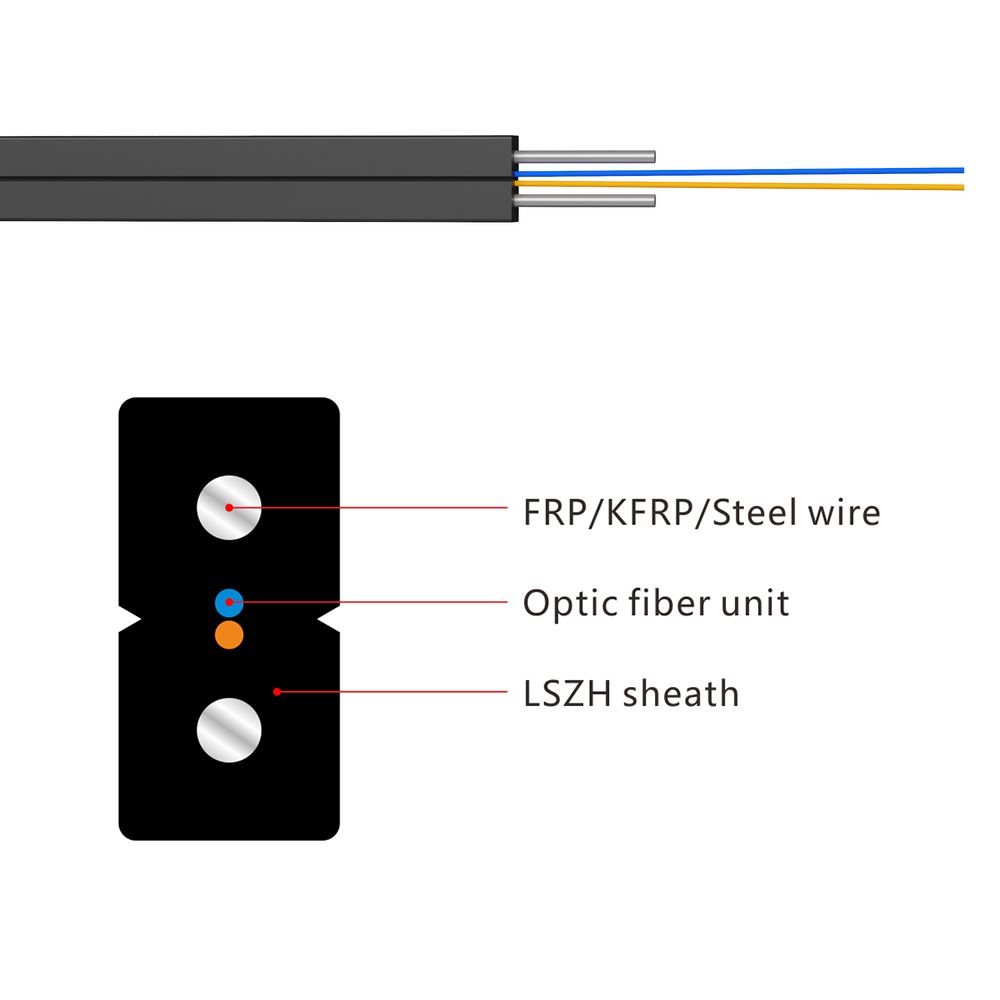
Quality consistency is the biggest pain point in fiber optic procurement. Batch-to-batch variations can cause installation delays and signal degradation. At Guangtong Optical, we eliminate this risk through rigorous testing protocols applied to every 6 core optical fiber cable produced.
We utilize advanced SZ stranding technology for our loose tube cables. This method ensures optimal fiber protection against mechanical stress during installation and operation, directly extending the lifespan of your 6 core outdoor fiber optic cable deployments.
All materials used in our 6 core FTTH fiber optic cable products comply with RoHS and REACH directives. We use low-smoke zero-halogen (LSZH) compounds for indoor variants, enhancing fire safety in dense cabling environments like data centers and office buildings.
Each production batch undergoes OTDR (Optical Time Domain Reflectometer) testing to verify attenuation levels and splice loss. Tensile strength tests ensure the cable can withstand pulling forces during installation without damaging the internal fibers.
Our outdoor 6 core ADSS fiber optic cable options are designed to resist UV radiation, extreme temperatures, and moisture ingress. This ensures reliable performance in harsh external conditions, reducing maintenance costs for telecommunication infrastructure.
Selecting the correct cable type depends on your specific application environment, distance requirements, and budget constraints. Use this guide to match your project needs with the appropriate 6 core fiber optic cable configuration.
| Cable Type | Best Application | Key Benefits | Typical Use Case |
|---|---|---|---|
| Indoor Riser/Plenum | Data Centers, Offices, Server Rooms | LSZH jacket, flexible, easy to terminate | Horizontal cabling, patch panels, intra-building runs |
| Outdoor Loose Tube | Aerial, Duct, Direct Burial | Waterproof, gel-filled, high tensile strength | Campus backbones, street-to-building connections, utility poles |
| Armored (Steel Tape) | Direct Burial, Rodent-Prone Areas | Mechanical protection, crush resistant | Underground installations, industrial facilities, harsh environments |
| ADSS (All Dielectric) | Aerial Spans Between Poles | No metallic components, EMI immune | Telecom tower drops, power line crossings, long-distance aerial runs |
| Air Blown Micro | Future-Proof Duct Infrastructure | Small diameter, installable via air jet | Smart city networks, FTTH last-mile, duct-based urban deployments |
Pro Tip: For FTTH (Fiber to the Home) projects, consider 6 core drop cables with tight-buffered construction. These provide easier termination at the customer premise while maintaining sufficient spare capacity for future upgrades or branch connections.
Before finalizing your purchase order, verify these critical factors to avoid costly mistakes and ensure compatibility with your existing infrastructure. This checklist helps procurement managers evaluate suppliers and product specifications systematically.
Fiber Grade: Confirm G.652.D single-mode or G.657.A bend-insensitive fibers based on your bend radius requirements.
Attenuation Values: Ensure attenuation is ≤0.36 dB/km at 1310nm and ≤0.22 dB/km at 1550nm for optimal signal integrity.
Jacket Material: Verify LSZH for indoor plenum/riser or PE (Polyethylene) for outdoor direct burial applications.
Certifications: Require ISO 9001, ISO 14001, and product-level certifications such as CE, RoHS, and UL.
Sample Testing: Always request pre-production samples for independent lab testing before committing to bulk orders.
Lead Time & MOQ: Clarify minimum order quantities and production lead times to align with your project deployment schedule.
Procurement professionals often encounter recurring issues when ordering fiber optic cables from unverified suppliers. Understanding these common pitfalls helps you negotiate better terms and protect your project timeline.
Low-quality fibers or improper manufacturing can result in signal loss exceeding specifications. This leads to reduced bandwidth and shorter transmission distances. Always request test reports with actual OTDR traces for each production batch.
Some manufacturers mislabel cable jackets, delivering fewer cores than ordered. This causes project delays and rework. Implement incoming inspection procedures that include physical core counting and identification under magnification.
Substandard PVC or PE jackets crack under UV exposure or become brittle in cold temperatures. This compromises waterproofing and exposes fibers to damage. Specify jacket thickness and material grade in your purchase agreements.
Ordering multiple batches over time may yield varying performance if the supplier lacks standardized processes. Work with manufacturers who maintain strict quality control across all production runs to ensure uniformity.
Standard G.652 fibers suffer significant loss when bent tightly around corners. For dense indoor installations, specify G.657.A bend-insensitive fibers to reduce installation complexity and signal degradation.
International shipping complications can delay critical infrastructure projects. Partner with suppliers experienced in export documentation, customs clearance, and reliable freight forwarding to minimize transit risks.
The versatility of 6 core fiber optic cable makes it suitable for a wide range of industries and deployment scenarios. Below are the most common applications where our cables deliver proven performance and reliability.
Internet service providers rely on 6 core FTTH fiber optic cable for last-mile connectivity, distributing broadband services to residential and commercial subscribers. The 6-strand configuration provides adequate capacity for current demand while leaving spare fibers for future expansion.
Modern data centers use 6 core indoor fiber optic cable for high-density patch panel connections between servers, switches, and storage arrays. The compact design maximizes rack space utilization while supporting multi-gigabit data throughput.
Urban smart city projects deploy 6 core air blown fiber optic cable through underground duct systems to connect traffic signals, surveillance cameras, public Wi-Fi hotspots, and environmental sensors. The small diameter enables efficient air-jet installation across extensive networks.
Oil & gas facilities, power plants, and manufacturing plants use 6 core armored fiber optic cable for SCADA systems, process control networks, and safety monitoring. The steel-tape armor protects against mechanical damage in harsh industrial environments.
University campuses, hospital complexes, and corporate parks use 6 core outdoor fiber optic cable for backbone connections between buildings. The robust construction supports aerial, duct, or direct-burial installation methods across diverse campus terrains.
Cable operators integrate 6 core fiber optic cable into hybrid fiber-coaxial (HFC) networks to deliver video, voice, and data services. The additional cores support redundant paths and future migration to full-fiber architectures.
When evaluating potential suppliers for your 6 core fiber optic cable requirements, consider these key recommendations to build a resilient supply chain. These guidelines apply whether you are sourcing from domestic or international manufacturers.
Direct manufacturers offer better pricing, faster response times, and deeper technical expertise. Companies like Shenzhen Guangtong Optical operate their own production facilities with dedicated R&D teams, enabling custom solutions for specialized 6 core fiber cable applications.
Request facility tours or video walkthroughs to confirm the supplier has the equipment necessary for 6 core loose tube cable and 6 core tight buffer cable production. Modern SZ stranding and extrusion lines indicate serious manufacturing capability.
Reliable suppliers provide comprehensive technical support including cable design consultation, installation guidance, and fault diagnosis assistance. Strong after-sales service reduces downtime and accelerates problem resolution for your field teams.
Ask for references from clients in similar industries or regions. Successful track records in your target market demonstrate the supplier's ability to meet local standards and handle regional logistics challenges effectively.
Below are answers to the most common questions buyers ask when procuring 6 core fiber optic cable for their projects. These FAQs address technical specifications, ordering processes, and installation considerations.
The primary difference is the number of optical fibers inside the cable jacket. A 6 core fiber optic cable contains six fibers, while a 12-core variant contains twelve. Six-core cables are lighter, more flexible, and cost-effective for applications requiring moderate capacity. They are ideal for point-to-point links, building interconnects, and FTTH distribution where spare capacity is limited. Twelve-core cables offer double the capacity but come with increased bulk and cost, making them better suited for high-density backbone applications.
Yes, most manufacturers including Guangtong Optical offer customization for jacket colors. Standard colors typically include blue, orange, green, brown, slate, and white for indoor cables, while black is standard for outdoor PE-jacketed cables. Custom color coding helps with fiber identification and splice management in multi-cable installations. Contact our sales team to discuss available color options and any minimum order requirements for customized jackets.
Standard lead times for 6 core fiber optic cable orders typically range from 7 to 15 business days depending on order volume and cable type. Ex-stock items may ship within 3-5 days. For custom configurations or large-volume orders exceeding 50km, production schedules may extend to 20-25 business days. We recommend placing orders well in advance of your project start date to accommodate production and shipping timelines.
Yes, but only if specified as a direct-burial rated cable. Standard indoor cables lack the mechanical protection needed for underground installation. For direct burial, we recommend our 6 core armored fiber optic cable with steel tape armor or 6 core micro duct cable designed for blow-in installation. These variants provide crush resistance, moisture barrier protection, and rodent-proof construction essential for underground deployments.
Key certifications to verify include ISO 9001 (quality management), ISO 14001 (environmental management), CE marking for European compliance, RoHS for hazardous substance restrictions, and UL listing for North American market access. Product-level certifications such as Telcordia GR-20/GR-409 and IEC 60794 standards demonstrate adherence to industry-specific performance requirements. Guangtong Optical maintains all major international certifications.
The dynamic bending radius (during installation) should be at least 20 times the cable diameter, while the static bending radius (after installation) should be at least 10 times the cable diameter. For example, a 6mm diameter cable requires a minimum 120mm static bend radius. If your installation involves tight bends, specify G.657.A bend-insensitive fibers which can tolerate radii as small as 7.5mm without significant signal loss.
Privacy statement: Your privacy is very important to Us. Our company promises not to disclose your personal information to any external company with out your explicit permission.
Fill in more information so that we can get in touch with you faster
Privacy statement: Your privacy is very important to Us. Our company promises not to disclose your personal information to any external company with out your explicit permission.