


Please Leave Us A Message
Privacy statement: Your privacy is very important to Us. Our company promises not to disclose your personal information to any external company with out your explicit permission.


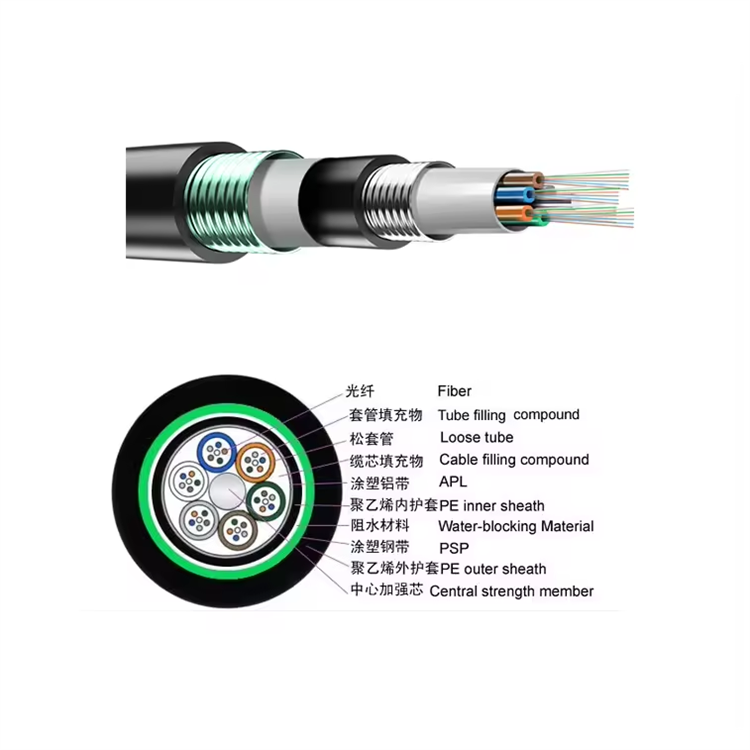
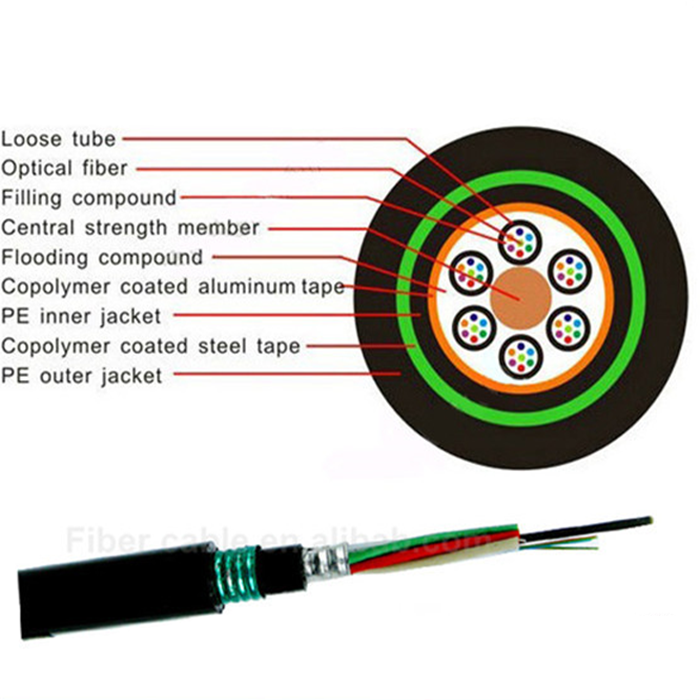
Direct bury fiber optic cable is a specialized telecommunications solution designed for underground installation without the need for additional conduit or protective piping. Engineered with robust multi-layer protection, these cables withstand soil pressure, moisture, and chemical exposure while maintaining high-speed data transmission over long distances.
For network engineers and procurement specialists, choosing the right direct bury cable minimizes infrastructure costs by eliminating conduit requirements while ensuring reliable performance in harsh environments. The integrated armor and water-blocking technologies provide decades of service life in outdoor plant networks.
Shenzhen Guangtong Optical Co., Ltd. operates advanced production facilities equipped with state-of-the-art testing equipment for all types of fiber cables. Our ISO 9000 certified quality management system ensures every meter of direct bury fiber optic cable meets international standards.
Buyer benefit: Our rigorous quality control reduces your risk of field failures and costly rework. Each cable undergoes comprehensive testing including tensile strength, crush resistance, and environmental stress screening to guarantee reliability in direct burial applications.
All materials comply with European Union directives and international regulations. Our products are exported to America, Europe, Middle East, Southeast Asia, and Pacific states with full documentation support.
Selecting the optimal direct bury fiber optic cable requires careful consideration of several technical factors that impact both performance and total cost of ownership. Understanding these parameters helps procurement teams make informed decisions that balance initial investment with long-term reliability.
Choose between single-mode (OS2) for long-distance applications or multi-mode for shorter runs. Select fiber count based on current needs plus 20-30% growth margin to avoid future excavation costs.
Armored cables with steel tape or corrugated steel sheath provide superior rodent and crush protection for rocky terrain. Non-armored options work well in controlled environments with lower mechanical stress risks.
High-density polyethylene (HDPE) jackets offer excellent chemical resistance and UV protection before burial. Consider black PE for standard applications or orange LSZH for indoor-to-outdoor transitions requiring low smoke zero halogen properties.
Essential for direct bury applications, water-blocking compounds prevent moisture ingress that can degrade signal quality. Look for radial water-swelling tapes and rods that expand upon contact with water to seal the cable structure completely.
Use this comprehensive checklist when evaluating direct bury fiber optic cable suppliers to ensure you select a partner who can meet your technical requirements and delivery expectations.
Direct bury fiber optic cables serve critical infrastructure across multiple industries where reliable underground connectivity is essential. Understanding application-specific requirements helps optimize cable selection for each use case.
Primary distribution networks connecting central offices to remote nodes. Armored direct bury cables protect against construction damage and provide the bandwidth capacity needed for modern broadband services.
FTTH (Fiber to the Home) deployments require durable cables that can be installed directly in trenches. These cables support high-density fiber counts for neighborhood distribution points.
Manufacturing plants and industrial complexes use armored cables for process control networks and security systems. Chemical-resistant jackets handle harsh industrial environments.
Smart city projects, traffic management systems, and public safety networks rely on direct bury cables for permanent underground installations with minimal maintenance requirements.
When sourcing direct bury fiber optic cables, partnering with experienced manufacturers ensures product quality, technical support, and reliable supply chain performance. Shenzhen Guangtong Optical Co., Ltd. stands out as a preferred supplier for international buyers.
Established Expertise: Founded in 2010, GT-Optical has over a decade of experience in fiber communication products. Their specialization in various cable types including ADSS, central tube, and drop cables provides comprehensive solutions for different deployment scenarios.
Advanced Manufacturing: State-of-the-art production equipment and testing facilities ensure consistent quality across all cable types. The company's commitment to integrity management and attractive quality makes them a reliable long-term partner.
Global Experience: Products exported to America, Europe, Middle East, Southeast Asia, and Pacific states demonstrate understanding of diverse market requirements and regulatory standards.
Complete portfolio including SZ stranded cables, central tube cables, ADSS cables, and FTTH drop cables. This breadth allows simplified procurement through a single trusted supplier.
ISO 9000 certified processes with materials complying with EU directives. Strict quality control from raw material selection to finished product testing ensures consistent performance.
The minimum static bend radius should be at least 10 times the cable diameter, while the dynamic bend radius during installation should be 20 times the cable diameter. Exceeding these limits can cause micro-bending losses and permanent fiber damage. Always consult manufacturer specifications for exact values based on cable construction.
Standard installation depth is 30-36 inches (750-900mm) below grade in residential areas and 42-48 inches (1050-1200mm) in commercial or heavy traffic areas. Local regulations may specify different depths. Always check with utility locating services before excavation and use warning tape above the cable at recommended depths.
Yes, but armored direct bury cables with steel tape or corrugated steel sheath are strongly recommended for rocky terrain. The armor provides crush protection and rodent resistance that non-armored cables cannot offer. Consider adding sand bedding around the cable to minimize point loads from sharp rocks.
When properly installed, direct bury fiber optic cables have a design life of 25-30 years. HDPE jackets provide excellent resistance to soil chemicals and moisture. Regular inspection and proper installation techniques maximize service life and maintain signal performance throughout the cable's operational lifetime.
Quality direct bury cables operate reliably in temperatures ranging from -40°C to +70°C. Extreme cold can make cables more brittle during installation, so follow manufacturer guidelines for minimum installation temperatures. Thermal expansion and contraction are managed through proper cable design and installation practices.
Post-installation testing should include OTDR (Optical Time Domain Reflectometer) testing to verify attenuation values and identify any splice or connector issues. Visual fault location (VFL) helps identify macro-bends. Documentation of test results provides baseline measurements for future maintenance and troubleshooting.
Privacy statement: Your privacy is very important to Us. Our company promises not to disclose your personal information to any external company with out your explicit permission.
Fill in more information so that we can get in touch with you faster
Privacy statement: Your privacy is very important to Us. Our company promises not to disclose your personal information to any external company with out your explicit permission.