


Please Leave Us A Message
Privacy statement: Your privacy is very important to Us. Our company promises not to disclose your personal information to any external company with out your explicit permission.


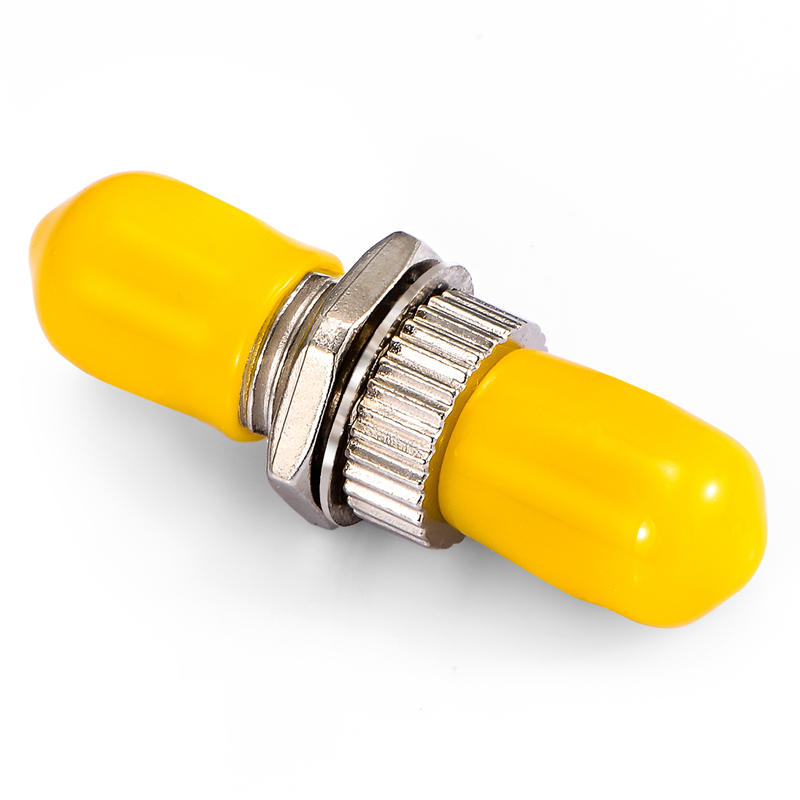
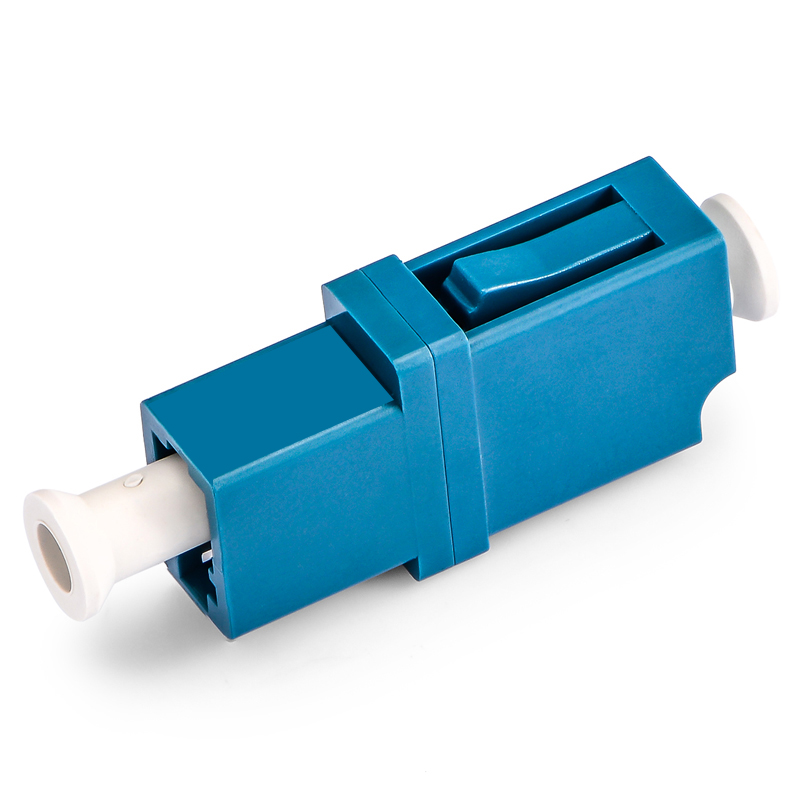
A fiber optic cable adapter, also known as a fiber coupler or patch panel adapter, is the passive mechanical device that connects two fiber optic patch cords together to form a complete optical link. These connectors are essential components in structured cabling systems, ensuring precise alignment of fiber cores to minimize signal loss and maintain high-speed data transmission.
Designed for durability and precision, these adapters support various connector types including LC, SC, ST, and FC. They play a critical role in telecommunications infrastructure, data centers, and FTTH (Fiber To The Home) networks by providing reliable signal continuity between active equipment and end-user devices. By using high-quality adapters, network operators can significantly reduce insertion loss and return loss, ensuring stable network performance over time.
Shenzhen Guangtong Optical Co., Ltd has been a trusted manufacturer since 2010, specializing in high-tech fiber communication products. Our manufacturing process for fiber optic cable adapters adheres strictly to ISO 9000 quality management systems, ensuring every unit meets international standards for reliability and performance.
We utilize advanced production and testing equipment to ensure precision in every component. Our adapters are manufactured using materials that comply with European Union directives and global environmental regulations. This commitment to quality guarantees low insertion loss and high return loss, which are vital for maintaining signal integrity in high-bandwidth applications.
Selecting the correct fiber optic cable adapter is crucial for minimizing signal attenuation and ensuring long-term network stability. Buyers should evaluate several key factors to match their specific infrastructure requirements.
Ensure the adapter type matches your existing patch cords. Common types include LC (Lucent Connector) for high-density applications, SC (Subscriber Connector) for general use, ST (Straight Tip) for older multimode systems, and FC (Ferrule Connector) for high-vibration environments.
Look for adapters with low insertion loss (typically < 0.2dB). Lower loss means less signal degradation, which is critical for long-haul telecommunications and high-speed data transmission.
Choose adapters made from durable plastics like PBT or metal housings if higher physical protection is needed. Ceramic ferrules are standard for single-mode applications due to their superior precision and wear resistance.
Use this checklist when evaluating suppliers and specifications to ensure you get the best value and performance for your procurement needs.
Even high-quality adapters can face issues if not handled correctly. Understanding common problems helps prevent costly network downtime and signal degradation.
Often caused by dirty ferrule ends, misalignment, or poor quality ceramic cores. Regular cleaning and using certified adapters can mitigate this.
Dust caps protect against debris. Removing caps unnecessarily can lead to scratches on the ferrule, permanently degrading signal quality.
Mixing different brands or connector types without proper verification can cause loose connections or excessive back-reflection.
Our fiber optic cable adapters are designed to meet the demands of diverse industries, from high-speed data centers to outdoor telecommunications networks.
Essential for backbone networks, FTTH deployments, and local area networks (LANs) requiring reliable, high-bandwidth connections.
Supports high-density rack-mounted configurations where space is limited and signal integrity is paramount for server connectivity.
Used in corporate campus wiring, industrial automation, and smart building systems where stable data transmission is critical.
When selecting a partner for fiber optic cable adapters, consider a supplier with a proven track record of quality, compliance, and global reach.
Founded in 2010, GT-Optical has extensive experience in R&D and manufacturing, ensuring deep technical knowledge and reliable production capacity.
Our strict adherence to ISO 9000 standards guarantees consistent product quality and reduces the risk of defects in bulk orders.
Products are exported to America, Europe, the Middle East, Southeast Asia, and Pacific states, demonstrating our ability to meet diverse regional standards and logistics requirements.
The primary difference lies in the connector size and latching mechanism. LC adapters use a small form-factor connector with a latch similar to RJ45, making them ideal for high-density applications. SC adapters use a larger square connector with a push-pull latching mechanism, commonly used in datacom and telecom applications.
Insertion loss represents the amount of optical power lost when light passes through the adapter. Higher insertion loss means weaker signal strength at the receiving end, which can lead to data errors or complete link failure. Low-loss adapters (<0.2dB) ensure optimal signal integrity.
Yes, we offer adapters specifically designed for both single-mode (SM) and multimode (MM) fibers. It is crucial to match the adapter type to your fiber type to avoid mismatch loss and potential damage to the fiber core.
Absolutely. As a professional manufacturer, we support OEM services. You can request custom packaging, labeling, and even specific connector color coding to match your brand identity or project requirements.
Our manufacturing process is certified under ISO 9000. Additionally, our materials comply with EU directives and international environmental regulations, ensuring our products meet global safety and quality standards.
Privacy statement: Your privacy is very important to Us. Our company promises not to disclose your personal information to any external company with out your explicit permission.
Fill in more information so that we can get in touch with you faster
Privacy statement: Your privacy is very important to Us. Our company promises not to disclose your personal information to any external company with out your explicit permission.