


Please Leave Us A Message
Privacy statement: Your privacy is very important to Us. Our company promises not to disclose your personal information to any external company with out your explicit permission.


Fiber optic cable types are the fundamental building blocks of modern high-speed telecommunications and data networks. Unlike traditional copper wiring, these cables transmit information as pulses of light through thin strands of glass or plastic fiber, enabling vastly superior bandwidth and signal integrity over long distances.
Designed for long-distance communication, single-mode fiber features a tiny core (typically 9 microns) that allows light to travel in a straight path. This eliminates modal dispersion, making it the ideal choice for metropolitan area networks (MANs) and long-haul telecommunication links where signal clarity is paramount.
With a larger core (50 or 62.5 microns), multi-mode fiber allows multiple light rays to propagate simultaneously. It is optimized for shorter distances, such as within a single building or campus, offering a cost-effective solution for local area networks (LANs) and data centers where transceivers are closer together.
Understanding the specific characteristics of each fiber optic cable type is essential for selecting the right infrastructure for your project's distance, bandwidth, and budget requirements. At Shenzhen Guangtong Optical Co., Ltd, we provide a comprehensive range of options tailored to diverse networking needs.
Shenzhen Guangtong Optical Co., Ltd is a high-tech enterprise specializing in the research, development, production, and sales of fiber communication products. Since our establishment, we have built a reputation for integrity operation and excellent quality products, earning the trust of partners across America, Europe, the Middle East, Southeast Asia, and the Pacific states.
Our manufacturing facility is equipped with advanced production and test equipment capable of handling various kinds of fiber cables, including SZ stranded cables, central tube cables, all-dielectric self-supporting (ADSS) cables, and drop cables. Every product is strictly controlled according to the ISO 9000 quality management system, ensuring consistent performance and reliability for your projects.
Materials used in our fiber optic cable types comply with European Union directives and international regulations, guaranteeing safety and environmental responsibility. We adhere to a business philosophy centered on attractive quality and standard management, contributing to the improvement of the industry while providing you with loyal partnership and ideal service.
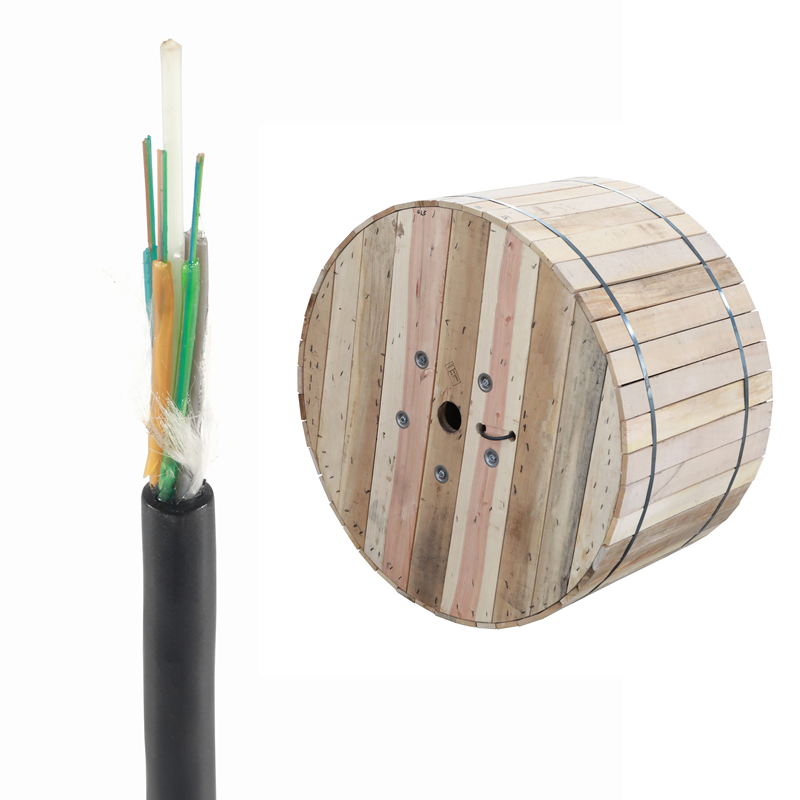
Selecting the appropriate fiber optic cable type involves evaluating several critical factors to ensure optimal network performance and cost-efficiency. The primary decision point is usually between Single-Mode and Multi-Mode fiber, based on the required transmission distance and bandwidth.
Transmission Distance: For distances exceeding 2 kilometers, Single-Mode fiber is typically the only viable option due to its low attenuation. Multi-Mode fiber is suitable for shorter runs, usually up to 550 meters depending on the data rate.
Cable Construction: Consider the installation environment. Indoor cables require lightweight, flexible jackets, while outdoor cables need robust armor (such as steel or aluminum) and water-blocking materials to withstand harsh conditions. For aerial installations, All-Dielectric Self-Supporting (ADSS) cables offer high tensile strength without conductive elements.
Bend Sensitivity: In dense cabling environments like data centers or FTTH (Fiber To The Home) last-mile connections, bend-insensitive fibers (G.657) prevent signal loss when cables are tightly routed around corners.
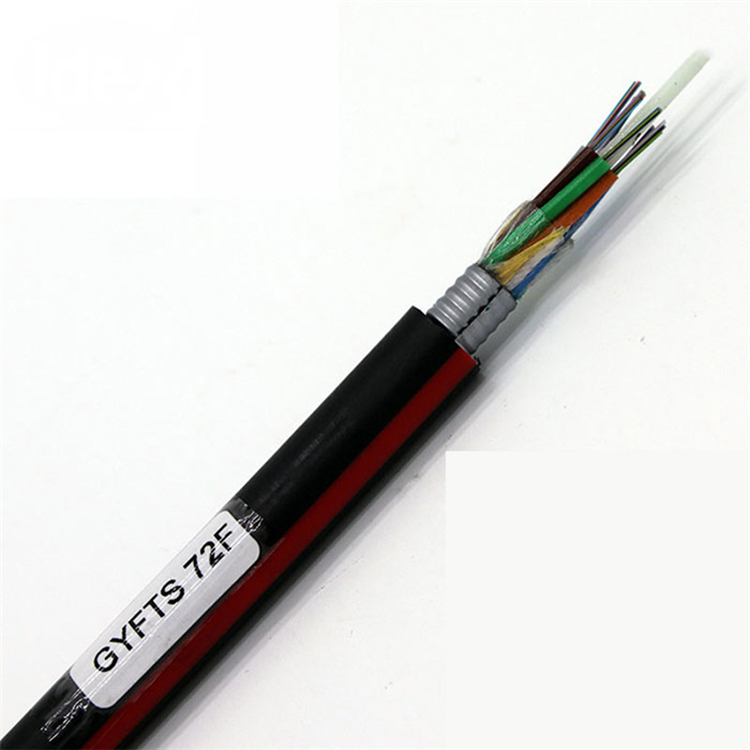
Before finalizing your order for fiber optic cable types, use this checklist to verify that your procurement specifications align with your technical requirements and risk mitigation strategies.
Does the cable type support the required link length and data rate (e.g., 1G, 10G, 40G, 100G Ethernet)?
Is the cable rated for indoor, outdoor, or direct burial? Does it have UV resistance and water blocking?
Do the materials meet EU directives (RoHS, REACH) and are they ISO 9000 certified?
Are the connectors (LC, SC, ST, FC) compatible with your existing patch panels and transceivers?
Can the supplier meet your delivery schedule? Are there flexible Minimum Order Quantities?
Does the manufacturer offer technical assistance, testing reports, and warranty coverage?
Even with high-quality fiber optic cable types, improper handling during installation can lead to significant signal loss and network failures. Here are common issues and how to avoid them.
Bending fiber tighter than its minimum bend radius causes macro-bending losses, leading to signal attenuation. Always use proper cable management tools and maintain the recommended bend radius (typically 10x the cable diameter during installation).
Dust and debris on connector ferrules are a leading cause of network failure. Always inspect connectors with a fiber microscope before mating and use clean-room wipes and appropriate cleaners to maintain end-face cleanliness.
Pulling cables with excessive force can stretch the glass fiber, increasing attenuation or causing micro-cracks. Use tension monitors and pulling grips to ensure the pulling tension never exceeds the cable's Maximum Tensile Strength (MTS).
When sourcing fiber optic cable types from international manufacturers, it is crucial to partner with a company that combines technical expertise with reliable logistics. Shenzhen Guangtong Optical Co., Ltd stands out as an ideal partner for global buyers.
We have successfully exported products to America, Europe, the Middle East, Southeast Asia, and the Pacific states. Our experience ensures that we understand international shipping requirements, customs documentation, and regional compliance standards.
Beyond standard fiber optic cables, we manufacture optical fiber armored cables, ADSS cables, air blown fiber, and FTTH drop cables. We also supply fiber optic fusion splicers, allowing you to consolidate your procurement from a single, knowledgeable source.
Our business philosophy prioritizes integrity management and attractive quality. We view our clients not just as customers, but as loyal friends and ideal partners, providing transparent communication and reliable after-sales support throughout the lifecycle of your project.
OS2 is a single-mode fiber designed for long-distance transmission (up to 10km+), using a 9-micron core. OM3 is a multi-mode fiber optimized for short-distance, high-bandwidth applications (like data centers), using a 50-micron core and supporting 10GbE up to 300 meters. The choice depends on your network distance requirements.
Yes, all materials used in our fiber optic cable types comply with the directive of the European Union. We strictly follow ISO 9000 quality management systems to ensure every batch meets international safety and environmental standards.
Absolutely. As a manufacturer specializing in R&D and production, we can customize cable lengths, jacket colors, and connector types to meet specific project requirements. Contact us for details on OEM/ODM services.
Lead times vary based on the specific fiber optic cable type and order volume. Standard items may ship quickly, while customized solutions require production time. Please contact our sales team for an accurate quote and delivery schedule based on your specific needs.
Yes, we provide comprehensive testing reports for every shipment, including attenuation measurements and visual fault locator results, ensuring you receive products that perform exactly as specified.
Privacy statement: Your privacy is very important to Us. Our company promises not to disclose your personal information to any external company with out your explicit permission.
Fill in more information so that we can get in touch with you faster
Privacy statement: Your privacy is very important to Us. Our company promises not to disclose your personal information to any external company with out your explicit permission.