


Please Leave Us A Message
Privacy statement: Your privacy is very important to Us. Our company promises not to disclose your personal information to any external company with out your explicit permission.


A fiber optic input cable serves as the critical link between your light source and the transmission medium. Unlike standard copper wiring, these cables utilize thin strands of glass or plastic to transmit data as pulses of light, enabling high-speed, long-distance communication with minimal signal loss.
For procurement teams managing network infrastructure, selecting the right fiber optic input cable is essential for maintaining bandwidth integrity. Whether you are deploying FTTH solutions or industrial data links, understanding the core structure—such as SZ stranded, central tube, or ADSS designs—ensures your system meets rigorous performance standards from day one.
Business Benefit: By specifying the correct fiber optic input cable architecture, you reduce latency risks and future-proof your network against increasing data demands.
At Shenzhen Guangtong Optical Co., Ltd, our manufacturing process for fiber optic input cables is governed by strict ISO 9000 quality management systems. We utilize advanced production and testing equipment to ensure every meter of cable meets international standards for durability and optical performance.
Our facility specializes in producing various types of fiber cables, including armored cables, all-dielectric self-supporting (ADSS) cables, and FTTH drop cables. Each product undergoes rigorous testing to comply with European Union directives and global safety regulations, ensuring reliable operation in diverse environments.
Strict adherence to quality management protocols ensures consistent batch quality and material compliance.
State-of-the-art equipment verifies optical performance and mechanical strength for every cable type.

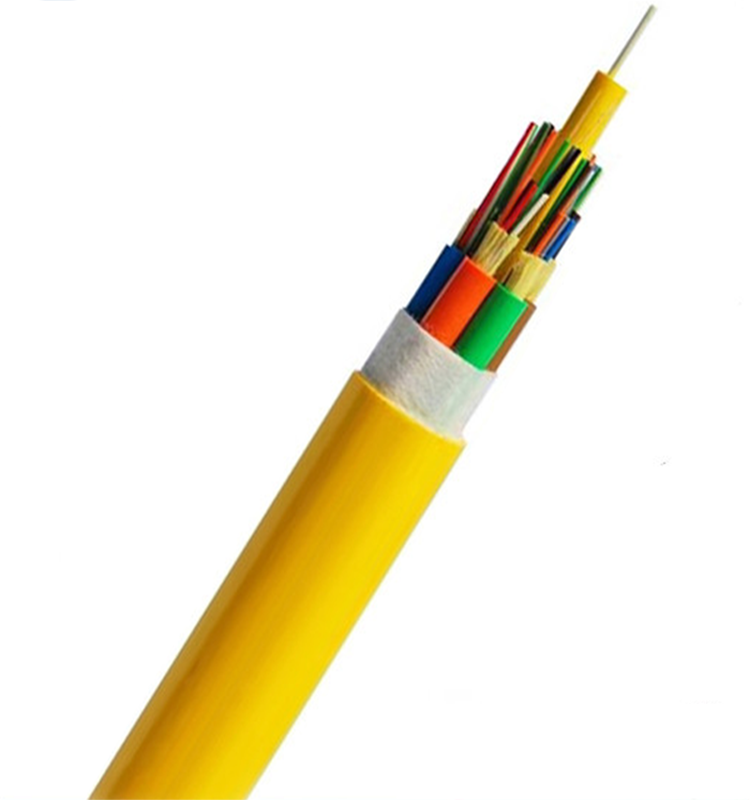
Selecting the optimal fiber optic input cable requires matching technical specifications to your specific application environment. Key factors include cable construction (central tube vs. loose tube), jacket material (PVC, LSZH, or PE), and tensile strength requirements.
Environment Matters: For outdoor aerial deployments, consider All-Dielectric Self-Supporting (ADSS) cables that withstand tension without metallic strength members. For indoor or direct burial applications, armored or water-swelling cables provide superior protection against moisture and rodents.
Procurement Tip: Always verify the cable's attenuation rate and bending radius. A flexible fiber optic input cable reduces installation time and labor costs, especially in dense rack environments.
Before finalizing your purchase order for fiber optic input cables, use this checklist to validate supplier capabilities and product specifications.
Our fiber optic input cables and related products are engineered for diverse industry sectors, providing reliable connectivity where copper fails.
High-density FTTH drop cables and backbone solutions for last-mile connectivity and regional networks.
Armored and ruggedized cables resistant to EMI/RFI interference, ensuring stable data transmission in factories.
Low-smoke zero-halogen (LSZH) patch cords and input cables for safe, high-bandwidth server interconnects.
All-dielectric ADSS cables for power line communication and smart grid monitoring applications.
High-performance fiber links for video transmission, live event broadcasting, and media editing workflows.
Secure, tamper-resistant fiber optic input cables for sensitive communications and surveillance systems.
When sourcing fiber optic input cables, reliability and support are just as critical as price. Shenzhen Guangtong Optical Co., Ltd offers more than just hardware; we provide a partnership built on integrity and technical expertise.
Global Experience: With exports to America, Europe, the Middle East, Southeast Asia, and Pacific states, we understand international compliance and logistics.
Integrated Solutions: Beyond cables, we supply fusion splicers and complete FTTH kits, simplifying your procurement workflow by consolidating suppliers.
We prioritize attractive quality and standard management as our guarantee, contributing to the improvement of the industry while serving as your loyal partner.
Privacy statement: Your privacy is very important to Us. Our company promises not to disclose your personal information to any external company with out your explicit permission.
Fill in more information so that we can get in touch with you faster
Privacy statement: Your privacy is very important to Us. Our company promises not to disclose your personal information to any external company with out your explicit permission.