


Please Leave Us A Message
Privacy statement: Your privacy is very important to Us. Our company promises not to disclose your personal information to any external company with out your explicit permission.


Multimode optical fiber cable is a specialized type of fiber optic cable designed to carry multiple light rays simultaneously through its larger core diameter, typically 50 or 62.5 microns. Unlike single-mode cables that use a tiny core to transmit a single light path over long distances, multimode cables are optimized for shorter-range data transmission within local area networks (LANs), data centers, and campus environments.
The primary advantage of choosing multimode fiber optic cable is cost-effectiveness. Because the core is wider, it allows for easier coupling with light sources like LEDs and VCSELs (Vertical-Cavity Surface-Mounted Lasers). This translates to significantly lower costs for transceivers and connectors compared to single-mode solutions, making it the preferred choice for high-bandwidth applications under 2 kilometers.
Shenzhen Guangtong Optical Co., Ltd. manufactures high-quality multimode fibers that comply with international standards, ensuring reliable performance for enterprise networks, security systems, and industrial automation where speed and reliability are critical.
High-Bandwidth Short-Range Solution
Ideal for LANs, Data Centers, and Campus Networks
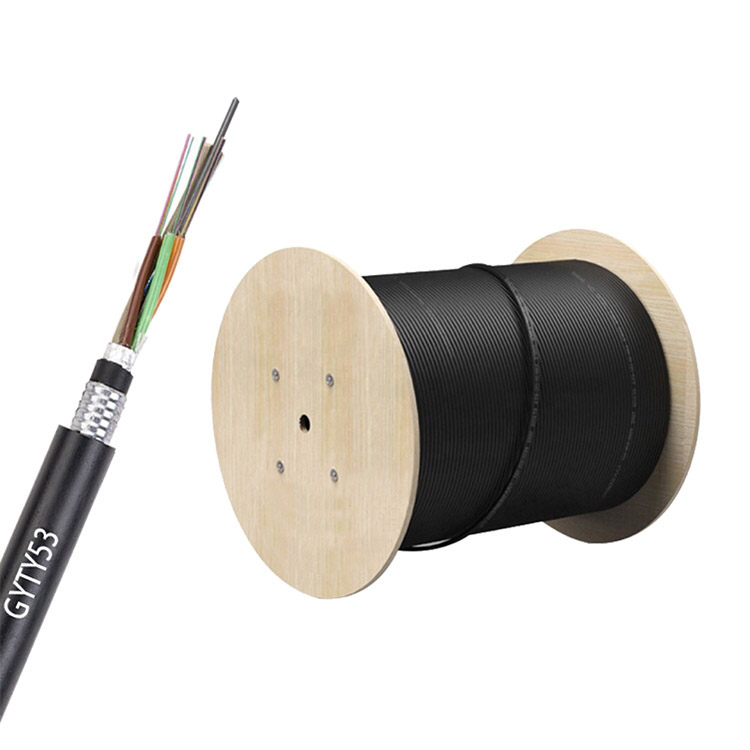
At Shenzhen Guangtong Optical, our commitment to quality begins with raw material selection. We strictly adhere to the ISO 9000 quality management system, ensuring that every component of our multimode optical fiber cable meets rigorous specifications.
Certified Management System
Compliant Materials
Optical Performance Test
Our advanced production equipment includes state-of-the-art SZ stranding machines, central tube cable extruders, and ADSS cable lines. Each batch undergoes precise testing for attenuation, bandwidth, and mechanical strength. This ensures that your network infrastructure remains stable and efficient over time.
We export globally to America, Europe, the Middle East, Southeast Asia, and Pacific states, maintaining consistent quality across all regions.
Selecting the correct multimode fiber optic cable for your project requires understanding several key technical factors. The wrong choice can lead to signal loss, increased latency, or costly upgrades down the line.
The most critical decision is the category. OM1 (62.5/125μm) is suitable for legacy 1Gbps networks. OM2 (50/125μm) offers better bandwidth. For modern 10Gbps applications, OM3 and OM4 laser-optimized fibers are essential. OM5 supports wideband multimode for future-proofing.
For indoor premises cabling, tight-buffered or central tube designs offer flexibility and ease of termination. For outdoor plant installations, loose tube cables with gel filling provide superior protection against moisture and temperature changes.
Pro Tip: Always verify the distance requirements. If your link exceeds 300 meters at 10Gbps, consider upgrading to OM4 or even single-mode to avoid signal degradation.
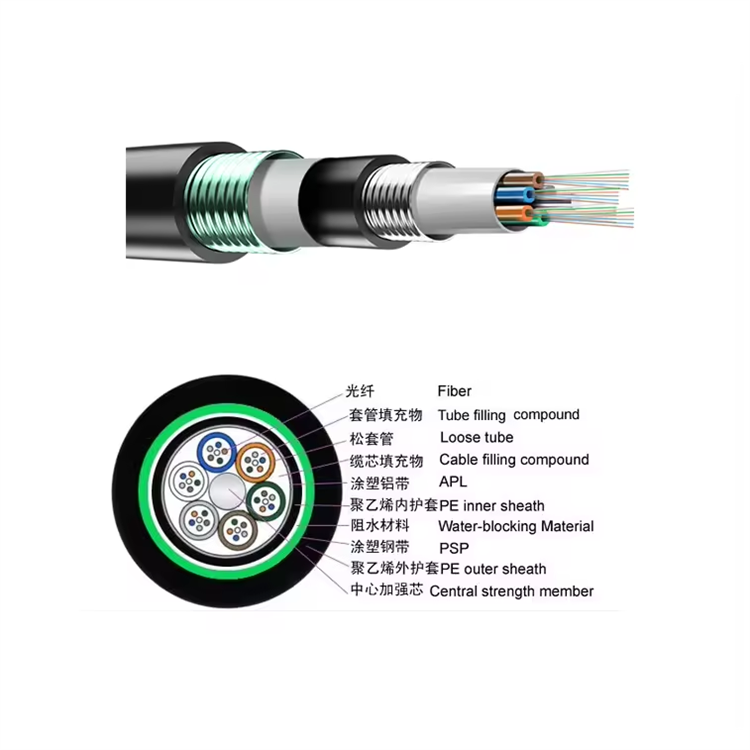
Before finalizing your purchase of multimode fiber optic cable, use this checklist to ensure you are getting the best value and technical performance from your supplier.
Ensure the manufacturer holds ISO 9001 and provides TUV, CE, or RoHS compliance documents.
Confirm the effective modal bandwidth (EMB) matches your switch and transceiver speeds.
Match the cable buffer (tight vs. loose) with your installation environment (indoor vs. outdoor).
Choose a factory with proven production capacity to avoid project delays.
Verify technical support availability for troubleshooting and custom labeling requests.
Request samples for insertion loss and return loss testing before bulk ordering.
Even with high-quality cables, installation errors can cause network failures. Here are the most frequent issues we see in the field and how to resolve them.
Cause: Dirty connectors, micro-bends, or mismatched fiber types.
Solution: Clean all ferrule ends with professional cleaning kits. Ensure proper bend radius (>10x cable diameter). Verify OM3/OM4 compatibility with LC/MPO connectors.
Cause: Using older OM1/OM2 fiber for 10G+ speeds or exceeding max distance specs.
Solution: Upgrade to laser-optimized OM3 or OM4 fiber. Check link budget calculations against transceiver output power.
Cause: Mixing SC, LC, and ST connectors without proper adapters.
Solution: Standardize on LC duplex connectors for high-density data centers. Use active alignment fusion splicing for permanent links.
Cause: Damaged sheathing or improper sealing of cable ends.
Solution: Use loose tube cables with water-blocking gel. Seal unused ports with protective caps immediately after installation.
Multimode fiber optic cable is versatile and widely used across various industries where high-speed data transmission is required over short to medium distances.
Connecting servers, switches, and storage arrays within racks and between rows. OM3/OM4 cables support 40G and 100G Ethernet links using MPO connectors.
Backbone cabling between building floors and distribution frames. Provides reliable Gigabit and 10Gbps connectivity for offices and campuses.
Transmitting high-definition video from CCTV cameras to recording servers. Immune to electromagnetic interference from power lines.
Connecting PLCs, sensors, and robotics in factories. Armored multimode cables protect against physical damage and harsh environments.
Supporting PACS imaging systems and telemedicine applications. Low latency ensures real-time data transfer for critical medical diagnostics.
SDI video transport in studios and OB vans. High bandwidth handles uncompressed HD/4K video signals without compression artifacts.
When sourcing multimode fiber optic cable from China, selecting a reliable manufacturer is crucial. Shenzhen Guangtong Optical Co., Ltd. stands out for several reasons.
From fiber drawing to cable extrusion and connector assembly, we control every step of the process, ensuring consistency and reducing lead times.
Our products meet EU directives and international standards, simplifying customs clearance and regulatory approval for buyers in Europe, America, and beyond.
With over a decade of experience, our engineering team provides pre-sales consultation and post-sales support to optimize your network design.
The distance depends on the fiber category. OM1 supports up to 33 meters, OM2 up to 82 meters, OM3 up to 300 meters, and OM4 up to 400 meters at 10Gbps. For longer distances, consider single-mode fiber or OM5 for extended reach.
Yes, you can mix them, but the entire link will perform at the speed of the lowest category component. For optimal performance, use homogeneous cabling (all OM3 or all OM4) to maximize bandwidth and minimize insertion loss.
Both are laser-optimized 50/125μm multimode fibers. OM4 has a higher Effective Modal Bandwidth (EMB) than OM3, allowing for longer distances at 10Gbps (400m vs 300m) and supporting 40G/100G Ethernet up to 150m. OM4 is recommended for new installations.
For distances under 300 meters, multimode is often more cost-effective because the transceivers (VCSELs) are cheaper than those required for single-mode (DFB lasers). However, single-mode offers unlimited scalability for future upgrades.
LC (Lucent Connector) is the standard for high-density applications due to its small form factor. SC (Subscriber Connector) is also common. For parallel optics (40G/100G), MPO/MTP connectors are used to handle multiple fibers simultaneously.
Yes, we provide OEM services including custom labeling, color-coded jackets, and tailored packaging to meet your brand requirements and logistics needs. Contact our sales team for details.
Privacy statement: Your privacy is very important to Us. Our company promises not to disclose your personal information to any external company with out your explicit permission.
Fill in more information so that we can get in touch with you faster
Privacy statement: Your privacy is very important to Us. Our company promises not to disclose your personal information to any external company with out your explicit permission.