


Please Leave Us A Message
Privacy statement: Your privacy is very important to Us. Our company promises not to disclose your personal information to any external company with out your explicit permission.


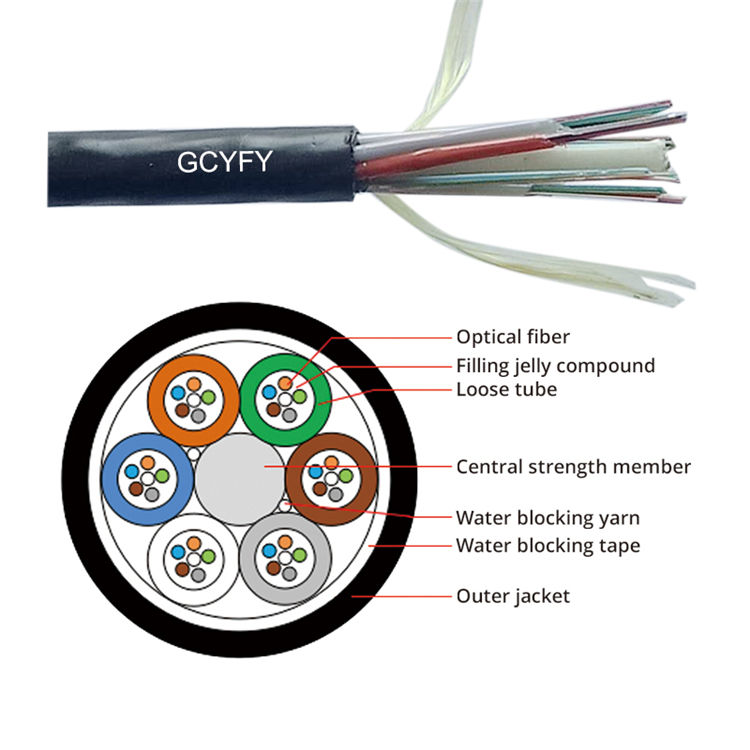
Outdoor rated fiber optic cable is a specialized communication medium engineered to withstand the most demanding environmental conditions. Unlike indoor cabling, these cables are built with robust protective layers—including ruggedized jackets, moisture-blocking gels, and reinforced strength members like FRP or steel wires—to ensure uninterrupted signal transmission.
For procurement managers and network architects, choosing the right outdoor solution is critical. It prevents costly downtime caused by weather exposure, temperature fluctuations, and physical stress. Whether you are deploying an underground duct run, an aerial span across a pole line, or a direct-buried backbone, high-quality outdoor fiber optic cable provides the durability required for long-term infrastructure reliability.
Why it matters for your project: Investing in certified outdoor-rated fiber minimizes lifecycle costs by reducing maintenance needs and ensuring compliance with strict telecommunications standards.
Our manufacturing process is strictly controlled according to ISO 9000 quality management systems. This ensures that every batch of outdoor fiber optic cable meets rigorous international standards for consistency and performance.
Materials used in our outdoor rated fiber optic cable comply with European Union directives and various international regulations. This guarantees that your supply chain remains compliant with global environmental and safety laws.
We utilize advanced production and test equipment for various kinds of fiber cable, including SZ stranded, central tube, and ADSS cables. This technological edge allows us to deliver superior tensile strength and bending resistance.
With products exported to America, Europe, the Middle East, Southeast Asia, and Pacific states, our outdoor fiber optic cables have proven their reliability in diverse climates and regulatory environments worldwide.
Selecting the appropriate outdoor rated fiber optic cable requires a deep understanding of your deployment environment. Not all "outdoor" cables are created equal; some are designed for aerial spans while others excel in direct burial scenarios.
Will the cable be strung between poles, pulled through ducts, or buried directly in the ground? For aerial installations, consider All-Dielectric Self-Supporting (ADSS) cables that can handle significant tension without metallic support. For duct runs, loose tube designs offer better flexibility and protection against water ingress.
Extreme temperatures, UV radiation, and moisture are primary threats to fiber integrity. Ensure the cable features a polyethylene (PE) jacket for UV resistance and water-blocking gel or tape to prevent core damage from freezing or flooding.
Check the fiber count, attenuation rates, and tensile strength ratings. A reliable supplier should provide full testing data sheets that match your specific engineering requirements.
Does the cable meet relevant industry standards (IEC, TIA/EIA)?
Is the jacket material suitable for UV and moisture exposure?
Are strength members (FRP/Steel) appropriate for the span length?
Does the manufacturer hold valid ISO 9000 certification?
Can they provide samples for independent lab testing?
Do they have experience exporting to your region?
The Issue: Moisture penetrates the cable core, causing signal attenuation and eventual fiber breakage in freezing temperatures.
The Solution: Always specify cables with longitudinal water-blocking gel or dry water-swellable tapes to seal the core completely.
The Issue: Excessive pressure from installation or soil shifts causes microscopic bends in the glass fibers, leading to signal loss.
The Solution: Choose loose-tube designs with proper buffer sizing and adequate crush-resistant armor for direct burial applications.
The Issue: Standard PVC jackets crack and crumble when exposed to prolonged sunlight, exposing fibers to the elements.
The Solution: Insist on High-Density Polyethylene (HDPE) jackets specifically formulated for outdoor UV resistance.
Long-distance trunk lines connecting exchanges and data centers require high-count, high-strength outdoor cables capable of spanning kilometers without signal degradation.
Fiber-to-the-Home deployments rely on durable drop cables and distribution fibers that can navigate complex aerial routes from street cabinets to individual premises.
Power plants, oil rigs, and railway signaling systems use armored and specialized outdoor cables to withstand extreme electromagnetic interference and physical hazards.
Founded in 2010, GT-Optical is a high-tech enterprise specializing in the research, development, and production of fiber communication products. Their facility in Shenzhen City is equipped with advanced machinery for producing SZ stranded, central tube, and ADSS cables.
Key Advantage: They combine strict ISO 9000 quality control with EU-compliant materials, making them a reliable partner for international projects requiring both technical precision and regulatory adherence.
Prefer suppliers who design their own cables rather than just assembling third-party components. Integrated R&D ensures better quality control over the entire manufacturing process.
A trustworthy manufacturer will have in-house testing labs to verify tensile strength, attenuation, and environmental resistance before shipping any order.
Indoor cables typically use LSZH (Low Smoke Zero Halogen) jackets for fire safety but lack protection against moisture and UV light. Outdoor rated fiber optic cable features a rugged Polyethylene (PE) jacket, water-blocking gels, and stronger armor to withstand harsh environmental conditions like rain, snow, and direct sunlight.
It is generally not recommended. Outdoor PE jackets are difficult to terminate and do not meet the same fire codes as indoor LSZH cables. Using outdoor cable inside a building can pose a fire hazard and may violate local building regulations.
ADSS stands for All-Dielectric Self-Supporting. These cables contain no metallic strength members, making them immune to electromagnetic interference. They are ideal for aerial spans across power lines or utility poles where conductivity would be dangerous.
For direct burial in areas prone to rodent activity, look for cables with corrugated steel tape armor or double-ridged steel strip armor. This physical barrier prevents animals from chewing through the cable and damaging the delicate glass fibers inside.
When installed correctly and manufactured to high standards (like those from Guangtong Optical), outdoor fiber optic cables can last 25 to 30 years or more. The key factors are the quality of the water-blocking materials and the UV stability of the outer jacket.
Privacy statement: Your privacy is very important to Us. Our company promises not to disclose your personal information to any external company with out your explicit permission.
Fill in more information so that we can get in touch with you faster
Privacy statement: Your privacy is very important to Us. Our company promises not to disclose your personal information to any external company with out your explicit permission.