


Please Leave Us A Message
Privacy statement: Your privacy is very important to Us. Our company promises not to disclose your personal information to any external company with out your explicit permission.


A fiber optic patch cable is a terminated assembly of optical fibers designed to connect one device to another for signal transmission. Unlike the longer runs of backbone cabling used in main distribution frames, these cables are engineered for flexibility and frequent handling within data centers, telecommunications rooms, and local area networks (LANs).
These cables serve as the critical "last mile" of connectivity, linking servers, switches, routers, and storage devices. They come in various configurations, including simplex (single strand), duplex (two strands), and trunk assemblies. The choice between single-mode and multi-mode fiber depends on your bandwidth requirements and transmission distance.
High-quality patch cables minimize signal attenuation and reflection, ensuring stable high-speed data transfer. For procurement managers, this means reduced downtime, lower maintenance costs, and compliance with industry standards like TIA/EIA-568.
Shenzhen Guangtong Optical Co., Ltd (GT-Optical) leverages over a decade of expertise to deliver fiber optic products that meet rigorous international standards. Our manufacturing process is anchored by ISO 9000 quality management systems, ensuring every batch of patch cables undergoes strict testing for performance and reliability.
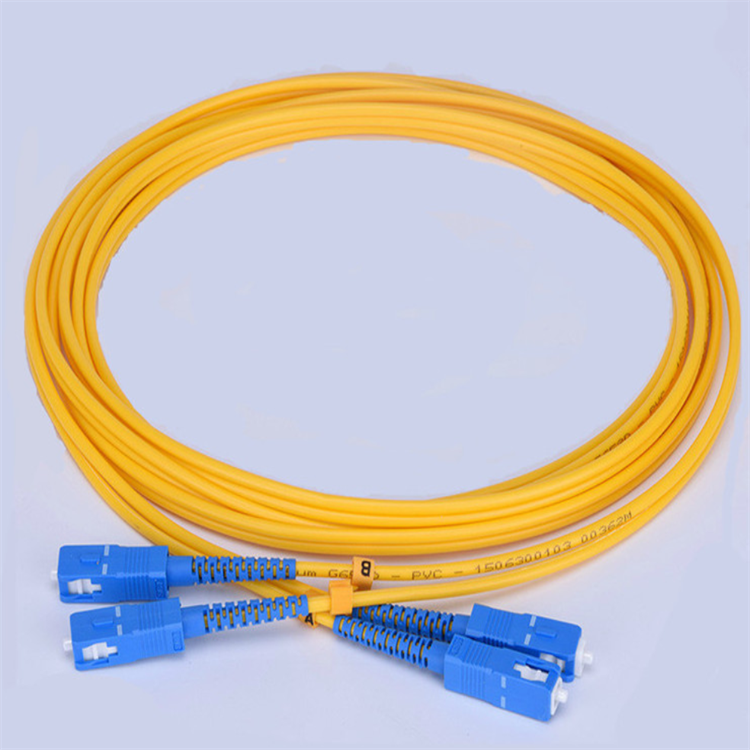
Our facility is equipped with state-of-the-art production and test equipment capable of handling various cable types, including SZ stranded cables, central tube cables, and ADSS cables. This versatility allows us to customize patch cables to specific client requirements while maintaining high-volume output.
We prioritize material integrity, using components that comply with European Union directives and global environmental regulations. This commitment not only ensures product longevity but also supports your sustainability goals by reducing electronic waste.
Selecting the correct fiber optic patch cable involves balancing technical specifications with practical application needs. Buyers must consider factors such as fiber type, connector type, jacket material, and bend radius to ensure optimal network performance.
Single-Mode (OS1/OS2): Ideal for long-distance transmissions (telecom, campus backbones) with smaller core diameters (9 microns). Best for future-proofing high-bandwidth needs.
Multi-Mode (OM1/OM2/OM3/OM4): Suitable for shorter distances (data centers, LANs) with larger cores. OM3 and OM4 are optimized for high-speed Ethernet (10G/40G/100G) using laser-optimized fibers.
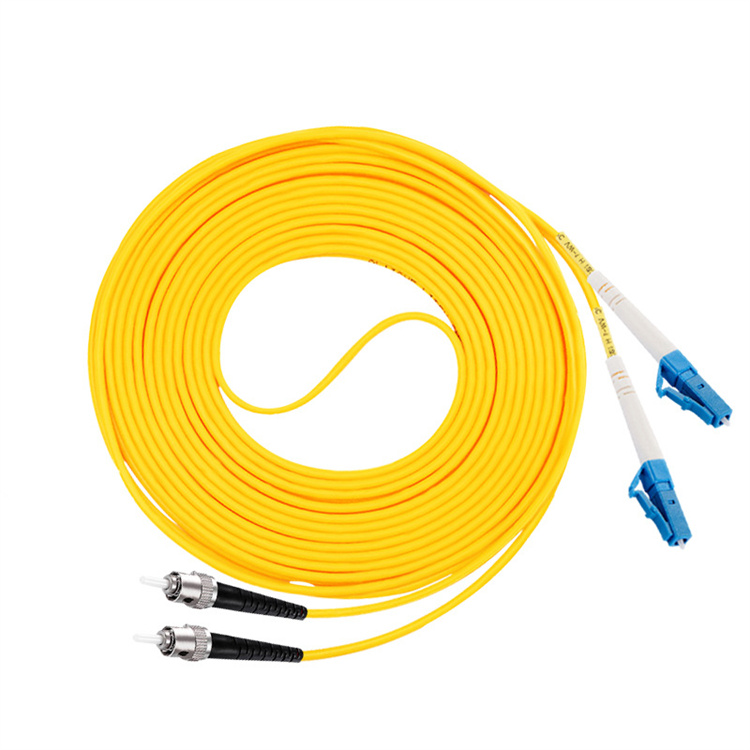
Common connectors include LC (Lucent Connector) for high density, SC (Standard Connector) for simplicity, and ST (Straight Tip) for legacy systems. Ensure polarity (A, B, or C) matches your switch configuration to avoid cross-wiring issues. GT-Optical provides clear labeling and polarity management solutions.
Use this checklist to evaluate potential suppliers and ensure your fiber optic patch cable procurement meets all technical and operational requirements.
Fiber optic patch cables are indispensable across various sectors where high-speed, reliable data transmission is critical. GT-Optical's products are widely used in environments ranging from enterprise data centers to outdoor telecommunication networks.
High-density LC-to-LC duplex cables enable efficient server-to-switch connections, supporting 10G, 40G, and 100G Ethernet speeds with minimal latency.
Outdoor-rated patch cords with LSZH jackets protect against moisture and UV damage, ensuring stable performance in FTTH (Fiber to the Home) deployments.
Color-coded cables simplify identification in structured cabling systems, enhancing maintenance efficiency and reducing human error during upgrades.
When selecting a supplier for fiber optic patch cables, prioritize partners who offer end-to-end solutions from R&D to delivery. Shenzhen Guangtong Optical Co., Ltd stands out due to its integrated manufacturing capabilities and global service network.
Since 2010, GT-Optical has built a reputation for excellence in the telecommunications industry. Our diverse product range, including fiber optic cables, armored cables, and fusion splicers, allows you to source all your connectivity needs from a single trusted partner. We look forward to being your loyal friend and ideal partner in building robust, high-performance networks.
OS1 is typically used for indoor applications with a maximum attenuation of 1.0 dB/km, while OS2 is designed for both indoor and outdoor use with a lower attenuation of 0.4 dB/km, making it suitable for longer distances. For most modern high-speed applications, OS2 is recommended.
Yes, our patch cables are fully interoperable with major networking equipment brands such as Cisco, Juniper, Arista, and HP. They meet or exceed industry standards for physical dimensions and optical performance, ensuring seamless integration into existing infrastructure.
Absolutely. We offer extensive customization options, including specific cable lengths (from 1m to 30m+), jacket colors for easy identification, and various connector types. This flexibility helps streamline cable management and reduces inventory complexity for large-scale projects.
Our manufacturing process is certified under ISO 9000 quality management systems. Additionally, our materials comply with European Union directives regarding hazardous substances (RoHS) and fire safety standards. We provide test reports and certificates upon request.
For standard stock items, lead times are minimal. For customized orders, our efficient production line typically ensures shipment within 7-15 working days, depending on quantity and specifications. We prioritize timely delivery to support your project schedules.
Privacy statement: Your privacy is very important to Us. Our company promises not to disclose your personal information to any external company with out your explicit permission.
Fill in more information so that we can get in touch with you faster
Privacy statement: Your privacy is very important to Us. Our company promises not to disclose your personal information to any external company with out your explicit permission.