


Please Leave Us A Message
Privacy statement: Your privacy is very important to Us. Our company promises not to disclose your personal information to any external company with out your explicit permission.


A patch cable is a short length of fiber optic cable with connectors on both ends, used to connect networking equipment such as routers, switches, and patch panels within a data center or local area network. These cables are essential for establishing reliable connections between devices where flexibility and frequent reconfiguration are required.
Fiber optic patch cables provide high bandwidth and low signal loss compared to copper alternatives. They are available in various configurations including single-mode and multi-mode fibers, supporting different connector types like LC, SC, ST, and FC depending on the application requirements.
Designed for long-distance transmission using a small core diameter (typically 9 microns). Single-mode fiber optic patch cables are ideal for telecommunications and campus backbones where signals need to travel several kilometers without degradation.
Feature larger core diameters (50 or 62.5 microns) suitable for shorter distances within buildings. Multi-mode fiber optic patch cables are commonly used in data centers and enterprise networks where cost-effective solutions for local connectivity are needed.
Shenzhen Guangtong Optical Co., Ltd maintains rigorous quality control standards throughout the manufacturing process of fiber optic patch cables. Our ISO 9000 certified production facility ensures that every patch cable meets international performance specifications for insertion loss, return loss, and tensile strength.
We utilize advanced testing equipment to verify optical performance at each stage of production. From raw material inspection to final packaging, our quality management system guarantees consistent batch-to-batch reliability for all fiber optic patch cable orders.
Our manufacturing adheres to strict European Union directives and international regulations. Every fiber optic patch cable undergoes comprehensive testing including visual inspection, optical time domain reflectometer (OTDR) testing, and environmental stress screening to ensure durability in demanding applications.
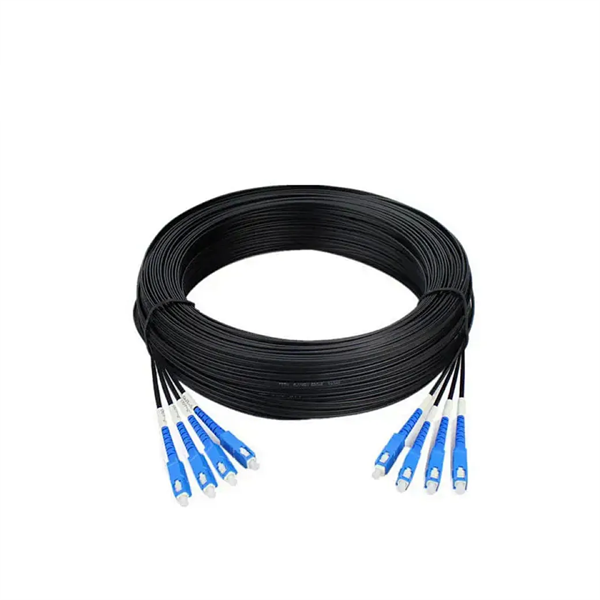
Selecting the appropriate fiber optic patch cable requires careful consideration of several technical factors. Understanding these parameters helps procurement teams minimize compatibility issues and optimize network performance for their specific infrastructure needs.
Determine whether your application requires single-mode or multi-mode fiber optic patch cables based on distance requirements and bandwidth needs. Single-mode is preferred for long-haul connections while multi-mode suits shorter data center runs.
Ensure the patch cable connectors match your existing equipment ports. Common options include LC, SC, ST, and FC connectors. Mismatched connectors can cause connection failures and signal degradation in critical network paths.
Choose jacket materials suitable for your installation environment. Riser-rated cables are designed for vertical building runs, while plenum-rated cables meet fire safety standards for air handling spaces. Proper jacket selection ensures regulatory compliance and safety.
The polish type affects optical performance significantly. UPC (Ultra Physical Contact) polish provides lower insertion loss suitable for most applications, while APC (Angled Physical Contact) polish offers superior return loss performance for sensitive video and RF applications. Select the appropriate polish type based on your network requirements.
Before placing an order for fiber optic patch cables, use this comprehensive checklist to evaluate suppliers and product specifications. This systematic approach helps procurement professionals make informed decisions that reduce risk and ensure long-term reliability.
Fiber optic patch cables serve diverse industries requiring high-speed, reliable data transmission. Understanding specific application requirements helps buyers select optimal solutions for their sector's unique challenges and regulatory environments.
High-density fiber optic patch cables enable efficient server-to-switch connections in modern data centers. Low-profile designs and organized cabling solutions help maximize airflow and simplify maintenance in crowded rack environments.
Long-haul fiber optic patch cables form the backbone of telecommunications infrastructure connecting exchanges and distribution points. High-performance variants ensure minimal signal degradation across extensive network distances.
Building-wide fiber optic patch cable installations provide robust backbone connectivity between floors and buildings. Reliable connections support growing bandwidth demands from cloud services, video conferencing, and IoT deployments.
Ruggedized fiber optic patch cables withstand harsh industrial environments including extreme temperatures, vibration, and electromagnetic interference. These specialized cables maintain connectivity in manufacturing plants and processing facilities.
Medical imaging systems and hospital networks require reliable fiber optic patch cable connections for high-definition video transmission and electronic health record access. Compliance with healthcare electrical safety standards is essential.
Live broadcasting operations depend on fiber optic patch cables for transmitting uncompressed HD video signals between cameras, switchers, and recording equipment. Low-latency performance ensures synchronization across complex production setups.
As a established manufacturer since 2010, Shenzhen Guangtong Optical Co., Ltd has built a reputation for delivering reliable fiber communication products to global markets. Our comprehensive product range and commitment to quality make us a trusted partner for fiber optic patch cable procurement.
Our facility includes state-of-the-art production and test equipment for various fiber cable types. This investment enables precise control over patch cable manufacturing parameters ensuring consistent quality across all orders.
With exports to America, Europe, Middle East, Southeast Asia, and Pacific states, we understand international standards and shipping requirements. Our experience simplifies cross-border procurement for global buyers.
Our business philosophy centers on integrity management and attractive quality standards. We aim to be your loyal friend and ideal partner, providing not just products but reliable long-term supply chain relationships.
Get answers to common questions about fiber optic patch cable specifications, installation, and purchasing decisions. This FAQ addresses typical concerns raised by procurement professionals and network engineers.
Single-mode fiber optic patch cables have a smaller core diameter (typically 9 microns) and are designed for long-distance transmission over several kilometers. They use laser light sources and are ideal for telecommunications and campus backbones. Multi-mode fiber optic patch cables feature larger cores (50 or 62.5 microns), use LED light sources, and are suited for shorter distances within buildings and data centers. The choice depends on your distance requirements and budget considerations.
Common connector types include LC (Lucent Connector), SC (Subscriber Connector), ST (Straight Tip), and FC (Ferrule Connector). LC connectors are popular in data centers due to their small form factor and high density. SC connectors offer straightforward push-pull engagement. ST connectors use a bayonet mount mechanism. FC connectors provide threaded coupling for secure connections. The selection depends on your equipment compatibility and space requirements.
Measure the actual routing path between connected devices, accounting for cable slack, bends, and future reconfiguration needs. It is advisable to add 10-20% extra length beyond the direct measurement to accommodate movement and maintenance. Standard lengths typically range from 1 meter to 30 meters, but custom lengths can be manufactured to specific requirements for optimal inventory management.
When properly installed and maintained, fiber optic patch cables can last 25 years or more. The longevity depends on installation conditions, handling practices, and environmental factors. Avoid excessive bending, pulling, and crushing during installation. Regular visual inspection and cleaning of connectors help maintain optimal performance throughout the cable's service life.
Yes, we offer customization services for fiber optic patch cables including specific lengths, connector combinations, jacket colors, and buffer tube configurations. Customization allows you to create organized cable assemblies that simplify identification and maintenance in complex network environments. Contact our engineering team with your specifications for tailored solutions.
Every fiber optic patch cable undergoes comprehensive testing including insertion loss measurement, return loss verification, visual inspection of connectors, and tensile strength testing. Our ISO 9000 certified quality management system ensures each batch meets international standards. Test reports are available upon request to verify product performance before delivery.
Privacy statement: Your privacy is very important to Us. Our company promises not to disclose your personal information to any external company with out your explicit permission.
Fill in more information so that we can get in touch with you faster
Privacy statement: Your privacy is very important to Us. Our company promises not to disclose your personal information to any external company with out your explicit permission.