


Please Leave Us A Message
Privacy statement: Your privacy is very important to Us. Our company promises not to disclose your personal information to any external company with out your explicit permission.


A splice closure is the critical protective housing for fiber optic splices, ensuring long-term signal integrity in harsh outdoor environments.
For network engineers and procurement specialists, understanding the splice closure definition goes beyond just seeing it as a plastic box. It is the primary defense against moisture, dust, and physical stress at your cable joints. In FTTH deployments and long-haul telecommunications, these closures protect the most vulnerable point in your infrastructure—the fusion splice.
Shenzhen Guangtong Optical Co., Ltd. manufactures high-performance closures designed to minimize insertion loss and back reflection. By choosing the right closure type—whether for aerial suspension or underground duct installation—you significantly reduce maintenance costs and extend the lifespan of your fiber network.
At Shenzhen Guangtong Optical, our manufacturing process for fiber optic splice closures adheres to strict ISO 9000 quality management systems. Every component, from the closure body to the sealing gel, is sourced and tested to meet rigorous international standards.
Material Compliance: Our materials comply with European Union directives and global regulations, ensuring safety and environmental responsibility. We use high-grade UV-resistant polymers that withstand extreme temperatures and weathering.
Rigorous Testing: Each batch undergoes performance testing for waterproofing (IP68 rating), air pressure resistance, and mechanical strength. This ensures that your splice closures will perform reliably for decades, reducing the risk of costly field failures.
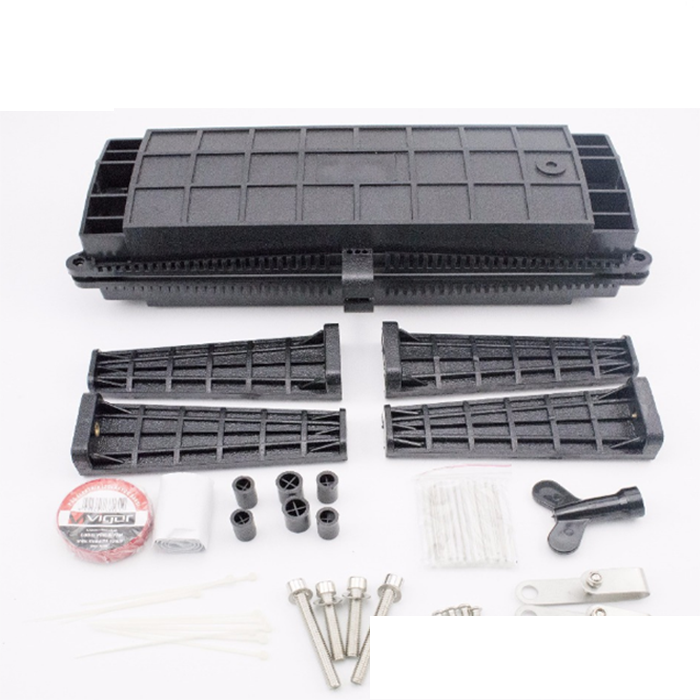
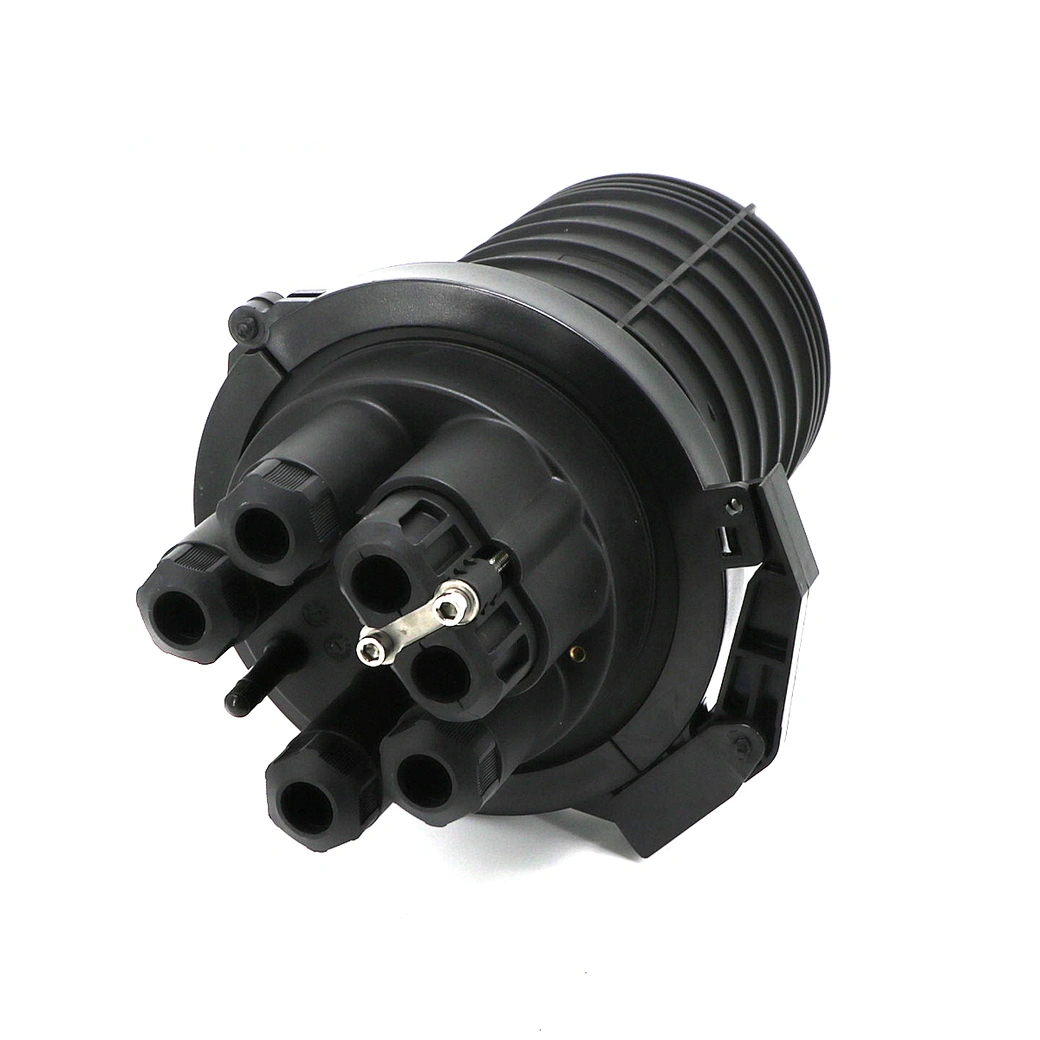
Selecting the optimal fiber optic closure requires evaluating three key factors: installation method, fiber capacity, and environmental conditions.
Will the closure be suspended on an ADSS cable (aerial), installed in a manhole (duct), or buried directly? Aerial closures need robust hanging hardware, while duct closures require compact profiles to fit into limited space.
Determine the number of fibers you need to splice and store. Closures typically range from 12 to 576 ports. For future-proofing, consider a slightly larger capacity than your current requirement to accommodate network expansion without replacing the closure.
Look for closures with modular seal units and heat-shrink tubes that provide reliable IP68 protection. Guangtong Optical's closures feature easy-to-use entry ports that simplify installation and reduce labor time.
Use this checklist to evaluate suppliers and ensure your order meets technical specifications before purchase.
Ensure the supplier provides valid ISO 9001 certification and product test reports for waterproofing and mechanical performance.
Check for internal trays that allow organized routing and easy access to splices. Modular designs simplify maintenance and re-splicing.
Confirm IP68 rating and operating temperature range (-40°C to +70°C) suitable for your specific geographic location.
Verify that the closure is compatible with standard fiber optic accessories, such as crossbars, adapters, and heat-shrink sleeves.
Discuss minimum order quantities and production lead times upfront to align with your project deployment schedule.
Choose a manufacturer like Guangtong Optical that offers technical support and warranty coverage for their products.
As a trusted manufacturer since 2010, we combine advanced technology with competitive pricing to deliver value.
Our state-of-the-art equipment ensures consistent quality and high-volume capacity, meeting the demands of large-scale telecom projects.
We have successfully exported to America, Europe, the Middle East, Southeast Asia, and Pacific states, understanding diverse market requirements.
Our business philosophy centers on integrity management and attractive quality. We act as a loyal partner, providing transparent communication and reliable delivery.
Our splice closures are engineered for versatility across various telecommunications networks.
Essential for last-mile distribution networks, connecting central offices to residential endpoints with reliable joint protection.
Designed specifically for All-Dielectric Self-Supporting cables, allowing safe aerial installation between poles without grounding issues.
Compact and watertight designs ideal for installation in municipal manholes and ducts, protecting against groundwater intrusion.
High-capacity closures used in backbone networks to manage large numbers of fibers over long distances with minimal signal loss.
A splice closure is primarily used to protect spliced fibers in outdoor or harsh environments, focusing on sealing and mechanical protection. A termination box (or patch panel) is typically used indoors or in controlled environments to terminate fibers and provide connection points for patch cords.
Fiber capacity depends on the number of fibers entering the closure and the amount of slack storage required. Standard closures range from 12 to 24 ports, while larger ones can handle up to 576 ports. Consider future expansion needs when selecting capacity to avoid premature replacement.
Yes, our closures are designed to be universally compatible with standard 14mm and 16mm heat shrink sleeves and crossbars commonly used in the industry, ensuring ease of integration with your existing tools and accessories.
Lead times vary based on order volume and customization requirements. Standard stock items may ship within a few days, while bulk custom orders typically require 2-4 weeks. Contact our sales team for precise scheduling based on your project timeline.
Absolutely. All our splice closures are tested to meet IP68 standards, ensuring complete protection against dust and prolonged immersion in water. They also undergo rigorous pressure and temperature cycling tests.
Privacy statement: Your privacy is very important to Us. Our company promises not to disclose your personal information to any external company with out your explicit permission.
Fill in more information so that we can get in touch with you faster
Privacy statement: Your privacy is very important to Us. Our company promises not to disclose your personal information to any external company with out your explicit permission.