


Please Leave Us A Message
Privacy statement: Your privacy is very important to Us. Our company promises not to disclose your personal information to any external company with out your explicit permission.


A fiber optic splice enclosure is a protective housing designed to secure and organize optical fiber splices within a telecommunications network. These enclosures serve as the critical junction point in both backbone and distribution networks, safeguarding delicate fusion splices from environmental factors such as moisture, dust, and physical stress.
For procurement managers, choosing the right enclosure means ensuring long-term network stability. High-quality enclosures like those manufactured by Shenzhen Guangtong Optical Co., Ltd are engineered to minimize signal loss while providing easy access for future maintenance and upgrades.
Key functions include:
Shenzhen Guangtong Optical Co., Ltd leverages advanced production equipment and strict ISO 9000 quality management systems to manufacture reliable fiber optic splice enclosures. Our commitment to integrity and excellence ensures that every unit meets international standards for durability and performance.
Our manufacturing process emphasizes precision engineering and rigorous testing. From raw material selection to final assembly, each step is controlled to guarantee consistent batch quality. This attention to detail reduces your risk of field failures and lowers total cost of ownership.
Certified Quality Management System ensures consistent product reliability and traceability.
Materials meet EU directives and global regulatory requirements for safety and environmental impact.
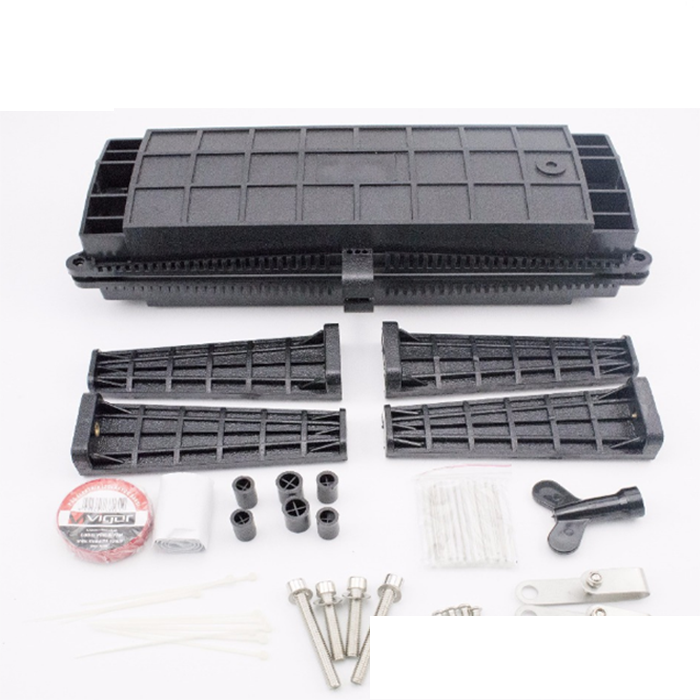
Selecting the appropriate fiber optic splice enclosure requires evaluating several technical and logistical factors. The wrong choice can lead to installation delays, increased maintenance costs, or network vulnerabilities.
When sourcing these components, consider the following key criteria to ensure compatibility with your specific network architecture and environmental conditions:
Determine the number of fibers you need to splice and manage. Enclosures range from small 2-fiber units to large 144+ fiber configurations. Ensure adequate slack storage for future expansion.
Choose between wall-mount, pole-mount, or underground burial options based on your deployment environment. Each type offers different sealing and mechanical protection features.
Look for IP68-rated enclosures with proven water-blocking capabilities. Proper sealing prevents moisture ingress, which is the primary cause of fiber degradation over time.
High-quality ABS or PC materials offer excellent resistance to UV radiation, temperature fluctuations, and chemical exposure, ensuring longevity in harsh environments.
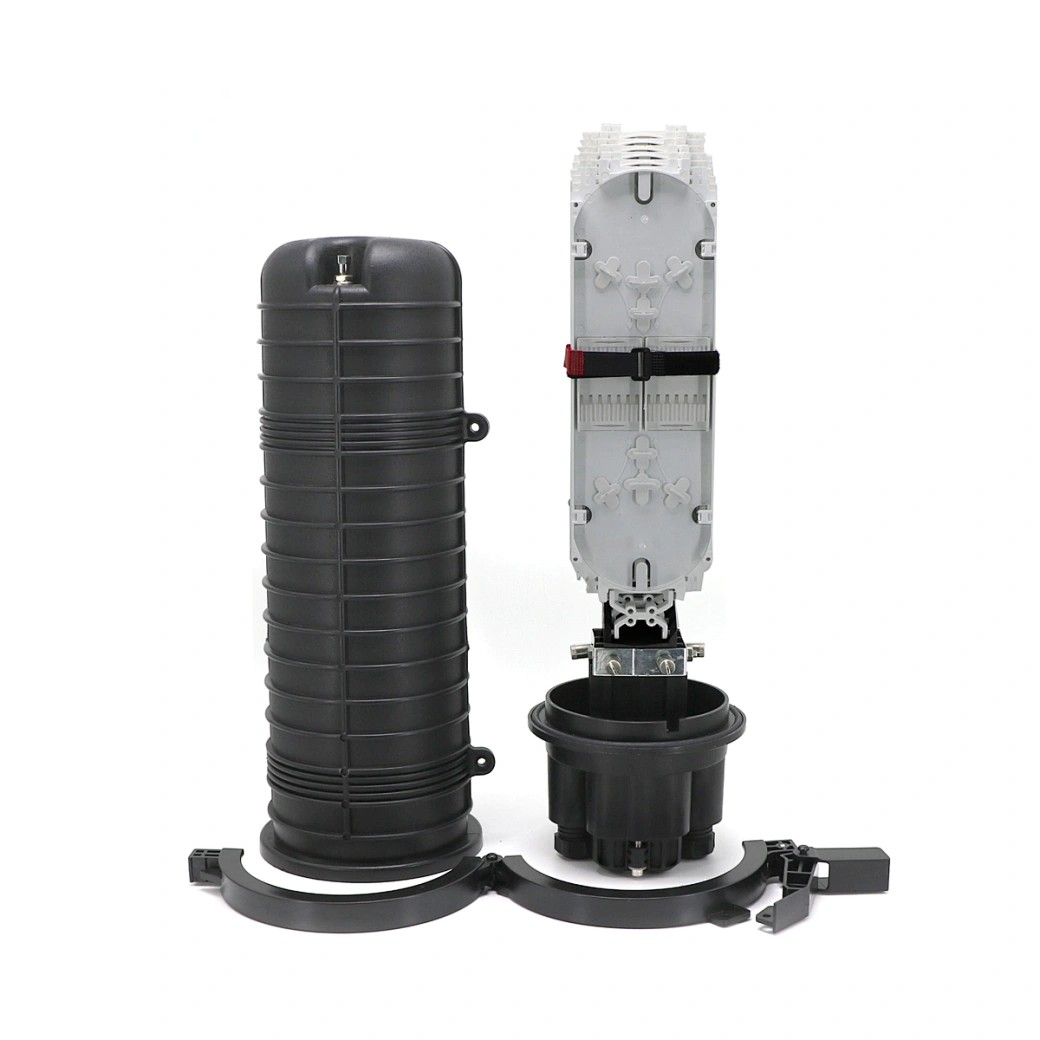
Use this comprehensive checklist to evaluate potential suppliers and products before placing your order. This guide helps streamline your procurement workflow and ensures all critical specifications are met.
Verify splice capacity matches your network design requirements.
Confirm IP68 rating for environmental protection needs.
Check insertion loss specifications (<0.2dB typical).
Verify ISO 9000 certification and quality management processes.
Review export history to similar markets and regions.
Assess R&D capabilities and customization options.
Confirm lead times and production capacity for large orders.
Request samples for pre-production testing and validation.
Evaluate after-sales support and warranty terms.
Focus on total cost of ownership rather than just unit price. Higher quality enclosures reduce field service calls and replacement costs over the network lifecycle.
Compare pricing across multiple qualified suppliers.
Negotiate volume discounts for bulk procurement.
Understanding common pitfalls during installation helps procurement teams specify better products and provide clearer instructions to installation teams. These issues often stem from improper handling or inadequate product design.
Improper sealing during cable entry or closure closure can allow moisture penetration, leading to signal attenuation and fiber corrosion over time.
Insufficient slack storage or tight bending radii during fiber management can cause micro-bends, increasing signal loss and degrading network performance.
Inadequate strain relief at cable entry points can transfer external forces to delicate splices, causing breakage or increased insertion loss.
Poorly designed closures make it difficult for technicians to access splices for maintenance, increasing labor costs and network downtime.
Inadequate labeling systems lead to confusion during troubleshooting and expansion, potentially causing connection errors and service disruptions.
Enclosures without proper thermal management may experience pressure buildup or seal failure due to temperature fluctuations in outdoor environments.
Fiber optic splice enclosures are essential components across various telecommunications infrastructure applications. Their versatility makes them suitable for diverse deployment scenarios worldwide.
Critical for fiber-to-the-home deployments, enabling efficient distribution of optical signals from central offices to end users through neighborhood distribution points.
Used in long-distance transmission networks to protect high-count splices and maintain signal integrity across extensive fiber routes.
Supports hybrid fiber-coaxial (HFC) networks by providing secure splice points for RF signal distribution to residential areas.
Facilitates building-to-building connections in large campus environments, ensuring reliable high-speed data transmission between facilities.
As a trusted manufacturer since 2010, Shenzhen Guangtong Optical Co., Ltd offers distinct advantages for buyers seeking reliable fiber optic splice enclosures. Our commitment to quality and customer satisfaction sets us apart in the global market.
State-of-the-art production equipment ensures precise manufacturing and consistent quality across all fiber optic cable and enclosure products.
Proven track record exporting to America, Europe, Middle East, Southeast Asia, and Pacific states demonstrates our ability to meet diverse international standards.
Strict ISO 9000 quality management system guarantees every product meets rigorous performance and durability requirements.
Flexible OEM/ODM capabilities allow us to tailor products to specific customer requirements and unique application needs.
Our business philosophy centers on integrity management, attractive quality, and standard management, fostering long-term partnerships with clients worldwide.
Direct manufacturing relationships enable competitive pricing without compromising on quality, helping buyers optimize their procurement budgets.
Get answers to common questions about fiber optic splice enclosures, procurement considerations, and technical specifications.
High-quality fiber optic splice enclosures typically have a lifespan of 20-30 years when properly installed and maintained. Factors affecting longevity include environmental conditions, installation quality, and material durability. Guangtong Optical's enclosures are designed to withstand harsh outdoor environments while maintaining structural integrity and sealing performance.
The ideal splice capacity depends on your network design, current fiber count, and future expansion plans. Consider factors such as cable entry points, fiber routing complexity, and maintenance access requirements. We recommend selecting an enclosure with 20-30% additional capacity to accommodate future growth and modifications.
Important certifications include ISO 9000 for quality management, CE marking for European compliance, and RoHS certification for environmental safety. Additionally, verify that materials comply with relevant international standards and that the supplier has experience meeting your region's specific regulatory requirements.
Standard fiber optic splice enclosures are not designed for direct underwater use. However, specialized submersible enclosures with enhanced sealing and corrosion-resistant materials are available for marine installations. These require additional testing and certification to ensure performance in underwater environments.
Lead times vary based on order quantity, customization requirements, and current production schedules. Standard products typically ship within 7-15 days, while customized solutions may require 20-30 days. Guangtong Optical maintains flexible production capacity to accommodate urgent orders and large-scale projects.
IP rating is crucial for determining environmental protection level. IP68 rating provides complete dust tightness and continuous immersion protection, making it ideal for outdoor and underground installations. For indoor applications, lower IP ratings may suffice, but higher ratings provide additional peace of mind and future-proofing.
Privacy statement: Your privacy is very important to Us. Our company promises not to disclose your personal information to any external company with out your explicit permission.
Fill in more information so that we can get in touch with you faster
Privacy statement: Your privacy is very important to Us. Our company promises not to disclose your personal information to any external company with out your explicit permission.