


Please Leave Us A Message
Privacy statement: Your privacy is very important to Us. Our company promises not to disclose your personal information to any external company with out your explicit permission.


Tight buffer fiber optic cable is a specialized cabling solution where each individual glass or plastic optical fiber core is encased in a protective plastic layer that sits directly against the coating. This "tight" fit ensures the fiber is protected from moisture, crushing forces, and physical abrasion right at the source.
Unlike loose tube cables designed for long-distance outdoor plant networks, tight buffer cables are engineered for indoor environments and direct connections. They offer immediate flexibility and durability, making them the standard choice for connecting your equipment to the network backbone without the need for additional buffering tubes.
Commonly available in 900µm buffer sizes, these cables support both single-mode and multi-mode fiber types. Whether you are deploying data center patch cords or local area network (LAN) drops, this design provides the robustness required for high-speed data transmission in complex building infrastructures.
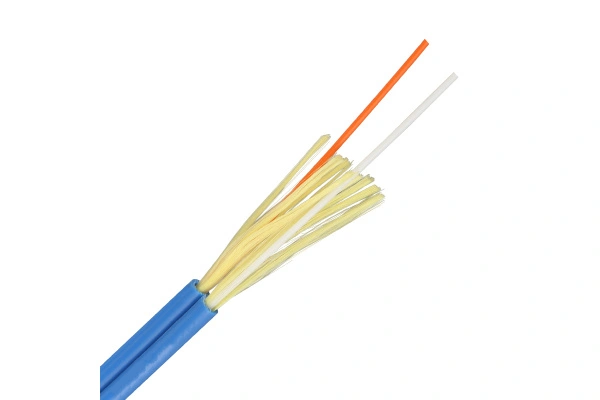
At Shenzhen Guangtong Optical Co., Ltd, our commitment to integrity management guarantees that every meter of tight buffer cable meets rigorous international standards. Our production facility utilizes advanced testing equipment to ensure consistent attenuation and mechanical performance across all batches.
We strictly adhere to the ISO 9000 quality management system, ensuring that material selection complies with European Union directives and global safety regulations. This dedication to quality minimizes your risk of signal loss and physical failure in critical network installations.
Selecting the correct tight buffer fiber optic cable requires matching technical specifications to your specific deployment environment. Whether you are running drop cables for FTTH (Fiber to the Home) or patch cords within a server rack, understanding key parameters is essential for optimal performance.
Single-mode (OS2) fibers are ideal for long-distance, high-bandwidth applications like telecom backbones. Multi-mode (OM3/OM4) fibers are better suited for shorter distances within data centers due to lower cost transceivers.
For indoor use, PVC jackets are standard and cost-effective. If fire codes require stricter compliance, choose LSZH (Low Smoke Zero Halogen) materials. Standard colors (blue, orange, aqua) help identify fiber types quickly during termination.
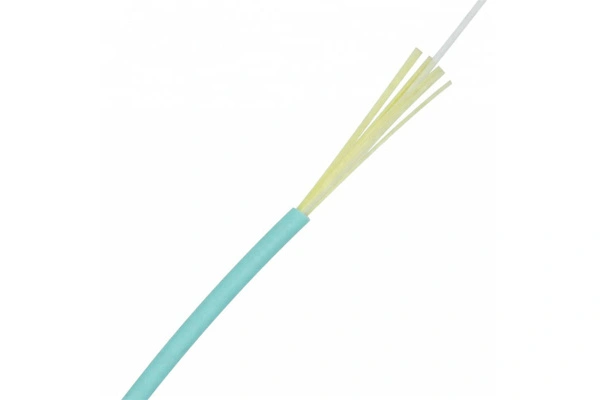
Before finalizing your procurement order for tight buffer cables, verify these critical factors to avoid installation delays and compatibility issues.
When sourcing tight buffer fiber optic cables, choosing a manufacturer with integrated R&D and production capabilities offers significant advantages over trading companies.
As a high-tech company founded in 2010, GT-Optical controls the entire process from fiber drawing to cable extrusion. This vertical integration allows us to offer competitive pricing and faster customization turnaround.
Our products are trusted by partners in America, Europe, the Middle East, Southeast Asia, and Pacific states. We understand diverse market requirements and export documentation needs.
We adhere to "integrity management as the basic" philosophy. Our team provides dedicated support for technical queries, sample requests, and after-sales service to ensure a smooth procurement workflow.
Problem: Signal loss exceeds acceptable limits, causing network instability.
Solution: Source cables from manufacturers with real-time OTDR testing. Ensure the tight buffer coating is applied evenly to prevent micro-bends that scatter light.
Problem: PVC jackets crack or degrade prematurely in harsh indoor environments.
Solution: Specify high-quality raw materials that meet flame retardancy standards. Verify tensile strength ratings to ensure the cable can withstand pulling tension during installation.
Problem: Pre-terminated cables don't fit existing patch panels or equipment ports.
Solution: Always double-check connector polarity (A/B/C) and ferrule size. Work with suppliers who provide detailed dimensional drawings for verification before mass production.
Problem: Inconsistent lead times disrupt project timelines.
Solution: Partner with established factories like GT-Optical that maintain stock of common SKUs (like 2-strand tight buffer jumpers) and have streamlined production lines for custom orders.
Loose tube cables house fibers inside a larger plastic tube filled with gel, designed for outdoor burial or aerial deployment to protect against water and temperature changes. Tight buffer cables have the plastic coating applied directly to the fiber, making them more flexible and easier to terminate, which is ideal for indoor distribution and equipment interconnections.
Standard tight buffer cables are primarily designed for indoor use. However, there are specific variants with water-blocking tapes and ruggedized jackets that can be used for short outdoor runs or direct earth burial. Always check the manufacturer's specifications for environmental ratings.
The recommended bending radius is typically 10 times the cable diameter during installation and 15 times during operation. Exceeding this limit can cause macro-bends, leading to significant signal loss. Flexible tight buffer designs allow for tighter bends in dense patch panels.
Yes, we encourage buyers to request samples to verify quality, flexibility, and termination ease before placing large orders. Our team will assist you in selecting the appropriate samples based on your specific project requirements.
Privacy statement: Your privacy is very important to Us. Our company promises not to disclose your personal information to any external company with out your explicit permission.
Fill in more information so that we can get in touch with you faster
Privacy statement: Your privacy is very important to Us. Our company promises not to disclose your personal information to any external company with out your explicit permission.