


Please Leave Us A Message
Privacy statement: Your privacy is very important to Us. Our company promises not to disclose your personal information to any external company with out your explicit permission.


6 core fiber cable is a specialized telecommunications medium designed to transmit data using six individual strands of optical glass or plastic within a single protective jacket. This configuration provides a balanced balance between bandwidth capacity and physical manageability, making it an ideal choice for structured cabling in commercial buildings and small-to-medium enterprise networks.
Unlike single-mode fibers that carry one light path or multi-mode fibers with higher counts, 6-core configurations allow for redundant pathways. If one strand fails, others can maintain connectivity, ensuring business continuity. The compact size simplifies installation in crowded conduits while offering enough channels to separate voice, data, and security systems physically.
Shenzhen Guangtong Optical Co., Ltd manufactures these cables adhering to strict ISO 9000 quality management systems. Our production process ensures that each fiber strand maintains precise dimensional tolerances, which is critical for minimizing signal loss over distance. Whether used for FTTH (Fiber To The Home) connections or internal building distribution, our 6 core fiber solutions deliver reliable performance backed by years of industry expertise.
Since 2010, Shenzhen Guangtong Optical has invested in advanced production lines capable of producing SZ stranded cables, central tube cables, and ADSS cables. This infrastructure allows us to scale production rapidly to meet your bulk order requirements without compromising on precision.
Our commitment to integrity means every batch of 6 core fiber undergoes strict testing. We adhere to ISO 9000 standards and ensure materials comply with European Union directives, giving you peace of mind regarding regulatory compliance and product longevity.
With a proven track record of exporting to America, Europe, the Middle East, Southeast Asia, and the Pacific, we understand the complexities of international shipping. We streamline the supply chain to reduce your landed costs and ensure timely delivery.
In the fiber optic industry, consistency is paramount. A single defect in one of the six strands can compromise the entire network's integrity. At GT-Optical, we utilize state-of-the-art test equipment to monitor every stage of the manufacturing process, from raw material intake to final packaging.
Our facility is equipped to handle various cable structures, including all-dielectric self-supporting (ADSS) designs and air-blown fiber technologies. This versatility ensures that whether you need rugged outdoor armor or flexible indoor drop cables, the 6 core fiber inside meets the same high-performance benchmarks.
We prioritize environmental responsibility by using materials that meet strict legal regulations across different markets. This not only protects the environment but also ensures that our products are safe for use in sensitive environments like schools, hospitals, and residential complexes.
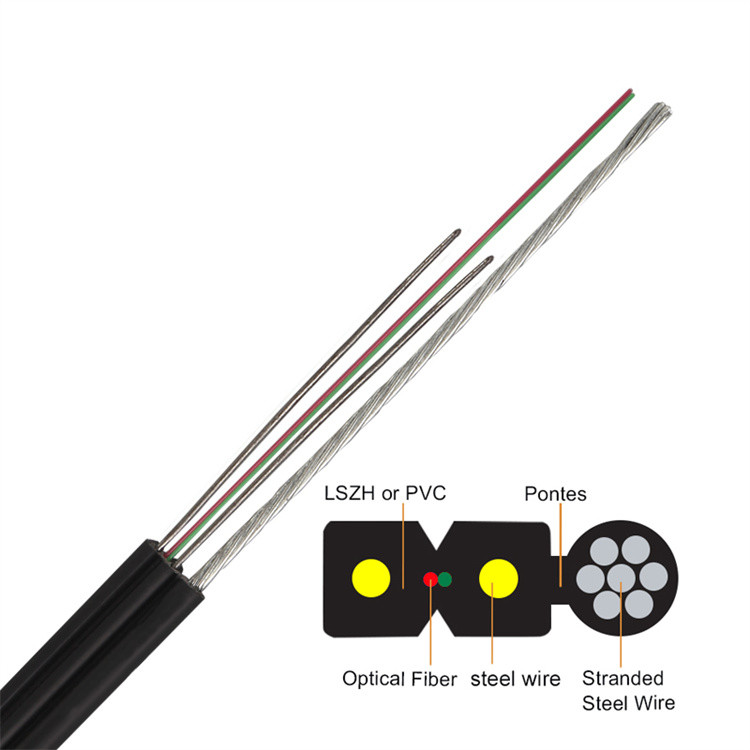
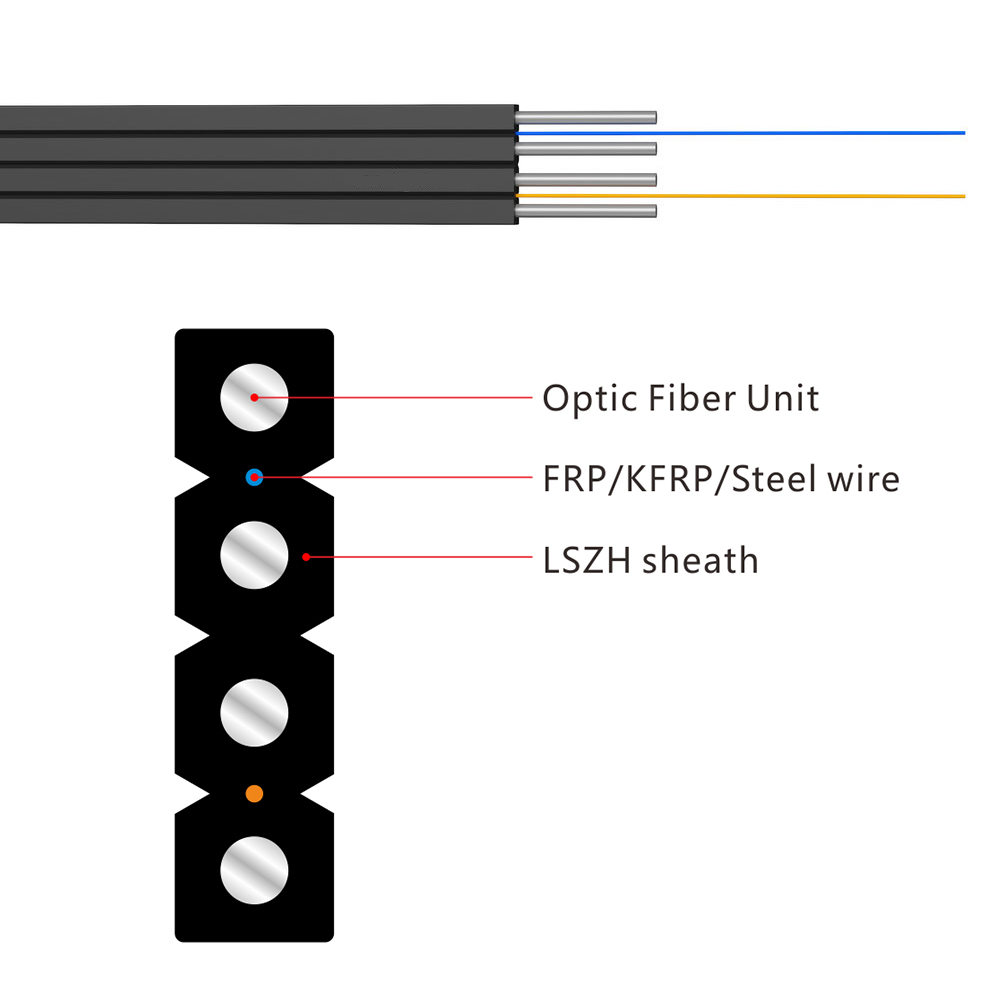
Selecting the appropriate 6 core fiber cable involves more than just counting strands. You must consider the installation environment, bend radius requirements, and tensile strength needs. For instance, underground installations require armored cables to protect against rodents and crushing forces, while indoor riser cables need fire-retardant jackets.
When evaluating suppliers, look for those who offer both standard and custom solutions. GT-Optical provides SZ stranded cables for tight-buffer applications and central tube designs for loose-tube outdoor runs. Understanding these structural differences helps you specify the exact cable needed for your project, avoiding costly retrofits.
Always verify the manufacturer's ability to provide technical documentation and traceability. A reputable supplier will provide detailed test reports for attenuation, back reflection, and mechanical performance, ensuring that the 6 core fiber you receive matches the datasheet specifications perfectly.
Ensure the supplier explicitly states compliance with ISO 9000 and relevant regional directives (like CE or RoHS if applicable). Do not rely on verbal assurances; request certificates.
Check if the factory has the machinery to produce your required cable type (e.g., ADSS, Armored, Drop). Verify their lead times for large volume orders.
Before committing to a full container load, order samples. Test the bend resistance and connector compatibility of the 6 core fiber in real-world conditions.
Prefer manufacturers who have exported to your region before. They will be familiar with local customs requirements and voltage/plug standards for any associated hardware.
Good communication is vital. Ensure the supplier offers technical support for splicing and termination, helping you integrate the cable into your existing network.
Confirm that the jacket materials are halogen-free if required by your building codes. This reduces toxic smoke in case of fire, enhancing overall safety.
One common issue is receiving cable with signal loss higher than specified. This often stems from poor quality control during the drawing process. Always insist on factory test reports for every batch delivered.
If the color coding of the 6 strands does not match TIA-598 standards, installation becomes error-prone. Reputable manufacturers like GT-Optical follow strict color-coding protocols to prevent cross-connection errors.
Outdoor cables may crack due to UV exposure or extreme temperatures if low-grade PVC is used. Verify that the outer jacket material is rated for the specific environmental conditions of your installation site.
Supply chain disruptions can halt projects. Work with established factories that keep stock of raw components or have diversified supply chains to mitigate risks.
Some suppliers fail to provide adequate installation guides. Ensure your partner provides comprehensive documentation to help your engineering team install the cable efficiently.
Raw material costs can vary. Transparent suppliers will communicate price changes early and offer long-term contracts to lock in rates, protecting your budget.
Fiber To The Home deployments frequently use 6 core drop cables to connect multiple residences from a single distribution point, optimizing last-mile infrastructure.
In server rooms, 6 core patch cords provide the necessary redundancy for critical connections between switches and storage arrays, ensuring minimal downtime.
For regional telecom operators, armored 6 core cables serve as robust backbone links between cell towers and exchange points, resisting harsh weather conditions.
Hybrid fiber-coaxial networks utilize 6 core fiber to distribute video and broadband signals, supporting the growing demand for high-speed internet access.
Urban infrastructure projects use distributed 6 core sensors and communication lines to monitor traffic, lighting, and public safety systems in real-time.
Factories rely on fiber optics for EMI immunity. 6 core cables connect PLCs and control systems in electrically noisy environments where copper would fail.
When evaluating potential partners for 6 core fiber supply, prioritize companies with a history of integrity and technological innovation. Shenzhen Guangtong Optical Co., Ltd stands out as a high-tech enterprise founded in 2010, specializing in research, development, and sales of fiber communication products.
We recommend choosing a supplier that offers a comprehensive range of cable types, including SZ stranded, central tube, and ADSS cables. This breadth of capability indicates a mature manufacturing process and the ability to solve diverse engineering challenges. Look for partners who value "attractive quality and standard management" as their guarantee, as this philosophy directly translates to fewer defects and smoother project execution for you.
Furthermore, consider the supplier's global reach. A company that successfully exports to America, Europe, and Southeast Asia has likely navigated complex logistics and regulatory landscapes, making them a safer bet for international procurement.
While single mode fiber refers to the glass diameter, 6 core refers to the count. A 6 core cable can contain single mode strands. The advantage of 6 cores is redundancy and capacity. You can run multiple independent networks or have backups within one jacket, whereas a single fiber offers no backup if cut.
Yes, 6 core fiber is widely used in FTTH (Fiber To The Home) applications. It is particularly useful for distributing service to multiple units from a central point or for providing redundant paths in high-reliability residential networks.
Absolutely. As a high-tech R&D focused company, GT-Optical specializes in producing various cable structures including SZ stranded, central tube, and ADSS cables to meet specific customer requirements and environmental conditions.
To ensure quality, work with suppliers who adhere to ISO 9000 standards and use materials compliant with EU directives. Request detailed test reports and consider ordering samples for independent verification before placing large orders.
Privacy statement: Your privacy is very important to Us. Our company promises not to disclose your personal information to any external company with out your explicit permission.
Fill in more information so that we can get in touch with you faster
Privacy statement: Your privacy is very important to Us. Our company promises not to disclose your personal information to any external company with out your explicit permission.