


Please Leave Us A Message
Privacy statement: Your privacy is very important to Us. Our company promises not to disclose your personal information to any external company with out your explicit permission.


Understanding the fiber optic cost per meter is fundamental for any procurement project involving high-speed data infrastructure. This metric represents the direct material expense for linear footage of optical cable, serving as the baseline for budgeting large-scale deployments.
However, the true value lies beyond the sticker price. Factors such as fiber count (e.g., 12-strand vs. 144-strand), cable type (armored, ADSS, or drop cable), and termination requirements drastically influence the final landed cost. By analyzing the cost per meter alongside total system efficiency, buyers can optimize their capital expenditure while ensuring long-term network reliability.
Guangtong Optical ensures that every meter of cable meets rigorous international standards, directly impacting your fiber optic cost per meter by reducing risk and warranty claims. Our ISO 9000-certified facility employs advanced SZ stranding and central tube technologies to guarantee consistent performance.
Every batch undergoes strict testing for attenuation, bandwidth, and mechanical strength. This ensures that the fiber optic cost per meter you pay reflects premium, defect-free product, minimizing downtime during installation.
From ADSS cables to FTTH drop cables, our automated lines ensure precise dimensions and material integrity. This efficiency allows us to offer competitive pricing without compromising on the durability required for harsh environments.
Materials comply with European Union directives and global regulations. Sourcing compliant cables prevents customs delays and legal liabilities, adding hidden value to the base fiber optic cost per meter.
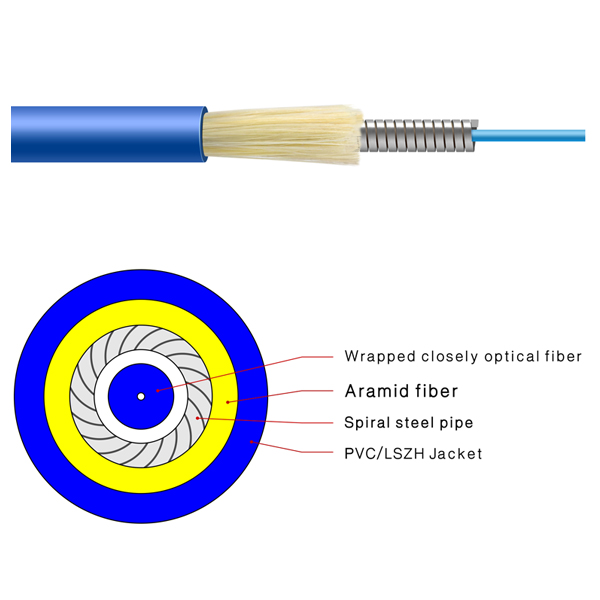
Selecting the correct cable type is critical to managing your fiber optic cost per meter effectively. Over-specifying leads to wasted budget, while under-specifying risks network failure. Buyers must evaluate environmental conditions, distance requirements, and installation methods.
| Cable Type | Best Application | Cost Consideration |
|---|---|---|
| Indoor/Outdoor Drop Cable | FTTH last-mile connections, indoor wiring | Lowest fiber optic cost per meter; flexible and easy to terminate. |
| Armored Fiber Cable | Direct burial, underground ducts | Higher upfront cost per meter, but eliminates need for conduit, lowering total project cost. |
| ADSS Cable | Aerial spans between poles | Premium pricing due to tensile strength components; ideal for long-span aerial deployments. |
| Air Blown Fiber | Future-proof duct infrastructure | Low friction design allows multiple fibers to be blown into existing ducts, saving excavation costs. |
When evaluating quotes, always ask for the total cost of ownership. A slightly higher fiber optic cost per meter for a robust armored cable may save thousands in labor and repair costs over the cable's lifespan compared to a cheaper, less durable alternative.
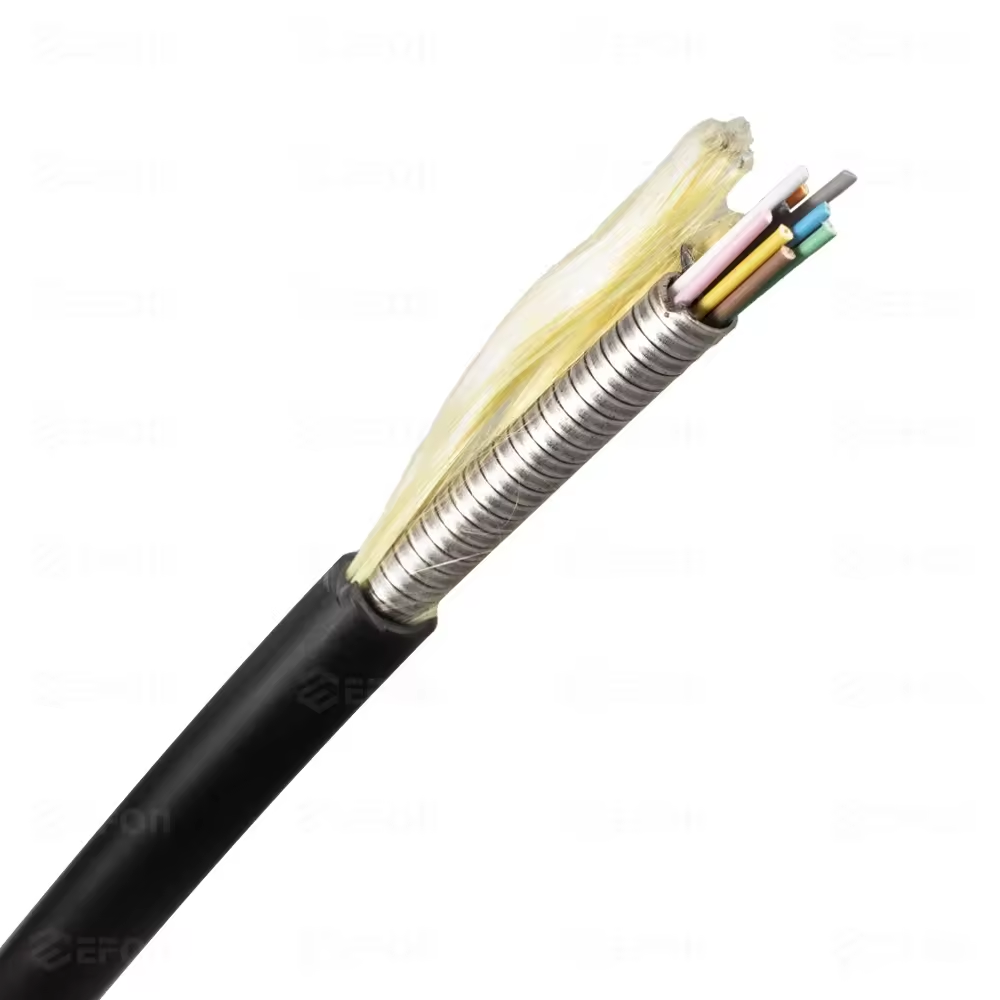
Use this checklist to validate suppliers and ensure your fiber optic cost per meter quote includes all necessary technical and logistical components. Avoid hidden fees and specification gaps by verifying these key points before placing orders.
Different industries have unique requirements that affect the optimal fiber optic cost per meter selection. Understanding these applications helps buyers specify the right cable for the job, avoiding costly mismatches.
High-density backbone networks require low-attenuation single-mode cables. Bulk purchasing reduces the fiber optic cost per meter significantly for ISP rollouts.
Pre-terminated trunk cables and high-count distribution cables streamline rack-to-rack connections, prioritizing speed of deployment over raw cable price.
Street lighting and traffic control systems use armored or microduct cables for durability. The initial investment pays off through reduced maintenance in outdoor environments.
Fiber's immunity to EMI/RFI makes it essential for factories. Armored variants protect against rodents and mechanical stress, justifying the cost premium.
Choosing the right manufacturer impacts not just the fiber optic cost per meter, but also supply chain stability and technical support. Look for partners with vertical integration and global experience.
With over a decade of experience since 2010, GT-Optical offers a comprehensive range from FTTH drop cables to ADSS and armored solutions. Their ISO 9000 certification and EU-compliant materials make them a low-risk choice for international buyers seeking reliable fiber optic cost per meter pricing.
Key Strengths: Advanced SZ stranding technology, full product line coverage, strong export history to Europe and America.
For massive projects, consider manufacturers with in-house glass preform production. These companies often achieve lower fiber optic cost per meter due to complete control over the raw material supply chain, though minimum order quantities may be higher.
Common questions from procurement professionals regarding pricing, specifications, and logistics.
The primary drivers are fiber count (strands), cable construction (armored vs. unarmored), and material quality (LSZH jackets). Single-mode fiber is generally more cost-effective than multi-mode for long distances, while higher strand counts increase complexity and price.
Yes. Purchasing larger quantities typically lowers the fiber optic cost per meter due to economies of scale in production and shipping. It also ensures color and batch consistency across large installations.
Request factory test reports including OTDR traces for attenuation and reflectance. Reputable suppliers like Guangtong Optical provide detailed QC documentation for every reel shipped, ensuring the fiber optic cost per meter reflects verified performance.
Standard stock items ship within 3-7 days. Custom lengths, colors, or specialized constructions (like specific armoring) typically require 15-25 days depending on factory capacity and order volume.
Yes, small sample lengths are available for bench testing and bend-radius verification. Samples help validate that the quoted fiber optic cost per meter corresponds to the physical quality required for your specific application.
Privacy statement: Your privacy is very important to Us. Our company promises not to disclose your personal information to any external company with out your explicit permission.
Fill in more information so that we can get in touch with you faster
Privacy statement: Your privacy is very important to Us. Our company promises not to disclose your personal information to any external company with out your explicit permission.