


Please Leave Us A Message
Privacy statement: Your privacy is very important to Us. Our company promises not to disclose your personal information to any external company with out your explicit permission.


Fiber optic mode refers to the specific path that light travels through an optical fiber core. Understanding these modes is critical for selecting the right cabling infrastructure for your network. The two primary categories are Single-Mode and Multi-Mode fibers, each serving distinct transmission needs based on distance and bandwidth requirements.
Features a tiny core (approx. 9 microns) allowing only one light path. This eliminates modal dispersion, enabling signals to travel long distances (kilometers) with high bandwidth. Ideal for telecommunications and campus backbones.
Has a larger core (50 or 62.5 microns) allowing multiple light paths. While cost-effective for short-range connections (within buildings), it suffers from modal dispersion over longer distances. Perfect for data centers and LANs.
Choosing the wrong mode can lead to signal loss, expensive upgrades, or compatibility issues with transceivers. Correct selection ensures your network scales efficiently without premature hardware replacement.
Shenzhen Guangtong Optical Co., Ltd. has been a trusted manufacturer since 2010, specializing in high-tech fiber communication products. Our facility is equipped with advanced production lines for SZ stranded cables, central tube cables, ADSS cables, and FTTH drop cables.
We adhere to ISO 9000 quality management systems, ensuring every meter of cable meets international standards. Our materials comply with European Union directives and global regulations, reducing compliance risks for importers.
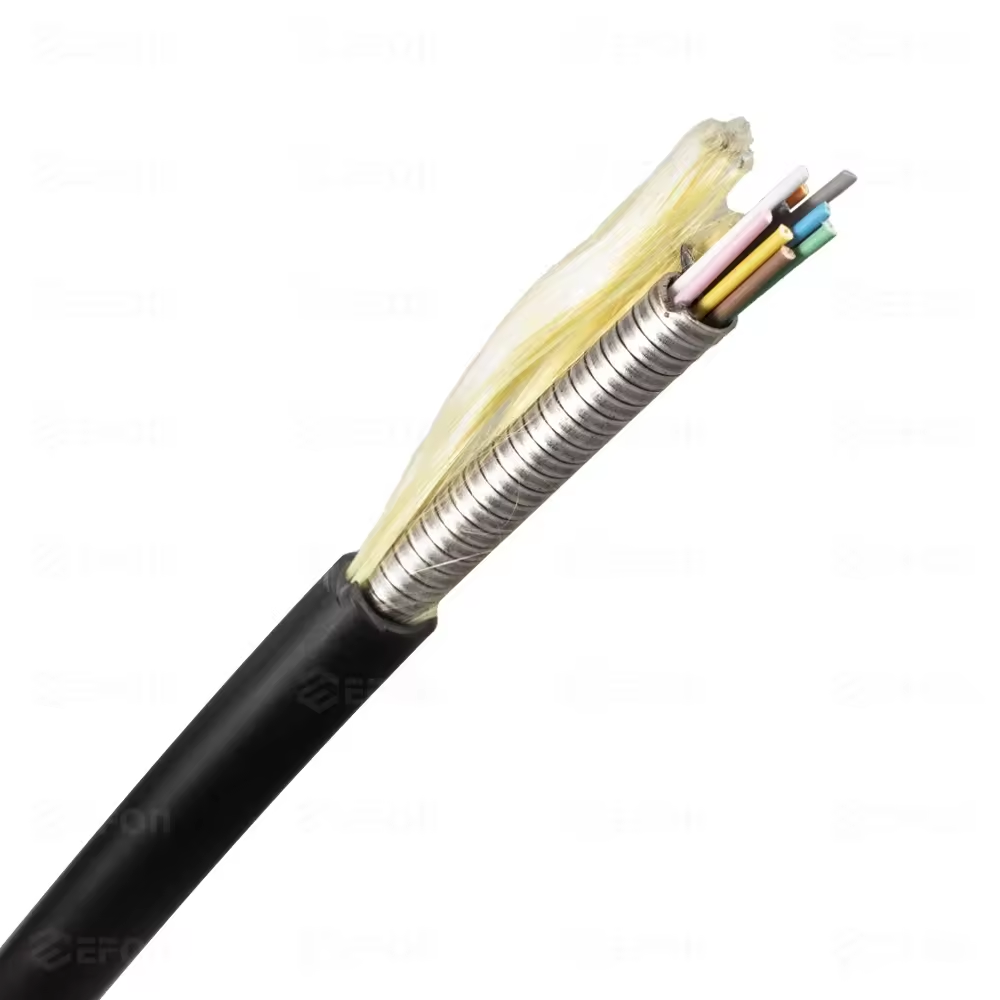
Selecting between Single-Mode and Multi-Mode fiber depends on three key factors: transmission distance, bandwidth needs, and total cost of ownership. Making the wrong choice can inflate costs due to incompatible transceivers or signal degradation.
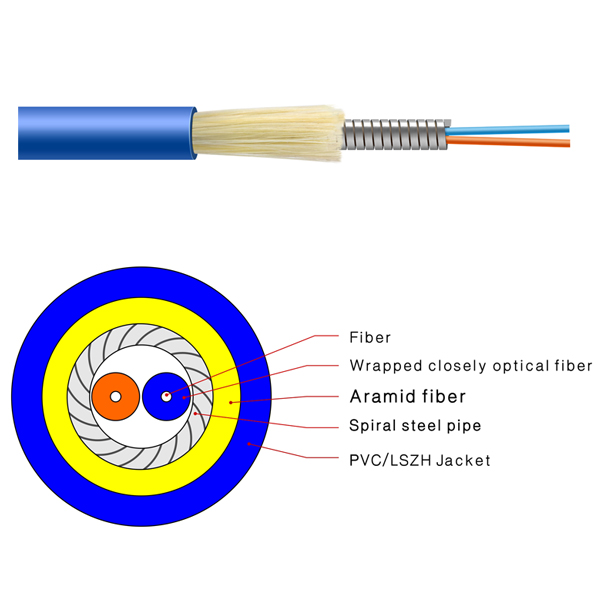
If your application requires transmitting data over 2km (e.g., campus links, city networks), Single-Mode is the only viable option. Although the fiber itself is cheaper, the transceivers are more expensive. However, the lower total cost per kilometer makes it ideal for wide-area networks.
For distances under 550m (e.g., within a data center or building floor), Multi-Mode allows the use of cheaper VCSEL lasers. The larger core makes splicing and termination easier and faster, reducing installation labor costs significantly.
Before finalizing your order, verify these critical specifications to avoid deployment failures and ensure compatibility with your existing infrastructure.
Confirm if you need OS1/OS2 (Single-Mode) or OM3/OM4/OM5 (Multi-Mode). Mismatched cores will result in zero signal transmission.
Indoor cables require LSZH (Low Smoke Zero Halogen) for fire safety. Outdoor cables need PE (Polyethylene) for UV and moisture resistance.
Ensure the cable has aramid yarn or fiberglass rods for tensile strength, especially for aerial (ADSS) or duct installations.
Verify connector polish (UPC vs APC). APC connectors have green boots and angled faces to reduce back reflection, crucial for high-speed video/data.
For tight spaces, ask for Bend-Insensitive Fiber (G.657.A1/A2) which maintains signal integrity even when curved sharply.
Request test reports (OTD traces) and compliance certificates (ISO, CE, RoHS) to pass your own quality audits.
Procurement buyers often face challenges during deployment. Addressing these common pitfalls early saves time and reduces rework costs.
Caused by dirty connectors, sharp bends, or poor splicing. Always clean connectors with lint-free wipes and use an optical power meter to test end-to-end loss before closing conduits.
If using Multi-Mode fiber for distances beyond its rated limit, different light paths arrive at different times, blurring the signal. Stick to OM4/OM5 for 10G+ speeds over 300m.
Moisture can freeze and expand, damaging the fiber. Ensure outdoor cables have gel-filled cores or dry water-blocking tapes to prevent longitudinal water travel.
Mixing UPC (blue) and APC (green) connectors causes physical damage and high return loss. Never force an APC connector into a UPC adapter.
Guangtong Optical's diverse product range supports various sectors requiring reliable, high-speed connectivity.
Long-haul backbone networks using ADSS and armored cables to connect cell towers and switching centers across cities.
High-density MPO/MTP pre-terminated trunk cables for server interconnects, supporting 40G/100G/400G speeds.
Drop cables and pigtails for Fiber-to-the-Home deployments, enabling gigabit internet access for residential users.
Ruggedized armored cables for factories and power plants, resisting EMI interference and physical stress.
Underground duct cables for traffic monitoring, surveillance cameras, and public Wi-Fi infrastructure.
Structured cabling for office buildings, connecting floors and wiring closets with centralized tube cables.
When sourcing fiber optic components, reliability is as important as price. We recommend partnering with manufacturers who offer end-to-end control over the supply chain.
Look for suppliers who produce both the fiber drawing preforms and the final cable assembly. This vertical integration, like that of Guangtong Optical, ensures material consistency and faster troubleshooting if defects arise.
The best partners provide engineering support for custom cable lengths, unique jacket colors for identification, and specialized connectors. Avoid traders who cannot answer technical questions about bend radius or attenuation coefficients.
Ensure your supplier has experience exporting to your region. They should handle proper packaging for international shipping (moisture-proof, impact-resistant crates) and provide all necessary customs documentation.
Get clarity on common technical queries regarding fiber optic selection and performance.
No, they are not directly compatible due to different core sizes and light wavelengths. You would need a mode conditioning patch cord or media converter to bridge the two, but this adds points of failure. It is best to standardize on one type per segment.
OS1 is rated for up to 10km and typically uses tight-buffered jackets for indoor use. OS2 is rated for 200km+ and usually comes in loose-tube construction for outdoor use. For most modern long-distance applications, OS2 is the preferred standard.
The jacket color indicates the bandwidth category. Orange is OM1/OM2 (legacy), Aqua is OM3/OM4 (optimized for 10G/40G/100G), and Lime Yellow is OM5 (optimized for SWDM broadband applications). Always match the color to your switch capabilities.
Yes, we provide full OEM/ODM support. You can customize cable lengths, connector types, labeling, and packaging to match your brand identity and project requirements.
Privacy statement: Your privacy is very important to Us. Our company promises not to disclose your personal information to any external company with out your explicit permission.
Fill in more information so that we can get in touch with you faster
Privacy statement: Your privacy is very important to Us. Our company promises not to disclose your personal information to any external company with out your explicit permission.