


Please Leave Us A Message
Privacy statement: Your privacy is very important to Us. Our company promises not to disclose your personal information to any external company with out your explicit permission.


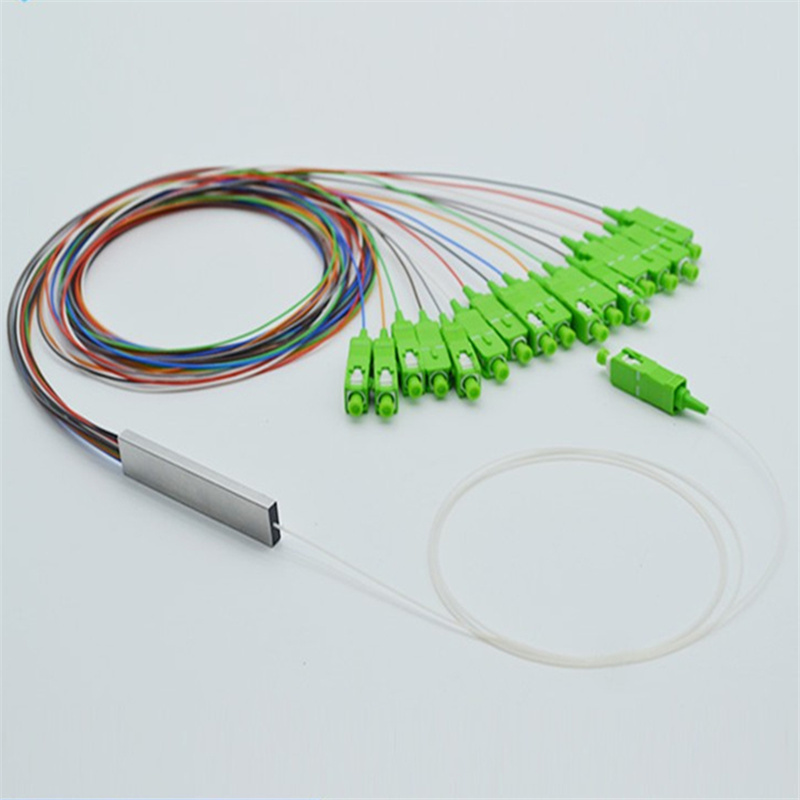
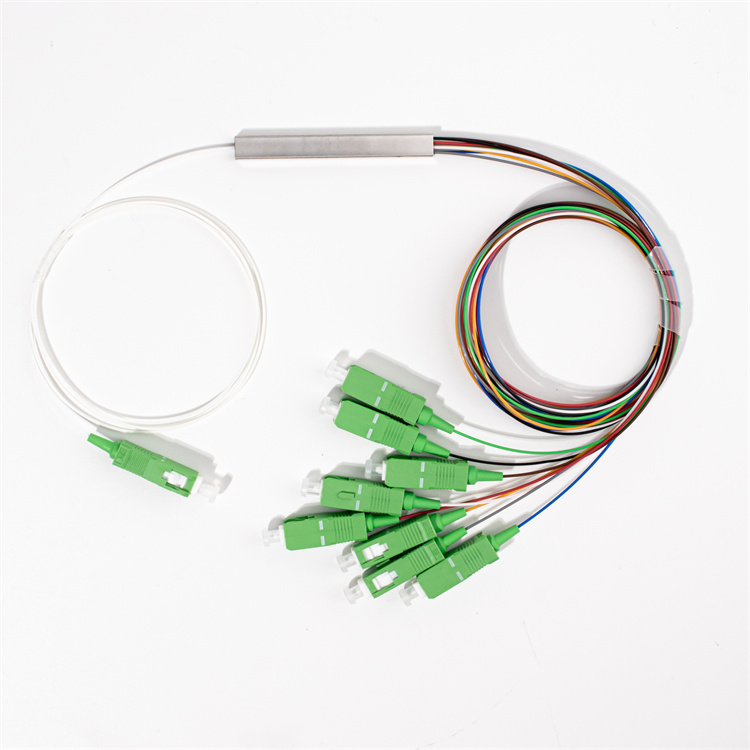
A fiber optic splitter box, also known as an Optical Distribution Terminal (ODT), is the critical junction point in a Fiber-to-the-Home (FTTH) network where optical signals are divided to serve multiple end-users. It acts as the "traffic controller" for your broadband infrastructure, ensuring that high-speed data reaches every subscriber efficiently.
For procurement specialists, these boxes represent more than just plastic enclosures. They are the physical foundation of network reliability. A well-engineered splitter box minimizes signal loss (insertion loss), protects delicate fiber splices from environmental damage, and simplifies future maintenance. Choosing the right design—whether wall-mounted, rack-mounted, or pole-mounted—directly impacts your installation speed and long-term operational costs.
Shenzhen Guangtong Optical Co., Ltd has specialized in manufacturing these essential components since 2010, ensuring that every box meets rigorous international standards for durability and optical performance.
As a high-tech enterprise established in 2010, Shenzhen Guangtong Optical Co., Ltd combines advanced R&D capabilities with strict quality management. We don't just manufacture; we engineer solutions that reduce your risk and streamline your supply chain.
Our commitment to integrity management ensures that you receive consistent, reliable products batch after batch. From our headquarters in Shenzhen, we export to America, Europe, the Middle East, Southeast Asia, and the Pacific states, serving as a trusted partner for telecom operators and distributors globally.
In the fiber optic industry, quality is not just a metric—it's a guarantee of network uptime. Our manufacturing process is controlled strictly according to the ISO 9000 quality management system, ensuring that every fiber optic splitter box meets precise specifications.
We utilize state-of-the-art SZ stranding machines, central tube cable extruders, and ADSS cable production lines. This vertical integration allows us to control raw material quality from the start, reducing defects and ensuring consistent optical performance.
All materials comply with European Union directives and international environmental regulations. Our enclosures are designed to withstand harsh outdoor conditions, including UV resistance, moisture protection, and temperature stability, ensuring longevity in diverse climates.
Every batch undergoes comprehensive testing using advanced test equipment. We verify insertion loss, return loss, and isolation parameters to ensure that your network experiences minimal signal degradation. This rigorous QC process gives you confidence in every unit delivered.
Selecting the correct splitter box requires understanding your network topology and deployment environment. The wrong choice can lead to difficult maintenance access, signal interference, or premature failure. Here is our expert guide to making the right decision.
Wall-Mounted: Ideal for indoor distribution points or exterior walls where space is limited. Look for compact designs with robust mounting brackets.
Rack-Mounted: Best for central offices or wiring closets. These units fit standard 19-inch racks and offer high density for large-scale deployments.
Pole-Mounted: Designed for outdoor aerial installations. These boxes feature weatherproof seals and sturdy hardware to withstand wind and weight loads.
Determine the split ratio (1:2, 1:4, 1:8, 1:16, 1:32, 1:64) based on your FTTH architecture. Ensure the box has sufficient core capacity to accommodate future expansion without requiring replacement.
Consider the number of input and output fibers. A flexible design allows you to mix different split ratios within the same enclosure.
Before finalizing your procurement order, use this checklist to evaluate suppliers and products. This ensures you avoid common pitfalls and secure a reliable supply chain.
When sourcing fiber optic splitter boxes, partnering with a manufacturer that offers end-to-end solutions provides significant advantages. Here is what to look for in an ideal partner.
Choose suppliers who produce their own fibers, cables, and passive components. Vertical integration like Guangtong Optical's ensures tighter quality control, faster problem resolution, and better pricing stability.
Your supplier should have experience shipping to your continent. Proven track records in America, Europe, and Southeast Asia mean they understand packaging requirements, documentation, and delivery timelines for your market.
Look for OEM/ODM services. The ability to customize labeling, connector types, and enclosure colors helps you maintain brand consistency and simplify inventory management for your specific projects.
Fiber optic splitter boxes are versatile components used across various telecommunications scenarios. Understanding these applications helps you select the right product for your specific use case.
The primary application for splitter boxes is Fiber-to-the-Home networks. They serve as the critical node between the main feeder cable and individual drop cables, distributing bandwidth to residential subscribers efficiently.
Beyond internet, these boxes support hybrid fiber-coaxial (HFC) networks and dedicated data connections for businesses. Their low-loss characteristics ensure high-quality signal transmission for video and data services.
Large organizations use splitter boxes to distribute fiber connectivity across multiple buildings. Rack-mounted units in server rooms provide centralized management and easy scalability for growing network demands.
Major telecom providers rely on standardized splitter boxes for their wide-area networks. These units must meet strict carrier-grade specifications for reliability, environmental sealing, and long-term performance.
Procuring fiber optic components often involves navigating technical complexities and logistical challenges. Here are common issues buyers face and how to resolve them.
Problem: Signal strength drops significantly after passing through the splitter, affecting user experience.
Solution: Ensure you are purchasing PLC (Planar Lightwave Circuit) splitters rather than FBT (Fused Biconical Taper) for higher split ratios. Verify that the supplier tests each port for insertion loss and provides test reports. Guangtong Optical uses advanced PLC technology to minimize signal loss.
Problem: Outdoor splitter boxes crack, fade, or allow moisture ingress after a few years.
Solution: Specify high-quality PC (Polycarbonate) or ABS materials with UV stabilizers. Check for IP65 or higher rating for outdoor units. Request material certificates to verify composition. Avoid cheap alternatives that degrade quickly in sun exposure.
Problem: Inconsistent lead times disrupt project schedules and installation plans.
Solution: Partner with manufacturers who have strong production capacity and raw material inventory. Guangtong Optical maintains stock of common models and has streamlined production lines to ensure timely delivery. Establish clear communication channels for order tracking.
Problem: Connector types or fiber counts don't match existing infrastructure.
Solution: Clearly specify connector types (SC, LC, FC) and fiber counts during inquiry. Work with suppliers who offer customization options. Always request samples to verify compatibility before placing bulk orders.
Privacy statement: Your privacy is very important to Us. Our company promises not to disclose your personal information to any external company with out your explicit permission.
Fill in more information so that we can get in touch with you faster
Privacy statement: Your privacy is very important to Us. Our company promises not to disclose your personal information to any external company with out your explicit permission.