


Please Leave Us A Message
Privacy statement: Your privacy is very important to Us. Our company promises not to disclose your personal information to any external company with out your explicit permission.


Underground fiber optic cabling is the backbone of modern telecommunications infrastructure, designed to protect sensitive optical signals from environmental hazards and physical damage. Unlike aerial lines that hang exposed to wind and ice, direct-buried fiber optic cables are engineered with specialized sheathing and armor to withstand soil pressure, moisture, and rodent attacks.
For procurement managers, choosing the right underground solution means balancing durability with cost-efficiency. Whether you are deploying a metropolitan area network or a last-mile FTTH connection, understanding the difference between direct burial, micro-duct, and ductible cables is critical to ensuring long-term reliability and minimizing maintenance costs.
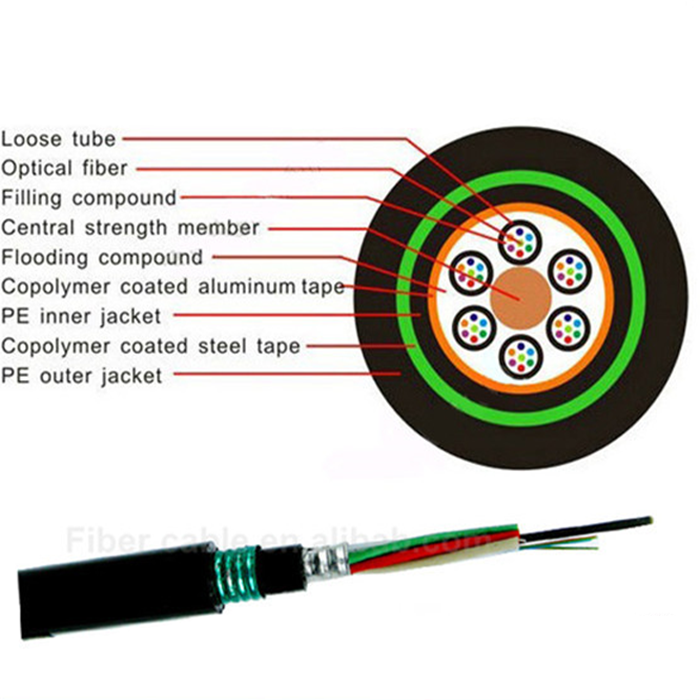
At Shenzhen Guangtong Optical Co., Ltd, our underground fiber optic cables are manufactured under strict ISO 9000 quality management systems. This ensures that every batch meets international standards for tensile strength, attenuation, and environmental resistance.
Why this matters to you: Consistent manufacturing reduces the risk of field failures. Our advanced SZ stranding and central tube technologies ensure uniform buffer protection, which is vital for cables subjected to the high mechanical stress of underground installation.
We utilize high-density polyethylene (HDPE) outer jackets that comply with European Union directives, providing superior resistance to UV radiation (during storage), moisture ingress, and chemical corrosion from soil acids.
Selecting the correct fiber optic cable for underground deployment depends heavily on your installation method. A cable suitable for direct burial may not be ideal for micro-duct blowing, and vice versa.
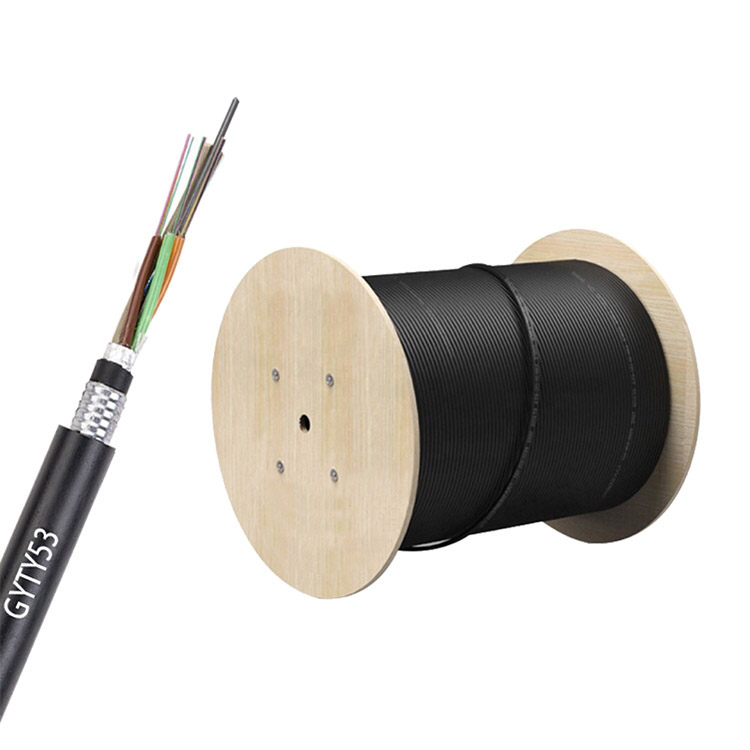
Direct Burial: Look for cables with armored armor (steel tape or corrugated steel) or rodent-resistant coatings. These provide immediate protection against digging animals and sharp rocks without the need for additional conduit.
Duct Installation: If you are pulling cable through existing conduits, prioritize low-friction sheaths and gel-filled cores to prevent damage during the pull and block moisture ingress.
Air Blowing: For rapid last-mile deployments, air-blown fiber solutions offer flexibility. These lightweight micro-cables are designed to be blown into micro-ducts using compressed air, significantly reducing labor time and installation costs.
Before finalizing your order, verify these critical specifications to avoid costly site changes or compatibility issues.
The "Last Mile" connection from the street cabinet to the customer's home or business. We supply drop cables and distribution cables that balance flexibility for indoor entry with durability for outdoor underground runs.
High-capacity backbones connecting data centers and exchange points within a city. Our central tube armored cables support high fiber counts (up to 288+ fibers) and provide robust protection against urban construction stresses.
Service providers rely on our ADSS (All-Dielectric Self-Supporting) and air-blown fiber solutions. ADSS cables eliminate the need for separate support wires, while air-blown systems allow for easy upgrades by simply blowing new cables into existing ducts.
When sourcing underground fiber optics, reliability and supply chain stability are paramount. Shenzhen Guangtong Optical Co., Ltd offers distinct advantages for B2B buyers:
Direct burial cables are designed to be buried directly in the ground without a protective conduit. They typically feature a thicker outer jacket and often include steel armor or rodent-resistant layers to withstand soil pressure and digging animals. Ductible cables, on the other hand, are designed to be pulled through existing pipes or conduits. They have a smoother, lower-friction jacket but lack the heavy armor, making them lighter and easier to install in congested underground pathways.
Rodents can easily chew through standard plastic cable jackets. To prevent this, use cables specifically rated as "rodent-resistant." These cables usually incorporate a layer of aramid yarn (Kevlar) or a specialized hard plastic coating beneath the outer jacket. In highly active areas, steel-armored cables provide the most robust physical barrier against gnawing.
For most underground long-distance applications, G.652.D Single-Mode Fiber is the standard choice due to its low attenuation and cost-effectiveness over long distances. However, if your underground route involves many tight bends (such as in dense urban manholes), G.657.A or G.657.B bend-insensitive fiber is recommended to prevent signal loss at tight radii.
Yes. As a manufacturer with dedicated R&D capabilities, we can customize cable structures, colors, and markings to meet specific project requirements. Whether you need a unique armoring configuration for rocky terrain or specific connector pre-termination for rapid deployment, our engineering team can work with your specifications.
Privacy statement: Your privacy is very important to Us. Our company promises not to disclose your personal information to any external company with out your explicit permission.
Fill in more information so that we can get in touch with you faster
Privacy statement: Your privacy is very important to Us. Our company promises not to disclose your personal information to any external company with out your explicit permission.