


Please Leave Us A Message
Privacy statement: Your privacy is very important to Us. Our company promises not to disclose your personal information to any external company with out your explicit permission.


A Fiber Reinforced Plastic (FRP) duct rodder is a high-strength, lightweight pulling guide designed specifically for the installation of fiber optic cables within underground conduits. Unlike traditional steel fish tapes or metal rod pullers, an FRP rodder combines exceptional tensile strength with non-conductive properties, making it the preferred tool for modern telecommunications infrastructure projects.
For procurement managers and network engineers, understanding the specific advantages of FRP material is crucial. The primary benefit lies in its resistance to corrosion and electrical interference, which significantly reduces downtime risks in complex urban environments. Furthermore, the flexibility of FRP rodders allows them to navigate tight bends in duct networks that would typically jam rigid steel alternatives.
Key Buyer Benefit: By choosing FRP duct rodder solutions, you minimize cable damage during installation, reduce labor costs associated with difficult pulls, and ensure compliance with safety standards regarding electrical conductivity in live utility corridors.
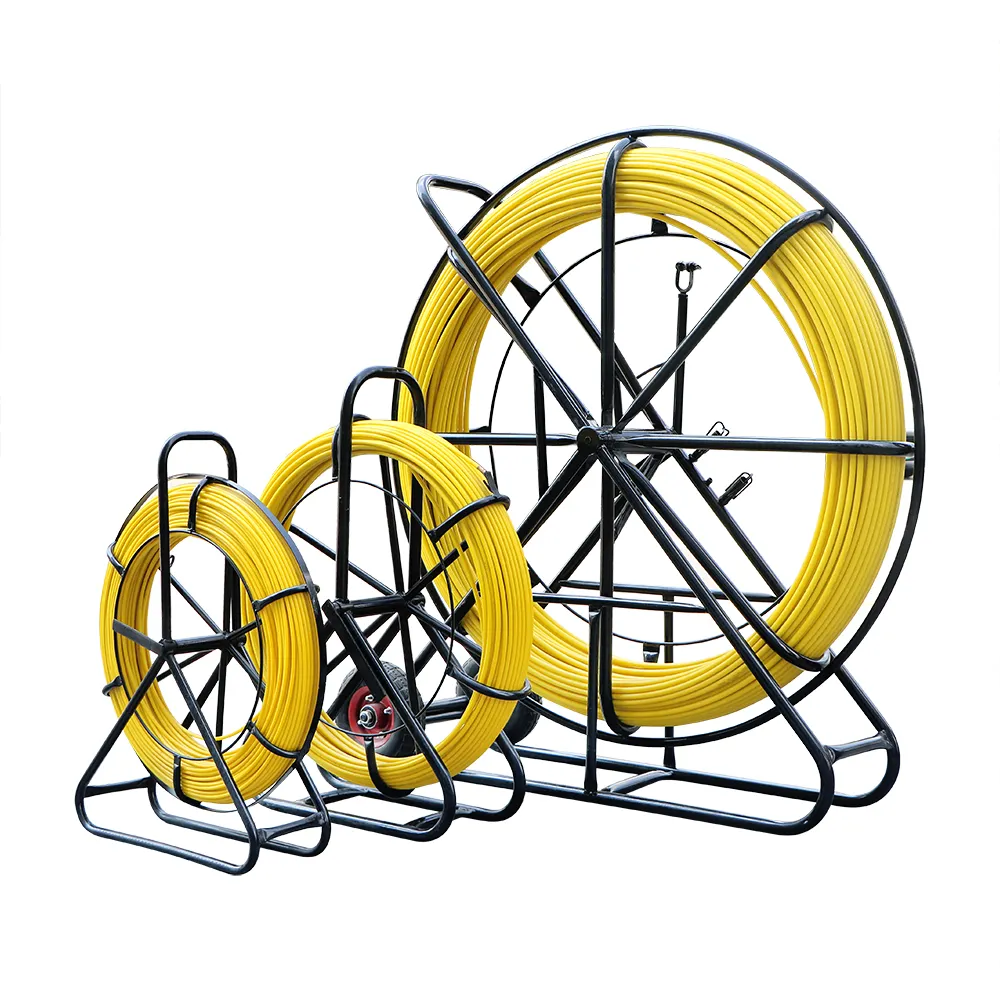
At Shenzhen Guangtong Optical Co., Ltd, our manufacturing process for FRP duct rodder components adheres to rigorous quality control protocols derived from our ISO 9000 certified production environment. While our core expertise lies in fiber optic cables and communication products, our commitment to material integrity ensures that every component we supply meets international performance benchmarks.
We utilize high-grade fiberglass reinforcement embedded in a thermoplastic matrix. This composite structure provides superior tensile strength-to-weight ratio compared to steel, ensuring the rodder can withstand high pulling tensions without permanent deformation.
Our production facilities employ advanced testing equipment to verify dimensional accuracy and mechanical properties. Each batch undergoes strict inspection to guarantee consistent performance across various conduit types, from micro-ducts to large-diameter mains.
Materials comply with European Union directives and relevant international regulations. The non-conductive nature of our FRP products ensures operator safety when working near live electrical lines or in electrified duct systems.
With years of experience exporting to America, Europe, the Middle East, Southeast Asia, and Pacific states, our manufacturing processes are aligned with diverse international market requirements and logistical demands.
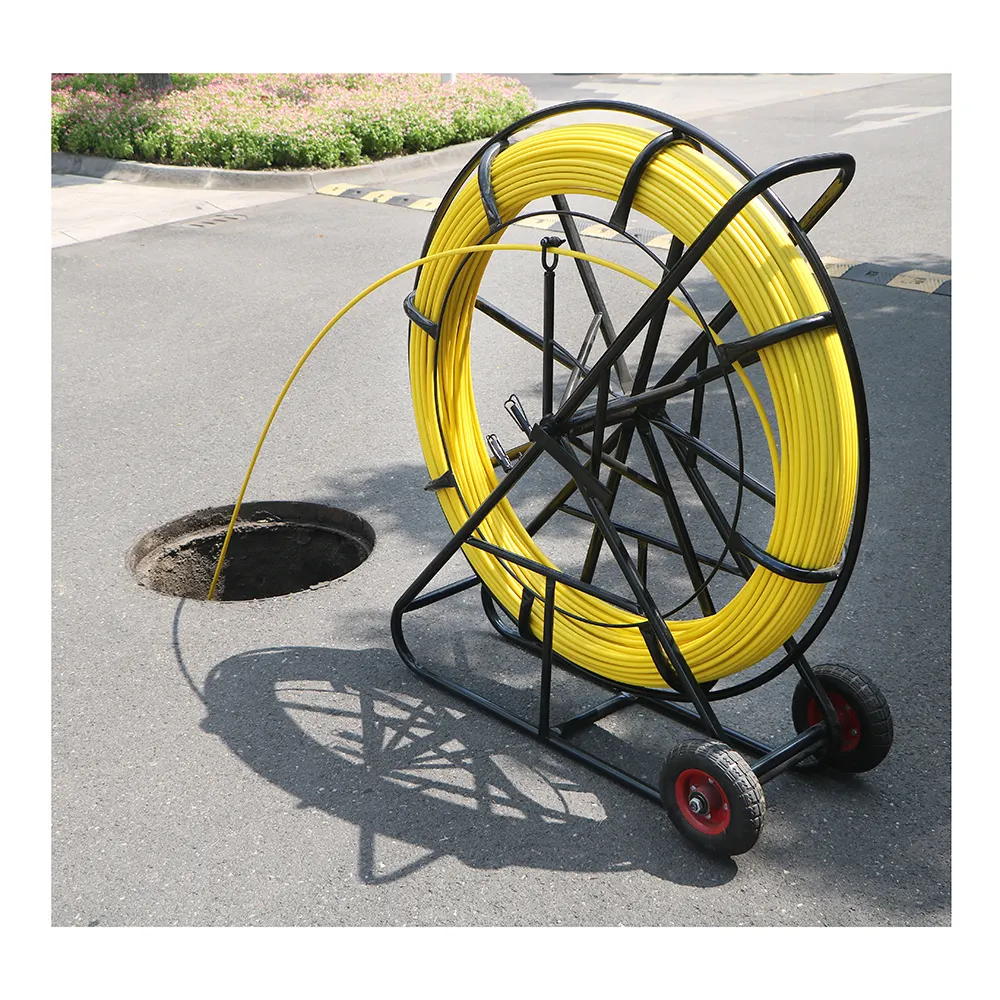
Selecting the optimal FRP duct rodder requires matching the tool's specifications to your specific conduit network characteristics. The wrong choice can lead to installation failures, increased labor time, and potential damage to both the rodder and the existing infrastructure.
The rodder diameter must be appropriately sized for the target duct. A general rule is that the rodder should occupy no more than 75% of the duct's cross-sectional area to allow sufficient space for cable passage and lubrication. Common sizes range from 6mm to 20mm, depending on whether you are installing into micro-ducts or standard sub-ducts.
Consider the length of the pull sections in your network. Longer rodders reduce the number of splices required, minimizing weak points. However, excessive length can introduce handling challenges. Look for rodders that offer a balance between reach and manageable flexibility for navigating S-bends.
Ensure compatibility with your existing pulling equipment. Standardized connectors such as eye-and-loop or universal coupling systems allow for quick changes and interoperability with various winches and pulling machines.
Use this checklist to evaluate suppliers and product specifications before finalizing your purchase order. This framework helps mitigate risk and ensures you receive products that deliver long-term value.
Procurement teams often encounter specific challenges when sourcing FRP duct rodder products. Understanding these pitfalls in advance allows you to negotiate better terms and avoid costly project delays.
The Problem: Low-quality manufacturing can result in variations in rodder diameter along its length. This causes the rodder to catch on conduit joints or bends, leading to installation failure.
The Solution: Request samples for physical testing before bulk ordering. Specify maximum tolerance limits in your contract and require pre-shipment inspection reports verifying dimensional consistency.
The Problem: Some suppliers may under-specify the fiberglass content or resin quality, resulting in rodbers that stretch or break during high-tension pulls, leaving the tool stranded inside the duct.
The Solution: Demand third-party test certificates for tensile strength. Choose suppliers like GT-Optical who operate under ISO 9000 frameworks, ensuring systematic quality control rather than ad-hoc production.
The Problem: The connection point between the rodder and the pulling grip is a critical stress point. Weak connectors can detach during operation, causing significant downtime.
The Solution: Inspect connector attachment methods. Mechanical interlocks combined with adhesive bonding offer superior reliability compared to glue-only attachments. Ensure connectors are compatible with standard industry gripping tools.
The Problem: Generic traders may not provide technical guidance on rodder selection, leading to mismatched specifications for your specific conduit network geometry.
The Solution: Partner with manufacturers who have engineering capabilities. Companies with deep industry experience, such as those specializing in fiber optic communications, can offer valuable consultation on optimal tool selection.
When evaluating potential suppliers for FRP duct rodder and related fiber optic installation tools, prioritize partners who demonstrate integrated manufacturing capabilities, global experience, and a strong commitment to quality management.
Look for suppliers who manufacture their own materials rather than trading companies sourcing from multiple factories. Integrated manufacturers maintain tighter control over raw material quality, production consistency, and pricing transparency.
Why It Matters: Direct manufacturing relationships reduce lead times, improve communication, and provide greater accountability for product performance.
Verify that the supplier operates under recognized quality management standards such as ISO 9000. This certification indicates systematic processes for quality control, continuous improvement, and customer satisfaction monitoring.
Why It Matters: Certified suppliers are less likely to experience quality fluctuations between orders, ensuring consistent performance across your entire project portfolio.
Choose suppliers with a proven track record of exporting to your region. Experience in international markets demonstrates familiarity with diverse regulatory requirements, packaging standards, and logistics challenges.
Why It Matters: Experienced exporters can navigate customs clearance, provide appropriate documentation, and ensure products arrive in optimal condition regardless of destination.
Prioritize suppliers whose core business includes fiber optic communications products. Companies with deep domain knowledge understand the complete installation ecosystem and can provide informed recommendations.
Why It Matters: Technical experts can help you select the right specifications for your specific application, avoiding over-specification costs or under-performance risks.
Addressing common procurement questions helps streamline your purchasing process and ensures all stakeholders have accurate information about FRP duct rodder specifications and applications.
FRP duct rodder is made from fiberglass reinforced plastic, offering non-conductive properties, higher tensile strength-to-weight ratio, and better corrosion resistance compared to steel fish tape. Steel fish tapes are conductive, heavier, and more prone to kinking in tight bends. FRP rodders are generally preferred for long-distance underground conduit installations where electrical safety and durability are priorities.
Yes, FRP duct rodder is fully compatible with PVC, HDPE, and other plastic conduit materials. The non-abrasive surface of FRP protects the interior walls of plastic conduits from damage during pulling operations. Always verify that the rodder diameter is appropriately sized for your specific conduit inner diameter to ensure smooth passage.
With proper handling and storage, an FRP duct rodder can last for hundreds of installation cycles. The actual lifespan depends on factors such as pulling tension applied, frequency of use, exposure to UV radiation, and storage conditions. Avoid dragging rodders across abrasive surfaces and store them in shaded, dry environments to maximize service life.
Yes, one of the primary advantages of FRP duct rodder is its excellent dielectric (non-conductive) properties. This makes it significantly safer than metal alternatives when working in conduits that may contain or be adjacent to live electrical wires. However, always follow local safety protocols and verify product specifications for voltage resistance ratings.
Select a rodder diameter that occupies approximately 70-75% of your conduit's internal cross-sectional area. This provides sufficient clearance for cable passage while maintaining adequate pushing/pulling force transmission. For micro-ducts (typically 3-10mm ID), use correspondingly small diameter rodders. Consult with your supplier for specific recommendations based on your conduit inventory.
Standard packaging typically involves cardboard cores with protective wrapping to prevent damage during transit. For international shipments, we can provide customized packaging solutions including wooden crates for bulk orders, moisture-resistant barriers, and clear labeling compliant with import regulations. Our extensive export experience ensures all documentation and packaging meet destination country requirements.
Privacy statement: Your privacy is very important to Us. Our company promises not to disclose your personal information to any external company with out your explicit permission.
Fill in more information so that we can get in touch with you faster
Privacy statement: Your privacy is very important to Us. Our company promises not to disclose your personal information to any external company with out your explicit permission.