


Please Leave Us A Message
Privacy statement: Your privacy is very important to Us. Our company promises not to disclose your personal information to any external company with out your explicit permission.


HDPE microduct pipe is a high-density polyethylene conduit specifically designed to protect and house fiber optic cables within larger telecommunications infrastructure. Unlike standard drainage pipes, these microducts are engineered with precise internal dimensions to facilitate the installation of tight-buffered fibers and loose tubes.
For procurement teams managing large-scale network deployments, HDPE microduct pipes offer a critical solution for maximizing cable density in existing conduits. By utilizing air-blown or micro-nerve pulling techniques, these pipes significantly reduce installation time and labor costs compared to traditional single-cable methods.
The material's inherent durability ensures that your fiber optic investments are protected against environmental stressors, including moisture ingress, chemical corrosion, and soil pressure, guaranteeing long-term signal integrity for FTTH (Fiber to the Home) and metropolitan area networks.
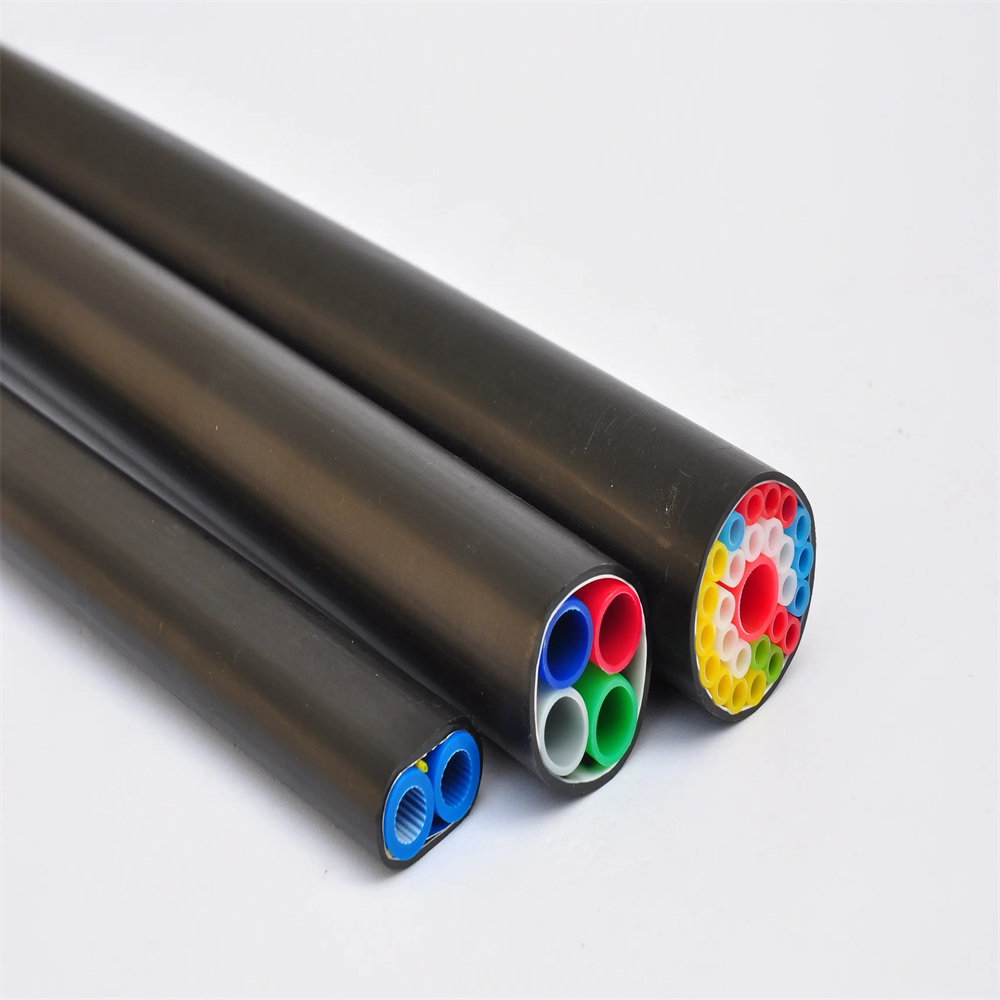
Shenzhen Guangtong Optical Co., Ltd employs rigorous quality management systems to ensure every meter of HDPE microduct pipe meets international standards. Our production facilities utilize advanced extrusion technology combined with real-time monitoring to maintain consistent wall thickness and smooth inner surfaces.
All our microducts are manufactured under strict ISO 9000 quality management protocols. This certification guarantees that our processes for raw material selection, extrusion, testing, and packaging are standardized and continuously improved, reducing variability in your supply chain.
Our materials comply with European Union directives and global environmental regulations. We prioritize non-toxic, recyclable HDPE compounds that ensure safety during installation and disposal, helping you meet corporate sustainability goals and regulatory requirements in export markets.
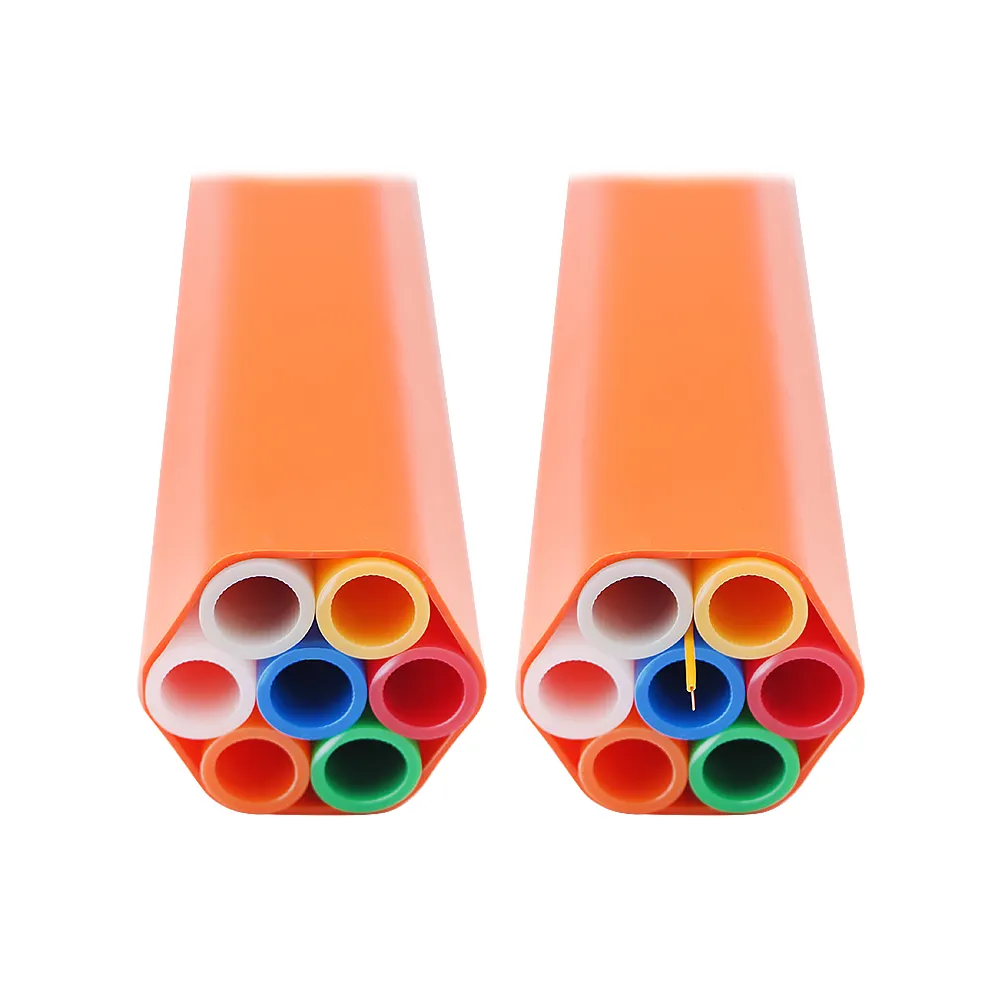
Selecting the correct HDPE microduct pipe specifications is crucial for optimizing cable capacity and installation efficiency. Buyers must evaluate internal diameter, burst strength, and friction coefficients to match their specific network architecture needs.
Use this checklist to evaluate potential suppliers and ensure your HDPE microduct pipe orders meet technical and commercial expectations.
HDPE microduct pipes are versatile components used across various telecommunications sectors. Their ability to aggregate multiple fiber strands makes them indispensable in modern network expansion projects.
Essential for Fiber-to-the-Home networks, allowing operators to install many individual fiber connections within a single main duct, reducing civil engineering costs.
Used in structured cabling systems to organize and protect high-density fiber bundles between racks and distribution frames, ensuring efficient airflow and cable management.
Deployed in city manholes and underground pathways to support smart city initiatives, providing durable protection for sensor networks and communication lines.
When sourcing HDPE microduct pipe, partnering with a specialized manufacturer like Shenzhen Guangtong Optical Co., Ltd offers distinct advantages over general trading companies.
As a high-tech company founded in 2010, we control the entire process from raw material research to final product sales. This vertical integration ensures faster response times and better cost control for your projects.
Our products are exported to America, Europe, the Middle East, Southeast Asia, and Pacific states. We understand international shipping logistics and compliance requirements, simplifying your procurement workflow.
We adhere to a business philosophy of "integrity management as the basic." This means transparent pricing, honest communication about lead times, and reliable quality assurance, building long-term trust with our partners.
Our facility includes advanced test equipment for various fiber cables and ducts, ensuring that every batch undergoes rigorous performance verification before shipment, minimizing risk for your end-users.
HDPE microduct pipes are designed for a long service life, typically exceeding 50 years in underground installations. The material is resistant to corrosion, chemicals, and environmental stress cracking, making it a durable choice for permanent telecom infrastructure.
Yes, one of the primary advantages of HDPE microducts is their ability to be blown into existing sub-ducts or spare conduits. This allows for network upgrades without the need for expensive new civil excavation, significantly lowering the total cost of ownership.
Standard colors include white, blue, and orange, but custom colors can often be arranged to meet specific project coding requirements. Color-coding helps in identifying different fiber groups or purposes within the same duct system.
Yes, we encourage buyers to request samples for testing before placing bulk orders. This allows you to verify the material quality, flexibility, and dimensional accuracy firsthand, ensuring the product meets your specific engineering standards.
Privacy statement: Your privacy is very important to Us. Our company promises not to disclose your personal information to any external company with out your explicit permission.
Fill in more information so that we can get in touch with you faster
Privacy statement: Your privacy is very important to Us. Our company promises not to disclose your personal information to any external company with out your explicit permission.