


Please Leave Us A Message
Privacy statement: Your privacy is very important to Us. Our company promises not to disclose your personal information to any external company with out your explicit permission.


HDPE micro duct pipe is a high-density polyethylene conduit designed specifically for protecting and housing optical fiber cables in telecommunications infrastructure. These pipes provide a robust, flexible pathway for fiber optic cabling, ensuring long-term durability against environmental stressors and physical damage.
For network engineers and procurement specialists, understanding the core properties of HDPE micro ducts is essential for selecting the right solution for FTTH (Fiber to the Home), metropolitan area networks, and data center interconnects. The material's inherent resistance to corrosion, chemicals, and moisture makes it the industry standard for underground and aerial fiber deployments.
HDPE provides exceptional impact resistance and protects delicate fiber optics from crushing forces, rodents, and harsh soil conditions.
The flexibility of HDPE allows for easy routing around corners and through tight spaces, reducing installation time and labor costs.
With a lifespan exceeding 50 years, HDPE micro ducts resist chemical degradation and UV exposure, ensuring minimal maintenance over the network's life.
At Shenzhen Guangtong Optical Co., Ltd, quality is not just an outcome; it is a foundational principle embedded in our manufacturing process. As a high-tech enterprise specializing in fiber communication products since 2010, we adhere to rigorous ISO 9000 quality management systems. This ensures that every meter of HDPE micro duct pipe meets international standards for tensile strength, dimensional accuracy, and environmental resistance.
Our commitment to integrity management and attractive quality guarantees that our products are not only compliant with European Union directives but also tailored to meet the specific demands of global markets, including America, Southeast Asia, and the Middle East. We utilize advanced production and test equipment to monitor every stage of fabrication, from raw material selection to final packaging.
Why this matters for your project: Sourcing from a manufacturer with strict ISO 9000 compliance reduces your risk of supply chain failures and product defects. It means consistent batch quality, predictable performance, and seamless integration into your existing fiber optic infrastructure projects.
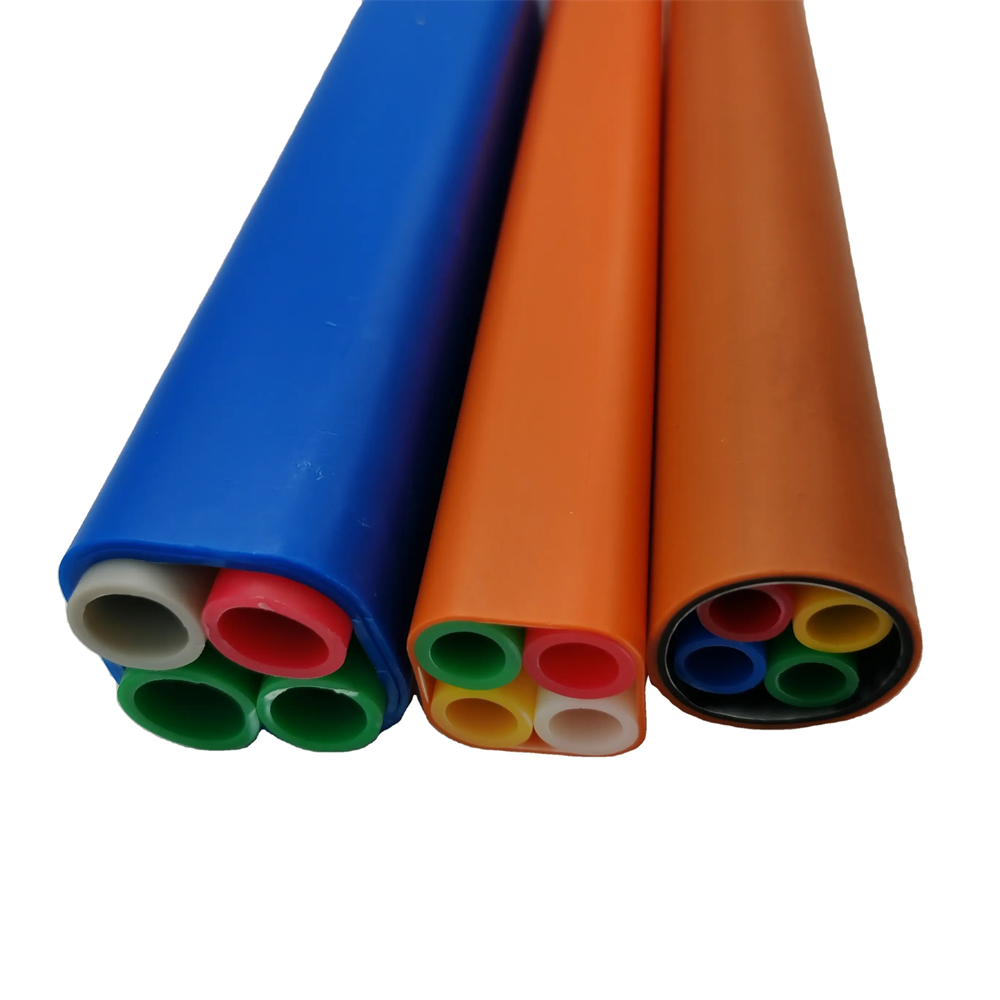
Selecting the appropriate HDPE micro duct pipe requires a detailed analysis of your network's technical requirements, environmental conditions, and installation methods. With various configurations available, making the wrong choice can lead to increased installation difficulties or compromised cable protection.
Evaluate the depth of burial and external loads. For deep trench installations or areas with heavy traffic, opt for pipes with higher pressure ratings (SN8 or SN16) to prevent deformation during backfilling.
Ensure the inner diameter accommodates the fiber bundle size plus necessary air-blown equipment clearance. Standard sizes range from single-duct to multi-duct configurations (e.g., 7-hole, 9-hole).
For air-blowing installation methods, low-friction inner walls are critical. High-quality HDPE extrusion processes ensure smooth interiors, allowing for longer blowing distances and reduced cable jacket wear.
Confirm that the pipe is made from virgin HDPE material, not recycled mixtures. Virgin material offers superior UV stability and mechanical strength, essential for long-term outdoor deployments.
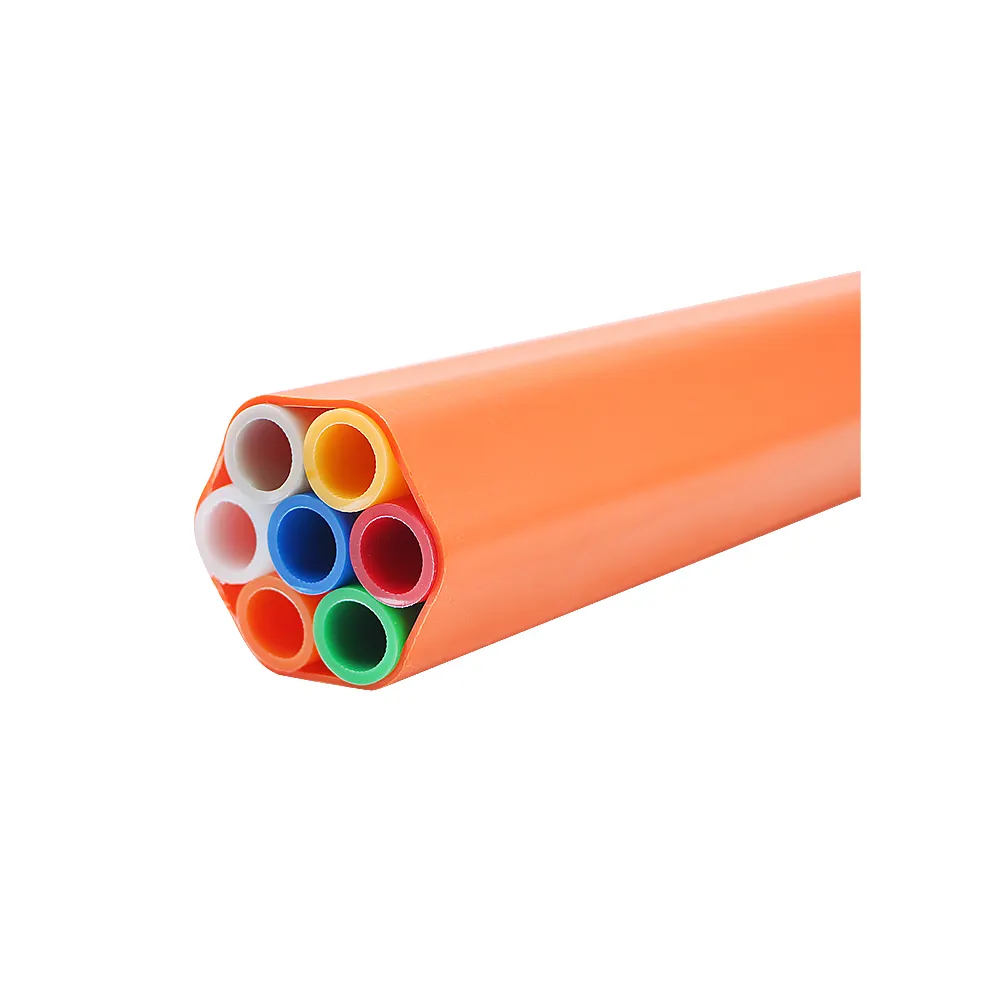
Use this comprehensive checklist to evaluate potential suppliers and ensure your HDPE micro duct pipe procurement aligns with your project's quality and delivery requirements.
HDPE micro duct pipes are versatile solutions deployed across various telecommunications sectors. Their adaptability makes them suitable for both urban and remote network expansions.
Ideal for last-mile connections, HDPE micro ducts protect fiber cables from residential premises to distribution points, ensuring reliable broadband delivery.
Used for structured cabling pathways within data centers, providing organized, high-density routes for server interconnections with minimal signal interference.
Essential for city-wide backbone infrastructure, supporting long-distance fiber runs with robust protection against urban construction and environmental factors.
When paired with support wires, HDPE ducts can be installed aerially on poles, offering a cost-effective alternative to direct burial in difficult terrains.
Chemical-resistant properties make these pipes suitable for industrial plants where corrosive substances might compromise other conduit materials.
Supports IoT sensor networks and smart lighting systems by providing durable, future-proof pathways for small-diameter fiber cables.
Navigating the market for HDPE micro duct pipes can present challenges. Here are common issues buyers face and how to mitigate them.
Variations in wall thickness can lead to weak points in the duct, increasing the risk of collapse during installation or service.
Rough inner surfaces can cause cable jamming during air-blowing installation, leading to damaged cable jackets and wasted material.
Pipes exposed to sunlight without proper stabilizers can become brittle and crack over time, compromising cable protection.
Inconsistent lead times can stall entire network deployment projects, especially for large-scale municipal contracts.
Choosing the right partner is as crucial as choosing the right product. We recommend evaluating suppliers based on technical capability, quality assurance, and global experience.
A high-tech company founded in 2010, specializing in R&D and production of fiber communication products. GT-Optical adheres to ISO 9000 systems and exports globally to the EU, US, and Asia.
Look for suppliers with dedicated testing labs and advanced extrusion equipment. This ensures consistent quality and the ability to handle complex custom orders.
Prioritize companies with a proven export history in your region. They will understand local regulatory requirements and logistics better than domestic-only producers.
Get answers to the most common questions regarding the specification, installation, and sourcing of HDPE micro duct pipes.
HDPE micro duct pipes typically have a lifespan of 50 years or more when installed correctly. Their resistance to corrosion, chemicals, and environmental stress cracking ensures long-term reliability for fiber optic networks.
Yes, HDPE micro ducts are specifically designed for air-blowing installation methods. Their smooth inner walls reduce friction, allowing for efficient and rapid deployment of fiber optic cables over long distances.
Common standards include IEC 61386, ISO 9001 for quality management, and regional regulations such as EU directives for material safety. Guangtong Optical ensures all products meet these rigorous international standards.
Yes, HDPE is recyclable and does not release harmful toxins. Its durability reduces the need for frequent replacements, minimizing waste and environmental impact over the network's lifecycle.
MOQs vary by manufacturer and customization level. For standard products, MOQs may be lower, while custom colors or dimensions might require larger batches. Contact suppliers directly for specific terms.
HDPE maintains its structural integrity across a wide temperature range. It remains flexible in cold environments and resistant to softening in heat, making it suitable for diverse climates worldwide.
Privacy statement: Your privacy is very important to Us. Our company promises not to disclose your personal information to any external company with out your explicit permission.
Fill in more information so that we can get in touch with you faster
Privacy statement: Your privacy is very important to Us. Our company promises not to disclose your personal information to any external company with out your explicit permission.