


Please Leave Us A Message
Privacy statement: Your privacy is very important to Us. Our company promises not to disclose your personal information to any external company with out your explicit permission.


HDPE microduct refers to high-density polyethylene conduits designed specifically to house optical fibers in telecommunications infrastructure. These multi-core tubes allow multiple fiber strands to be installed simultaneously through a single blow-molding process, significantly accelerating deployment timelines.
For procurement teams, choosing the right microduct for fiber optic cables reduces long-term maintenance costs and minimizes network downtime. The smooth inner walls of HDPE microducts ensure low friction during air-blowing installation, which is critical for pulling delicate fibers over long distances without damage.
Shenzhen Guangtong Optical Co., Ltd has specialized in fiber communication products since 2010, ensuring that every HDPE microduct we supply meets rigorous international standards for durability and performance in diverse environmental conditions.
At Shenzhen Guangtong Optical Co., Ltd, every HDPE microduct undergoes strict quality control measures aligned with ISO 9000 quality management systems. Our advanced production lines utilize precision extrusion technology to ensure consistent wall thickness and dimensional accuracy across all batches.
Materials comply with European Union directives and global regulatory standards, ensuring your fiber optic microduct projects meet international compliance requirements. This commitment to quality reduces your risk of material failure and ensures reliable performance in harsh environments.
Our rigorous testing protocols verify tensile strength, impact resistance, and temperature tolerance, giving you confidence that our microduct for fiber optic cables will perform reliably throughout the lifespan of your network infrastructure.
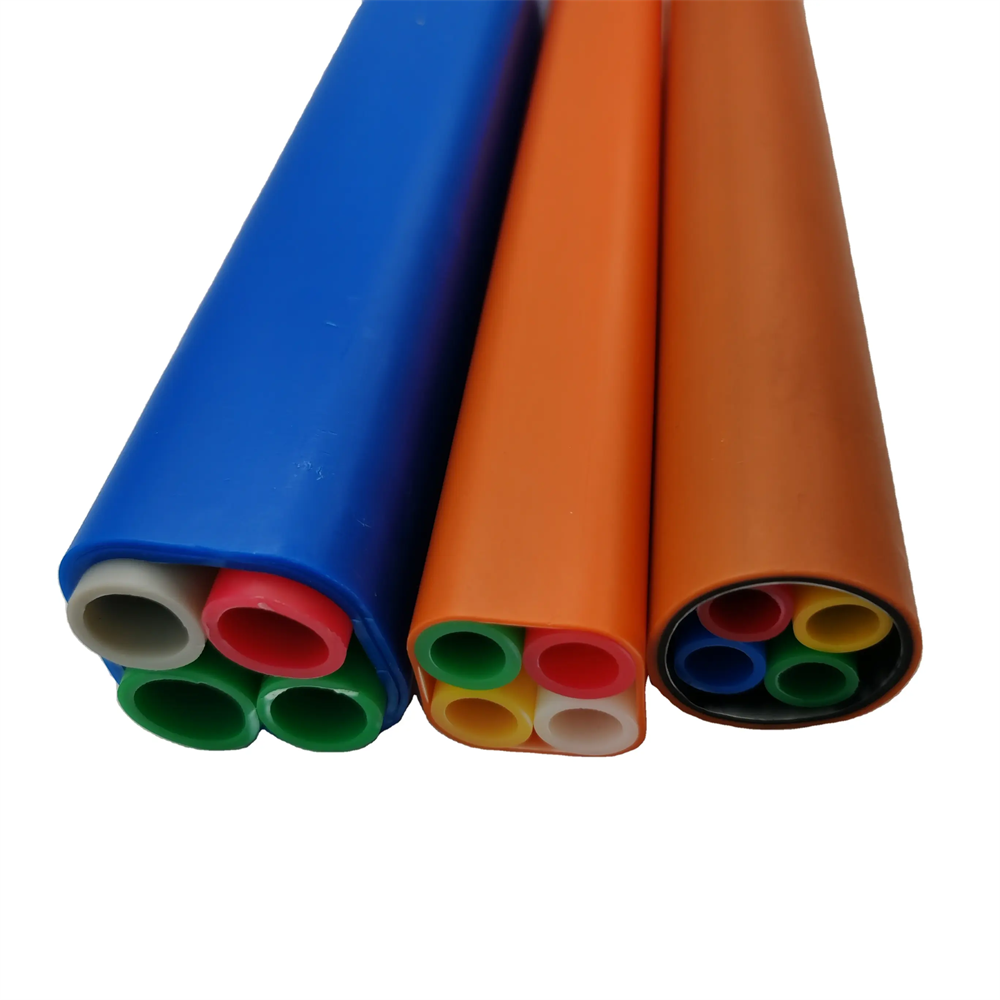
Selecting the appropriate HDPE microduct requires evaluating several key factors including core count, diameter, and installation method. For air-blowing applications, prioritize microducts with ultra-smooth inner liners to minimize friction coefficients and reduce installation force.
Consider your project's future expansion needs. Choosing a multi-core microduct with spare capacity now can save significant costs compared to retrofitting later. Evaluate environmental conditions such as soil acidity, moisture levels, and temperature fluctuations to select the correct HDPE compound.
Partner with a manufacturer like GT-Optical, who provides technical support to help you optimize your microduct selection based on specific project requirements, ensuring cost-effective and efficient fiber deployment.
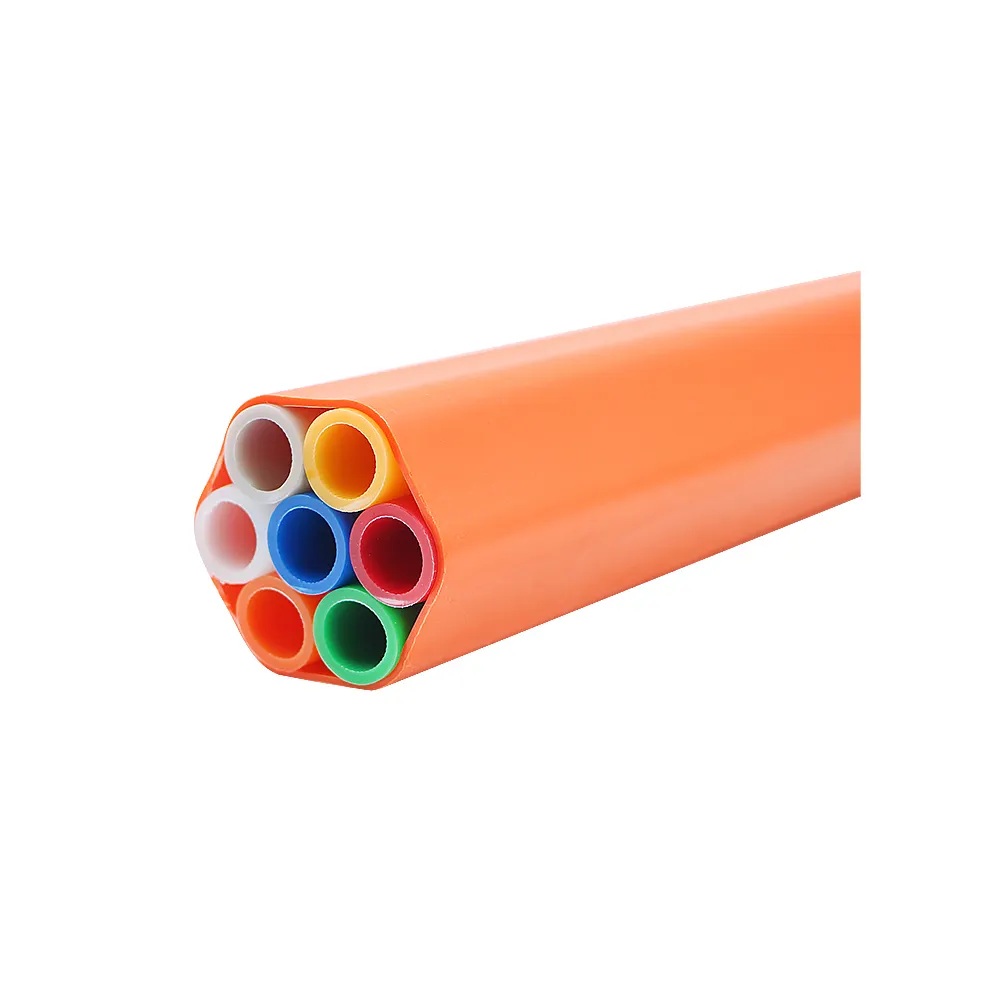
Fiber sticking often results from high friction coefficients or debris inside the HDPE microduct. Ensure your supplier uses clean-room extrusion processes and maintains smooth inner liners. Regularly inspect microduct ends for burrs or deformations before installation.
Improper backfilling materials can crush or abrade microduct for fiber optic cables. Use sand bedding around ducts and avoid rocky soil contact. Select HDPE compounds with high impact resistance ratings to withstand ground pressure and shifting.
UV exposure and chemical contamination accelerate aging. Verify that your HDPE microduct contains carbon black or UV stabilizers. Store materials away from direct sunlight and harsh chemicals until installation to preserve longevity.
Inconsistent dimensions indicate poor quality control. Work with manufacturers like GT-Optical who adhere to ISO 9000 standards and use precision extrusion equipment to maintain tight tolerances across all production batches.
Standard HDPE microduct bundles typically come in 7, 19, 37, or 61 cores, depending on fiber density requirements. GT-Optical can customize core counts to match your specific microduct for fiber optic cables deployment plans.
Yes, certain HDPE microduct designs are engineered for submerged environments. They offer excellent water resistance and structural integrity, making them suitable for marine fiber optic deployments when specified correctly.
Lead times vary based on order volume and customization. GT-Optical maintains efficient production schedules to ensure timely delivery of microduct for fiber optic cables to international destinations, supporting your project timelines.
Request mill test certificates and conduct visual inspections for surface defects. Measure outer diameter and wall thickness at multiple points. GT-Optical provides comprehensive quality documentation with every HDPE microduct shipment.
Privacy statement: Your privacy is very important to Us. Our company promises not to disclose your personal information to any external company with out your explicit permission.
Fill in more information so that we can get in touch with you faster
Privacy statement: Your privacy is very important to Us. Our company promises not to disclose your personal information to any external company with out your explicit permission.