


Please Leave Us A Message
Privacy statement: Your privacy is very important to Us. Our company promises not to disclose your personal information to any external company with out your explicit permission.


In high-speed telecommunications and data networking, reliable connectivity is paramount. An LC pigtail single mode fiber is a fundamental component designed to bridge the gap between cable assemblies and optical distribution frames. It consists of a single strand of single-mode optical fiber with an LC connector pre-installed on one end, while the other end is stripped for splicing.
The primary purpose of an LC pigtail is to facilitate the connection between the loose fibers inside a main cable and the ports on a patch panel or splice tray. By using these pigtails, technicians can efficiently terminate multiple fibers at once without handling delicate connectors during the splicing process.
Single-mode fiber (typically OS2 standard) features a small core diameter (9 microns) that allows light to travel in a straight line. This design minimizes signal attenuation and dispersion, making it the ideal choice for long-distance data transmission, including FTTH (Fiber To The Home), metro networks, and high-bandwidth data centers.
At Shenzhen Guangtong Optical Co., Ltd, we treat quality as the backbone of our operations. Our production of LC pigtail single mode fiber is governed by a strict ISO 9000 quality management system. Every step, from raw material selection to final packaging, is monitored to ensure consistent performance.
We utilize state-of-the-art testing machinery to verify insertion loss and return loss for every batch. This ensures that our pigtails meet industry standards for low signal loss and high reliability.
Our materials comply with European Union directives and international regulations. We prioritize environmental safety and durability, ensuring that our products are safe for global deployment in sensitive infrastructure projects.
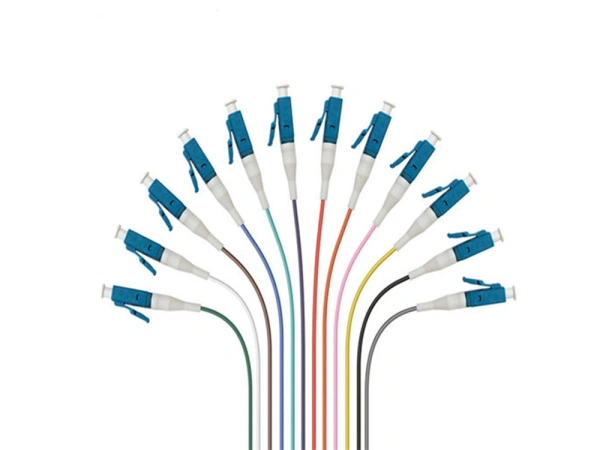
Selecting the correct fiber optic components requires attention to technical specifications and application requirements. When sourcing LC simplex pigtail single mode cables, buyers must consider several critical factors to avoid costly network failures or compatibility issues.
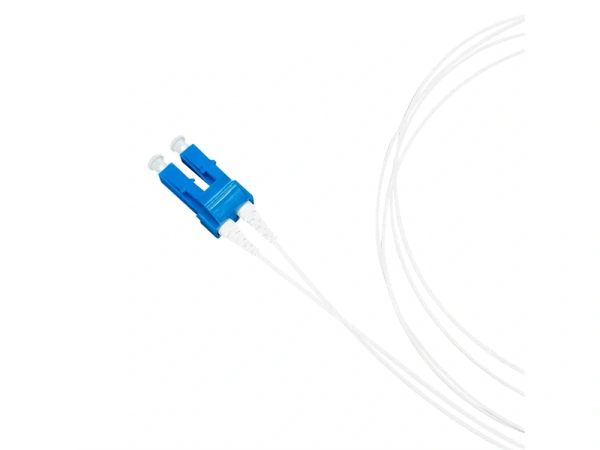
Ensure you choose the correct polish type. UPC (Ultra Physical Contact) offers typical return loss >50dB, while APC (Angled Physical Contact) provides >60dB. APC connectors have a green housing and are angled to reduce back reflection, essential for high-performance video and RF applications.
Standard pigtails typically use 2.0mm or 900µm buffer tubes. Verify that your splice sleeves and termination hardware match the buffer size to ensure a secure mechanical protection around the splice point.
Before finalizing your procurement order, use this checklist to validate your supplier's capabilities and product specifications. This ensures you receive high-quality LC pigtail single mode fiber that integrates seamlessly into your network infrastructure.
Even with high-quality components, installation errors can lead to network degradation. Understanding common pitfalls helps you maintain lower latency and higher throughput in your fiber optic networks.
Often caused by dirty connectors or misalignment during fusion splicing. Always clean ferrules before mating and ensure precise core alignment during splicing.
Excessive bending radius can snap the glass core. Adhere to the minimum bend radius specified by the manufacturer (usually 30mm for dynamic, 15mm for static) to prevent micro-cracks.
Mixing UPC (blue) and APC (green) connectors causes physical damage and high loss due to the angled face of APC. Never mate these two types together.
The versatility of LC pigtail single mode fiber makes it a staple across various industries. Its compact size and high density make it particularly suitable for environments where space is at a premium but bandwidth demand is high.
Essential for Fiber To The Home installations, connecting the optical splitter in the street cabinet to the drop cables leading to individual residences.
Used in high-density patch panels to manage backbone cabling. The small form factor of LC connectors allows for more ports per rack unit compared to SC or LC alternatives.
Critical for long-haul telecommunications and metropolitan area networks (MAN) where single-mode fiber's low attenuation supports signals over tens of kilometers.
Choosing the right supplier for your LC pigtail single mode fiber needs is as important as the product itself. Guangtong Optical offers a blend of technological expertise, rigorous quality control, and global experience.
As a high-tech company specializing in research, development, and production, we control the entire manufacturing process. This vertical integration allows us to offer competitive pricing without compromising on the integrity of the fiber optics.
With a track record of exporting to America, Europe, the Middle East, Southeast Asia, and the Pacific, we understand diverse market requirements and regulatory standards. We deliver consistent quality that meets international benchmarks.
Our business philosophy centers on "integrity management." We believe in transparent communication, reliable delivery schedules, and providing after-sales support that fosters long-term partnerships with our B2B clients.
Beyond pigtails, we supply a full ecosystem of fiber communication products, including armored cables, ADSS cables, and fusion splicers. Sourcing from one supplier simplifies your procurement workflow and reduces logistics complexity.
Procurement teams often have specific technical questions when ordering fiber optic components. Here are answers to the most common inquiries regarding LC pigtail single mode fiber.
The primary difference lies in the polishing of the connector ferrule face. UPC (Ultra Physical Contact) pigtails have a curved polished surface that minimizes back reflection (typical return loss >50dB). APC (Angled Physical Contact) pigtails feature an 8-degree angled face, which further reduces back reflection (typical return loss >60dB). Visually, UPC connectors are blue, while APC connectors are green. Mixing them can cause permanent damage to the connectors.
LC pigtails are designed to be fused onto the bare fibers extracted from various types of indoor and outdoor fiber optic cables. However, you must ensure the buffer tube diameter of the pigtail (usually 2.0mm or 900µm) matches your splice sleeves and closure trays. They are compatible with loose tube cables, zip cord cables, and distribution cables commonly used in FTTH and data center environments.
When installed correctly and protected from physical stress, single-mode fiber optic pigtails have a very long operational life, often exceeding 25 years. The longevity depends largely on the quality of the fusion splice and the protection provided by the splice sleeve. Regular cleaning and avoiding excessive bending will ensure optimal performance over time.
Yes, we understand that different installation scenarios require different cable lengths. While we stock standard lengths (e.g., 1m, 2m, 3m, 5m), we can accommodate custom length requests to suit your specific project requirements. Please contact our sales team with your desired specifications for a quote.
Privacy statement: Your privacy is very important to Us. Our company promises not to disclose your personal information to any external company with out your explicit permission.
Fill in more information so that we can get in touch with you faster
Privacy statement: Your privacy is very important to Us. Our company promises not to disclose your personal information to any external company with out your explicit permission.