


Please Leave Us A Message
Privacy statement: Your privacy is very important to Us. Our company promises not to disclose your personal information to any external company with out your explicit permission.


A single mode fiber patch cord is a specialized optical cable designed to carry a single ray of light—typically laser-generated—at infrared wavelengths. Unlike multi-mode fibers which use larger cores to carry multiple light rays, single mode fiber features a very small core diameter (usually 9 microns). This design eliminates modal dispersion, allowing data signals to travel much further distances at significantly higher bandwidths without signal degradation.
For procurement professionals managing telecommunications infrastructure, understanding this distinction is critical. Single mode cables are the industry standard for long-haul telecommunications, CATV networks, and high-speed data centers where distance and bandwidth are paramount. They typically utilize yellow jackets to distinguish them from multi-mode counterparts, ensuring correct installation in complex network environments.
At Shenzhen Guangtong Optical Co., Ltd., we recognize that the reliability of your network depends entirely on the quality of the cabling infrastructure. Our manufacturing process for single mode fiber patch cords adheres to strict ISO 9000 quality management systems, ensuring every batch meets international standards.
We utilize advanced production and test equipment to handle various fiber types, including SZ stranded cables and central tube cables. Each patch cord undergoes rigorous testing for insertion loss and return loss to guarantee optimal signal transmission. Our materials comply with European Union directives and other global regulations, providing you with peace of mind regarding environmental compliance and safety.
Founded in 2010, GT-Optical has built its reputation on integrity operation and excellent product quality. We export our fiber communication products to America, Europe, the Middle East, Southeast Asia, and Pacific states, serving a global clientele with consistent, high-grade hardware.
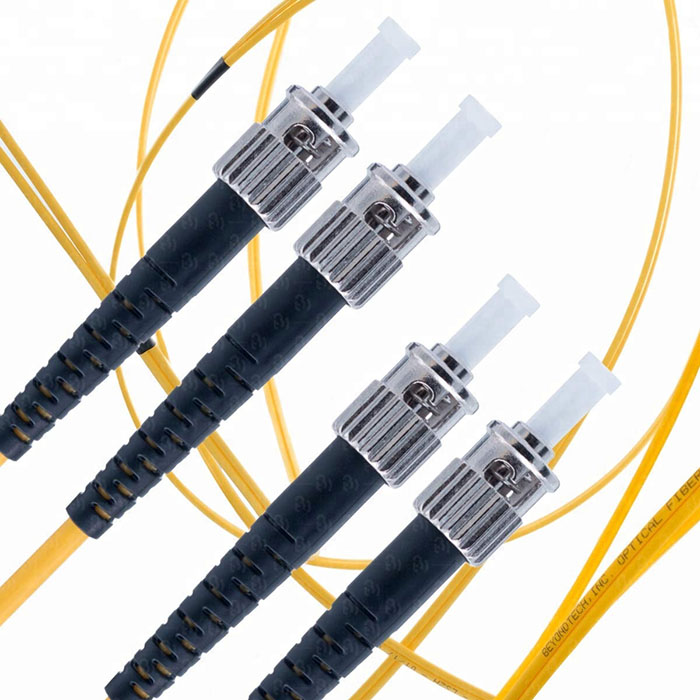
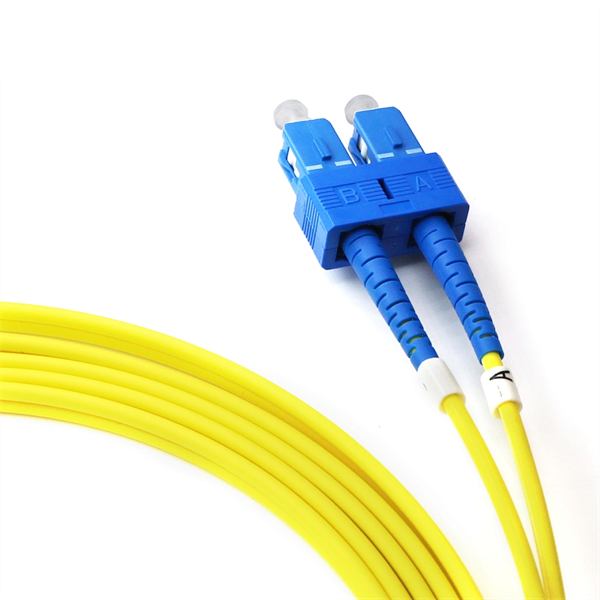
Selecting the correct single mode fiber patch cord involves more than just picking a connector type. Buyers must consider the fiber grade, connector polish, and jacket material to ensure compatibility with their existing infrastructure and future-proofing needs.
OS2 is the preferred choice for most modern long-distance applications due to its lower attenuation and tighter bandwidth requirements. While OS1 is suitable for shorter premises distances, OS2 offers better performance for outside plant and backbone cabling.
The polish type determines how light reflects off the fiber end-face. UPC (Ultra Physical Contact) connectors provide good return loss performance and are ideal for most datacom applications. For high-speed networks like 10G, 40G, or 100G Ethernet, APC (Angled Physical Contact) connectors are necessary to minimize back reflection, which can disrupt laser sources.
Choose between LSZH (Low Smoke Zero Halogen) for indoor safety where fire codes are strict, or PVC for general outdoor durability. The jacket material protects the delicate fiber core from moisture, rodents, and physical stress during installation.
Before finalizing your purchase order for single mode fiber patch cords, use this checklist to verify that your supplier and product specifications meet your project requirements. This helps avoid costly rework and network downtime.
Even with high-quality single mode fiber patch cords, installation errors can lead to significant network performance issues. Understanding these common pitfalls allows procurement teams to specify better products and installers to execute flawless deployments.
Often caused by dirty connectors or poor mating. Dust particles on the ferrule end-face can scatter light, increasing loss. Solution: Use certified cleaning kits and inspect connectors with a microscope before installation.
Typically occurs when APC connectors are mated with UPC connectors. The angled face of APC reflects light away, while UPC reflects it back. Mixing these types causes signal interference. Always mate APC with APC and UPC with UPC.
Single mode fiber has a smaller core and is more susceptible to micro-bends and cracks if bent too tightly. Ensure the bend radius exceeds the manufacturer's specification (usually 10x the cable diameter) during installation and storage.
Using incorrect adapter pigtails or mismatched connector types (e.g., LC to SC without proper adapters) creates unnecessary connection points, each adding potential loss. Verify connector polarity and type against your network diagram.
The versatility of single mode fiber patch cords makes them indispensable across various sectors requiring high-speed, long-distance data transmission. From telecommunications giants to local enterprise networks, these cables form the backbone of modern connectivity.
Used extensively in Long Haul and Metro networks where signals must travel tens or hundreds of kilometers without regeneration. Single mode fiber's low attenuation makes it the only viable option for inter-city and cross-country links.
In large-scale data centers, single mode cables connect servers, switches, and routers over extended distances. They support high-bandwidth protocols like 10G, 40G, and 100G Ethernet, enabling efficient data center interconnects (DCI).
Fiber-to-the-Home (FTTH) deployments rely on single mode drop cables and patch cords to deliver broadband internet to end-users. Their ability to maintain signal integrity over the "last mile" ensures consistent speeds for residential and business customers.
Cable television providers use single mode fiber to distribute video signals over long distances with minimal signal degradation. This ensures high-quality picture delivery to subscribers, even in remote areas.
Harsh environments require robust cabling. Single mode armored cables and tight-buffered jumpers withstand temperature fluctuations, moisture, and physical stress, making them ideal for industrial plants and outdoor utility installations.
Connecting buildings within a campus or corporate park requires reliable, high-bandwidth links. Single mode fiber provides the scalability needed for future upgrades without replacing the underlying cabling infrastructure.
When sourcing single mode fiber patch cords, partnering with a manufacturer that combines technological expertise with ethical business practices is essential. Shenzhen Guangtong Optical Co., Ltd. offers distinct advantages for B2B buyers.
Our facility is equipped with state-of-the-art production and test equipment capable of handling various fiber cable types, including SZ stranded, central tube, ADSS, and drop cables. This vertical integration allows us to control quality at every stage, from raw material processing to final packaging.
We adhere strictly to ISO 9000 quality management systems. Our materials comply with EU directives and international regulations, simplifying your compliance audits. Our products are trusted by partners in America, Europe, the Middle East, Southeast Asia, and the Pacific states.
Since 2010, our philosophy has been "integrity management as the basic, attractive quality and standard management as guarantee." We prioritize long-term partnerships over short-term gains, ensuring consistent supply, transparent communication, and after-sales support.
We understand that every network is unique. Our R&D team can customize cable lengths, connector types, and jacket materials to meet specific project requirements. Whether you need small batches for prototyping or large volumes for deployment, we accommodate your needs.
OS1 is designed for premises networks with typical distances up to 2km, while OS2 is optimized for longer distances (up to 10km and beyond) and offers lower attenuation. For most new installations, especially those involving outside plant or long-haul connections, OS2 is the recommended choice due to its superior performance characteristics.
No, you should never mix UPC (blue) and APC (green) connectors. The physical angle of the APC ferrule (8 degrees) does not match the flat face of the UPC ferrule. Attempting to mate them can damage both connectors and result in extremely high insertion loss and back reflection. Always ensure matching polish types are connected.
Single mode fiber can transmit data over distances ranging from a few kilometers to over 100 kilometers without regeneration, depending on the wavelength (1310nm or 1550nm) and the transceiver technology used. This makes it ideal for metropolitan area networks (MANs) and wide area networks (WANs).
Single mode fibers are fragile and require careful handling. We recommend using protective tubes or reels for shipping. Avoid sharp bends, excessive tension, and crushing forces. Our packaging solutions are designed to meet international shipping standards, ensuring your cables arrive in perfect condition.
Direct connection between single mode and multi-mode fiber is not possible due to core size differences. However, you can use mode-conditioning converters or active media converters to bridge the gap between single mode fiber optic transceivers and multi-mode fiber networks. Always consult with your network engineer for the best integration strategy.
Privacy statement: Your privacy is very important to Us. Our company promises not to disclose your personal information to any external company with out your explicit permission.
Fill in more information so that we can get in touch with you faster
Privacy statement: Your privacy is very important to Us. Our company promises not to disclose your personal information to any external company with out your explicit permission.