


Please Leave Us A Message
Privacy statement: Your privacy is very important to Us. Our company promises not to disclose your personal information to any external company with out your explicit permission.

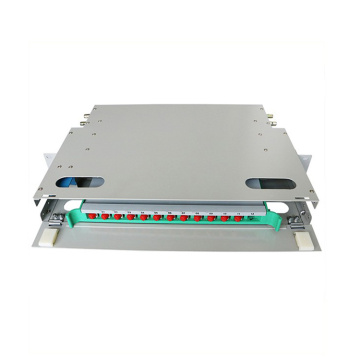


A PLC optical splitter (Planar Lightwave Circuit) is a passive device that divides an incoming optical signal into multiple output signals. Unlike older fused biconical taper splitters, PLC technology uses semiconductor manufacturing processes to create highly reliable, uniform splits across all channels.
For modern fiber-to-the-home (FTTH) networks, PLC splitters are the industry standard because they offer consistent performance regardless of wavelength. Whether you are deploying a GPON or EPON network, understanding how these devices work is critical for maintaining signal integrity over long distances.
Shenzhen Guangtong Optical Co., Ltd has been providing high-quality PLC splitters since 2010. Our products are designed to meet the rigorous demands of global telecommunications operators, ensuring that your infrastructure remains stable and efficient as traffic loads increase.
Our advanced production lines utilize automated testing equipment to ensure insertion loss is minimized and uniformity is maximized. This precision reduces your need for rework and ensures every unit meets strict ISO 9000 standards.
We adhere to European Union directives and international regulations. Our materials are environmentally friendly and safe, helping you comply with local environmental laws while reducing your supply chain risk.
Trusted by partners in America, Europe, the Middle East, Southeast Asia, and the Pacific. Our track record proves that our PLC splitters deliver consistent performance in diverse climates and operating conditions.
At Guangtong Optical, quality is not an afterthought—it is built into every step of the manufacturing process. We strictly control raw material intake, wafer fabrication, packaging, and final testing.
Rigorous Testing Protocols: Every PLC optical splitter undergoes comprehensive testing for key parameters including insertion loss, return loss, directivity, and polarization dependent loss (PDL). We use state-of-the-art test equipment to verify performance at multiple wavelengths (1310nm, 1490nm, 1550nm).
Environmental Durability: Our splitters are tested for thermal stability (-40°C to +85°C), humidity resistance, and mechanical durability. This ensures your network components will survive harsh outdoor environments without degradation.
Traceability: Each unit is tracked through our production system, allowing for full traceability from raw silica wafer to finished product. This transparency gives procurement teams confidence in the supply chain.


Selecting the appropriate PLC splitter involves balancing technical specifications with project requirements. Here are the critical factors to consider:
Common ratios include 1x2, 1x4, 1x8, 1x16, 1x32, and 1x64. Choose based on your network topology. For FTTH deployments, higher ratios like 1x32 or 1x64 are common in central offices, while lower ratios may be used in distribution points closer to the customer.
We offer various form factors including loose tube splitters, plug-in modules, rack-mount units, and micro-modules. Loose tube designs are ideal for outdoor splicing closures, while plug-in modules fit directly into OLT chassis or distribution frames.
Ensure the splitter supports the wavelengths used in your network. Standard single-mode PLC splitters typically support 1260-1650nm, covering CWDM and DWDM applications if needed.
Choose between SC/UPC, SC/APC, LC/UPC, or LC/APC connectors based on your existing infrastructure. APC connectors provide better return loss performance, which is crucial for video-over-fiber applications.
Insertion Loss Specification: Verify that insertion loss meets ITU-T G.652 standards. Lower loss means longer reach and fewer amplifiers needed.
Uniformity Check: Ensure split ratio uniformity is within acceptable limits (typically ±0.8dB) to prevent signal imbalance across ports.
Return Loss Performance: Higher return loss (typically >55dB for UPC, >65dB for APC) reduces signal reflection and improves network stability.
Temperature Range: Confirm operational temperature range matches your deployment environment (standard vs. extended).
Certifications: Require ISO 9001 certification and relevant environmental compliance documentation from your supplier.
Lead Time & MOQ: Discuss minimum order quantities and production lead times upfront to align with your project schedule.
Why Recommended: With over a decade of experience since 2010, Guangtong offers a complete portfolio of fiber communication products. Their integrated approach—from R&D to sales—ensures consistent quality and competitive pricing.
Key Strength: Advanced production and test equipment for various fiber cables and splitters, backed by ISO 9000 quality management systems.
Technical Support: Look for suppliers who provide detailed technical datasheets, customization options, and responsive engineering support.
Supply Chain Stability: Choose manufacturers with proven export history to major markets (America, Europe, Middle East) as indicators of reliability.
Integrity Management: Prioritize suppliers who emphasize integrity and attractive quality as core business philosophies, ensuring long-term collaboration.
After-Sales Service: Verify warranty terms, replacement policies, and availability of spare parts for future maintenance needs.
The primary application for PLC splitters is Fiber-To-The-Home deployments. They enable point-to-multipoint architectures in GPON and EPON systems, delivering high-speed broadband to residential customers efficiently.
PLC splitters are widely used in Cable Television distribution networks. Their low polarization dependent loss and wide bandwidth make them ideal for transmitting analog and digital video signals alongside data.
Large enterprises and campuses use fiber optic splitters to distribute network connectivity across multiple buildings or floors. The passive nature of PLC splitters eliminates power requirements and reduces failure points.
Hybrid Fiber-Coaxial networks utilize PLC splitters in the fiber segment to extend reach and reduce signal degradation before conversion to coaxial distribution.
Telecom operators deploy PLC splitters in mobile backhaul networks to connect cell towers to the core network, supporting 4G LTE and 5G infrastructure expansion.
As cities invest in IoT and smart monitoring systems, PLC splitters provide the scalable fiber backbone needed to connect thousands of sensors and cameras across urban environments.
FBT (Fused Biconical Taper) splitters are created by fusing fibers together and are cost-effective for simple 1x2 splits. However, PLC (Planar Lightwave Circuit) splitters use semiconductor manufacturing techniques to create more precise, uniform splits across multiple ports (1x8, 1x16, 1x32, etc.). PLC splitters offer better wavelength independence and superior performance for high-split-ratio applications, making them the preferred choice for modern FTTH networks.
PLC optical splitters are passive devices with no moving parts or electronic components, giving them an extremely long operational lifespan—typically exceeding 25 years. As long as they are installed within their specified temperature and humidity ranges, they require minimal maintenance and remain reliable throughout the life of the fiber network.
Yes, PLC splitters are bidirectional devices. They can simultaneously handle upstream traffic (from customer premises to the central office) and downstream traffic (from the central office to customers) on different wavelengths. A standard GPON system uses 1490nm for downstream and 1310nm for upstream, both of which pass through the splitter without interference.
We offer several form factors to suit different installation scenarios: Loose Tube Splitters for outdoor splice closures, Plug-in Modules for rack-mounted or wall-box installations, Rack-Mount Units for central office deployment, and Micro-Modules for compact distribution frames. Each form factor is optimized for specific environmental conditions and mounting requirements.
The split ratio depends on the number of end-users per optical line terminal (OLT) port and the power budget of your network. Common ratios include 1x32 and 1x64 for FTTH deployments. You must calculate the total link loss, including splitter insertion loss, connector losses, and fiber attenuation, to ensure it stays within the receiver sensitivity limits of your ONTs/ONTUs.
Yes, we offer customized PLC splitter solutions based on your specific requirements. This includes custom split ratios, connector types, cable colors, labeling, and packaging. Our engineering team works closely with procurement teams to ensure the final product meets your exact technical specifications and branding requirements.
Privacy statement: Your privacy is very important to Us. Our company promises not to disclose your personal information to any external company with out your explicit permission.
Fill in more information so that we can get in touch with you faster
Privacy statement: Your privacy is very important to Us. Our company promises not to disclose your personal information to any external company with out your explicit permission.