


Please Leave Us A Message
Privacy statement: Your privacy is very important to Us. Our company promises not to disclose your personal information to any external company with out your explicit permission.


Understanding the standardized 24 fiber color code is fundamental for efficient fiber optic cable management and splicing. This industry-standard sequence defines the specific jacket colors assigned to each individual fiber within a multi-strand cable, ensuring that technicians can quickly identify and terminate fibers without errors.
The standard utilizes a primary palette of 12 distinct colors combined with striping patterns. For cables containing more than 12 fibers, such as a 24-fiber assembly, the sequence repeats in "super-groups" or "booklets." Each booklet is distinguished by a unique identifier, typically a black tracer or sleeve, which signals that the internal color sequence is being repeated. Proper adherence to this 24 fiber color code minimizes downtime during network installation and maintenance.
In complex telecommunications infrastructure, misidentifying a single fiber can lead to significant service outages. The standardized color sequence allows engineers to map physical cables directly to logical network diagrams. This visual consistency is critical for high-density environments where dozens of cables converge in a single splice closure.
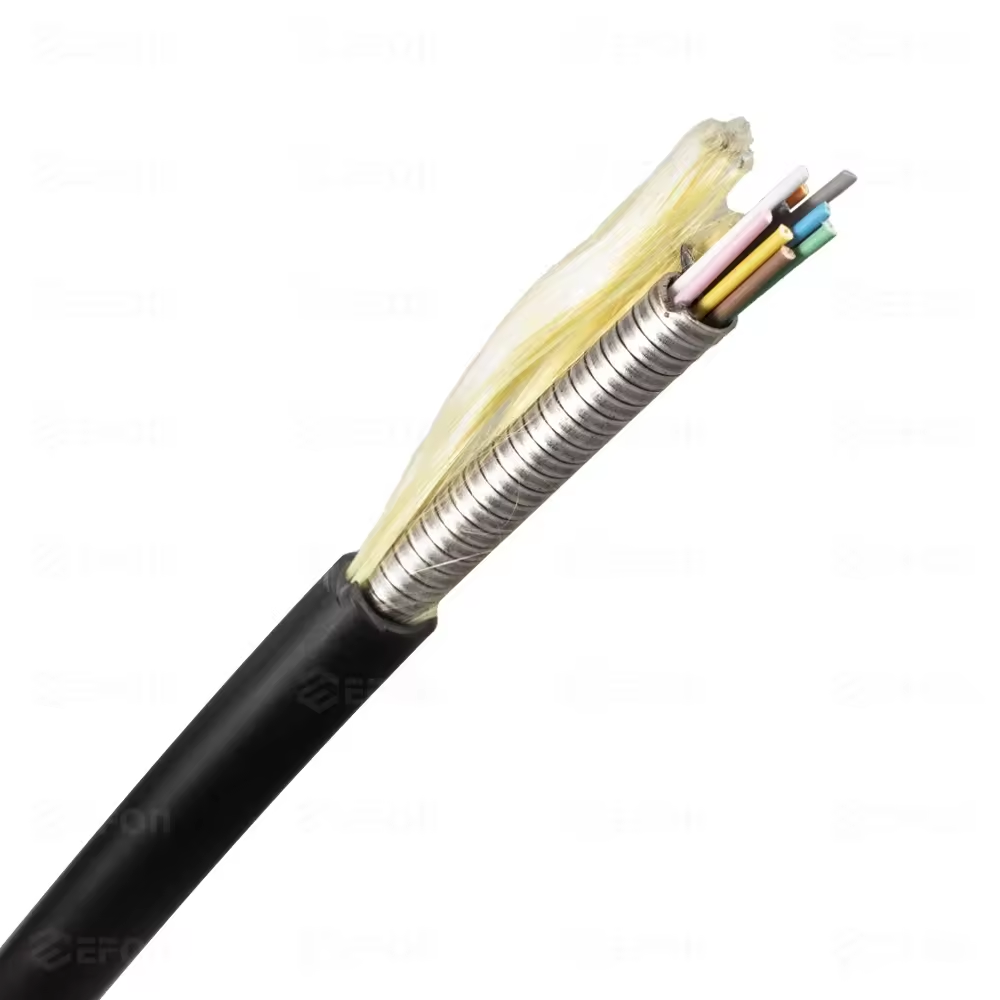
Shenzhen Guangtong Optical Co., Ltd. ensures that every fiber optic cable meets rigorous international quality standards. Our manufacturing process is strictly controlled according to the ISO 9000 quality management system, guaranteeing consistent performance across all production batches.
We utilize advanced production and test equipment for various kinds of fiber cables, including SZ stranded cables, central tube cables, and ADSS cables. Our materials comply with European Union directives and other international regulations, ensuring our products are safe and reliable for global deployment.
Our manufacturing facilities operate under strict ISO 9000 guidelines. This ensures that every step of the production process, from raw material sourcing to final testing, meets predefined quality metrics.
We employ state-of-the-art testing equipment to verify attenuation, bandwidth, and mechanical strength. This proactive quality control prevents defects before the cable leaves our facility.
Our products comply with EU directives and international safety laws. This compliance facilitates smooth customs clearance and regulatory approval in markets across America, Europe, and Southeast Asia.
Selecting the correct fiber optic cable involves more than just counting the strands. Buyers must consider the installation environment, mechanical requirements, and future scalability. Whether you need an indoor drop cable or an outdoor armored cable, understanding the construction details is key to long-term reliability.
Key factors include the buffer tube arrangement, the strength member material (such as FRP or steel), and the outer jacket composition. For example, air-blown fiber solutions offer flexibility for future upgrades, while armored cables provide superior protection against rodents and crushing forces in direct-burial applications.
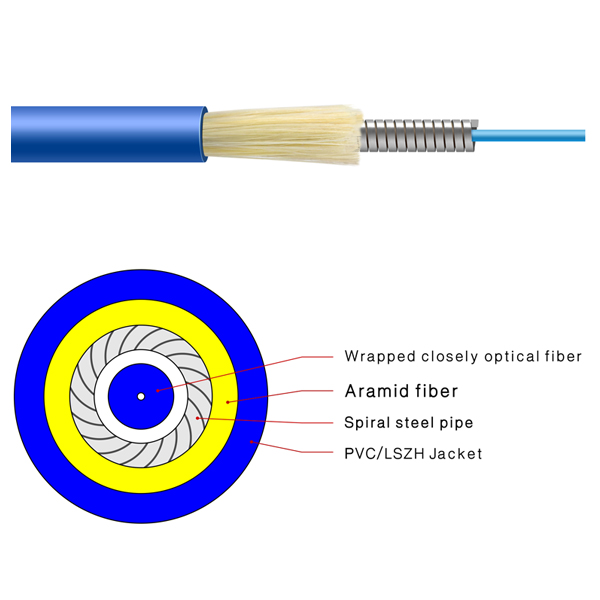
Determine if the cable will be installed aerially, underground, or indoors. Aerial installations require All-Dielectric Self-Supporting (ADSS) cables with high tensile strength, while underground runs may benefit from steel tape armoring for crush resistance.
Choose between Single-Mode (OS2) for long-distance transmission or Multi-Mode (OM3/OM4) for short-range data centers. Ensure the 24 fiber color code is clearly printed and durable to withstand harsh environmental conditions over decades.
Before finalizing a purchase order for fiber optic cables, procurement managers should verify the following critical parameters. This checklist helps mitigate risk and ensures the supplied product matches your technical specifications.
Confirm the cable follows the TIA-598 standard 24 fiber color code sequence to ensure compatibility with standard splicing closures.
Check that attenuation values meet ITU-T G.652.D or G.657.A1 standards for the specific wavelength (1310nm/1550nm).
Ensure the outer jacket material (PE, LSZH, PVC) is suitable for the intended UV exposure, moisture levels, and temperature range.
Request ISO 9001 certificates and third-party test reports to validate manufacturer claims regarding quality and performance.
Verify production lead times to align with your project schedule. Reputable manufacturers like GT-Optical typically maintain stock for common SKUs.
Check that cables are packed on robust drums with waterproof wrapping to prevent damage during international shipping.
When sourcing fiber optic cables globally, partnering with a established manufacturer like Shenzhen Guangtong Optical Co., Ltd. offers distinct advantages. With over a decade of experience since 2010, GT-Optical has built a reputation for integrity and excellent quality products.
Their extensive export history to America, Europe, the Middle East, and Southeast Asia demonstrates their ability to navigate complex international logistics and compliance requirements. Choosing a supplier with a diverse product portfolio simplifies procurement by allowing you to source cables, splicers, and accessories from a single trusted partner.
GT-Optical offers a wide range of products including FTTH drop cables, ADSS cables, and fusion splicers. This one-stop capability reduces vendor management overhead for large-scale projects.
With a philosophy centered on "integrity management," GT-Optical prioritizes long-term partnerships over short-term gains. Their products are known for durability and consistent performance.
As a high-tech company specializing in R&D, they provide expert technical support to help buyers select the optimal cable design for their specific application needs.
24-fiber cables are versatile workhorses in modern telecommunications, bridging the gap between small business networks and large-scale carrier infrastructure. Their capacity supports multiple redundant paths and high-bandwidth applications.
Common applications include Fiber to the Home (FTTH) distribution networks, Metropolitan Area Networks (MAN), and Data Center interconnects. In these environments, the standardized 24 fiber color code ensures rapid troubleshooting and reconfiguration when network topology changes.
Used in drop cables and distribution points to connect residential subscribers to the main optical line terminal. The compact size of 24-fiber bundles makes them ideal for dense urban installations.
Facilitates high-speed connectivity between server racks and core switches. The precise color coding aids in managing the high density of connections typical in enterprise data centers.
Connects cell towers to the core network. Armored 24-fiber cables provide the necessary protection against environmental hazards while supporting 4G/5G bandwidth demands.
The standard sequence consists of 12 primary colors: Blue, Orange, Green, Brown, Slate, White, Red, Black, Yellow, Violet, Rose, and Aqua. For a 24-fiber cable, this sequence repeats. The second booklet (fibers 13-24) is typically identified by a black tracer or sleeve around the buffer tubes.
In a standard loose tube cable, the first 12 fibers use the primary color sequence. The next 12 fibers (13-24) repeat the same color sequence but are grouped together in a separate buffer tube or booklet. This booklet is often marked with a black tracer or a specific sleeve color to distinguish it from the first group.
Correct color identification is crucial for minimizing insertion loss and ensuring proper connectivity. Splicing technicians rely on the color code to match transmit fibers to receive fibers accurately. Misalignment due to incorrect color reading can lead to signal loss or complete circuit failure.
While most reputable manufacturers follow the TIA-598 standard, some may have slight variations in secondary identifiers or jacket markings. However, the primary 12-color sequence remains consistent globally. Always verify with the manufacturer's datasheet before procurement to ensure compatibility with your existing infrastructure.
Standardization ensures interoperability between equipment from different vendors. It simplifies inventory management, reduces training time for technicians, and minimizes the risk of human error during installation and maintenance. Using non-standard cables can lead to significant logistical and operational challenges.
Privacy statement: Your privacy is very important to Us. Our company promises not to disclose your personal information to any external company with out your explicit permission.
Fill in more information so that we can get in touch with you faster
Privacy statement: Your privacy is very important to Us. Our company promises not to disclose your personal information to any external company with out your explicit permission.