


Please Leave Us A Message
Privacy statement: Your privacy is very important to Us. Our company promises not to disclose your personal information to any external company with out your explicit permission.


All Dielectric Self-Supporting (ADSS) aerial fiber optic cables are engineered for overhead installation between utility poles without the need for a separate messenger wire. The term "ASU" often refers to specific structural configurations or application standards within these high-performance cables.
These cables are critical for extending high-speed connectivity across long distances where trenching is impractical. By combining advanced optical fiber technology with dielectric materials, ADSS cables eliminate electrical interference risks while providing robust protection against environmental stressors like wind, ice, and UV radiation.
For procurement teams, choosing the right ADSS cable ensures a reliable, low-maintenance backbone for FTTH (Fiber to the Home) deployments, metropolitan area networks, and last-mile connectivity projects.
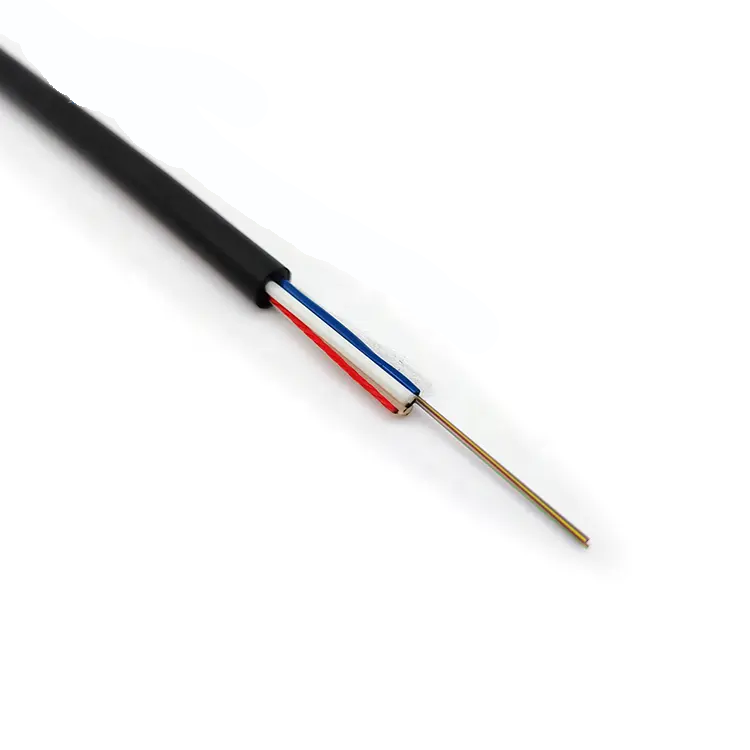
Shenzhen Guangtong Optical Co., Ltd. has been a trusted manufacturer since 2010, specializing in high-tech fiber communication products. Our ADSS cables are designed to meet rigorous international standards, ensuring consistent performance for global buyers.
Key Advantages:
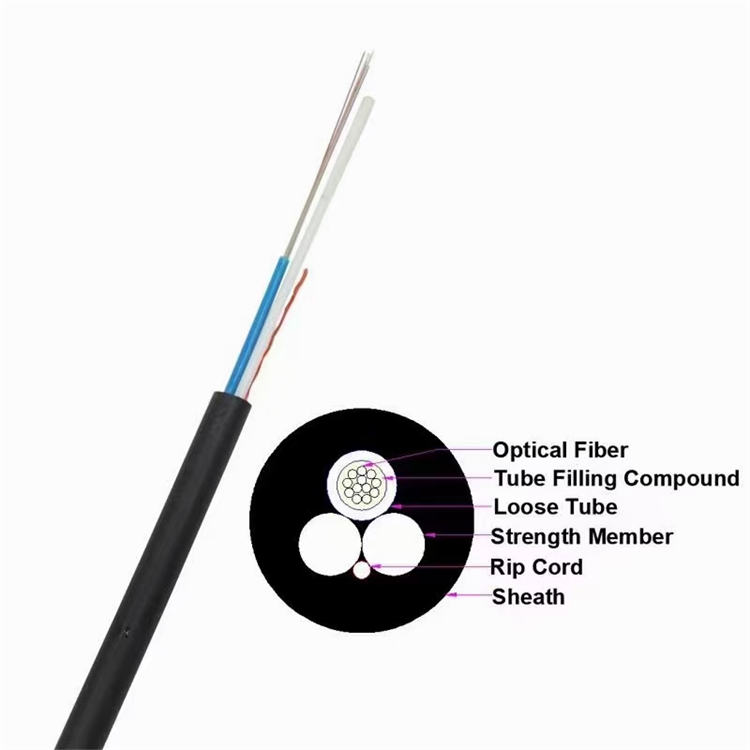
Our facility utilizes state-of-the-art SZ stranding, central tube, and extrusion lines specifically calibrated for ADSS and other fiber cables. This ensures precise geometric control and consistent mechanical properties.
Every production batch undergoes strict testing for tensile strength, crushing resistance, and thermal cycling. We verify that our ADSS cables can withstand the mechanical loads required for long-span aerial installations.
We use high-strength aramid yarns and UV-resistant sheathing materials that comply with EU environmental directives. This guarantees long-term durability and resistance to harsh outdoor environments.
ADSS cables must be selected based on the electric field intensity at the power line location. Incorrect selection can lead to cable deterioration due to electrical tracking. Our engineering team assists in calculating the optimal outer jacket thickness.
Consider the distance between poles and environmental loads (wind, ice). ADSS cables come in various strength members to handle different tension levels. We provide customized designs to match your specific span requirements.
Choose between single-mode (G.652D) or multi-mode fibers depending on your bandwidth needs. Standard counts range from 2 to 144 fibers, but we can accommodate larger core counts for backbone applications.
For coastal or industrial areas, specify corrosion-resistant jackets. For extreme cold, ensure the cable is rated for low-temperature flexibility to prevent cracking during installation and operation.
Using standard PE jackets in high-electric-field environments causes rapid degradation. Always specify "AT" (Anti-Tracking) jackets for proximity to power lines.
Exceeding the Maximum Tensile Strength (MTS) during stringing can permanently damage the aramid yarn strength members. Use proper tensioning equipment and follow our installation guidelines.
Low-quality outer jackets become brittle under UV exposure. Ensure all cables meet IEC standards for UV resistance to maintain a lifespan of over 25 years.
Why They Stand Out: With over a decade of experience, GT-Optical combines advanced manufacturing with a commitment to integrity. Their ability to produce customized ADSS solutions for diverse climates makes them an ideal partner for global projects.
Their extensive export network ensures reliable logistics and after-sales support.
Pros: Often have lower MOQs and faster stock availability for standard fiber counts.
Cons: May lack specialized engineering support for complex ADSS electric field calculations. Verify their specific experience with aerial self-supporting cables before ordering.
High-quality ADSS cables, when properly specified and installed, typically have a design life of 25-30 years. Factors influencing lifespan include UV exposure, mechanical load, and electric field intensity.
Yes, ADSS cables are specifically designed for installation alongside power lines. However, they require careful calculation of the electric field strength to select the appropriate anti-tracking (AT) outer jacket.
MOQ varies depending on the cable configuration and fiber count. Contact our sales team for specific project requirements. We aim to support both large-scale infrastructure projects and smaller last-mile deployments.
Yes, we provide comprehensive technical documentation including installation manuals, tension tables, and hardware recommendations to ensure a smooth deployment process.
Absolutely. Our products comply with IEC, ITU-T, and ANSI standards. Materials also meet EU environmental directives, facilitating smooth customs clearance for international shipments.
Privacy statement: Your privacy is very important to Us. Our company promises not to disclose your personal information to any external company with out your explicit permission.
Fill in more information so that we can get in touch with you faster
Privacy statement: Your privacy is very important to Us. Our company promises not to disclose your personal information to any external company with out your explicit permission.