


Please Leave Us A Message
Privacy statement: Your privacy is very important to Us. Our company promises not to disclose your personal information to any external company with out your explicit permission.


Duct fiber optic cable is a specialized telecommunications cable designed to be installed within underground conduits or ducts. Unlike direct-buried cables, these are not intended for direct soil contact but rather for protected routing through existing infrastructure such as PVC or HDPE pipes.
This type of cabling is the backbone of modern **Fiber To The Home (FTTH)** and metropolitan area networks. It typically features a loose tube design that houses optical fibers in protective gel-filled tubes, surrounded by strength members like aramid yarn or fiberglass rods, and an outer jacket resistant to moisture and crushing forces.
For procurement managers, understanding the distinction between duct and direct-burial designs is critical. Duct cables prioritize tensile strength for pulling operations over long distances within pipes, while offering flexibility for tight bends around manholes and junction boxes.
Shenzhen Guangtong Optical Co., Ltd operates under strict ISO 9000 quality management systems. This ensures every batch of duct fiber optic cable meets consistent performance benchmarks from raw material intake to final shipment.
Our facility utilizes state-of-the-art production and test equipment for SZ stranded, central tube, and all-dielectric designs. Rigorous testing includes attenuation checks, tensile strength verification, and environmental cycling to guarantee reliability in harsh underground conditions.
Materials comply with European Union directives and international regulations. We use low-smoke zero-halogen (LSZH) options where required, ensuring safety in confined duct spaces and reducing toxic fumes during potential fire events.
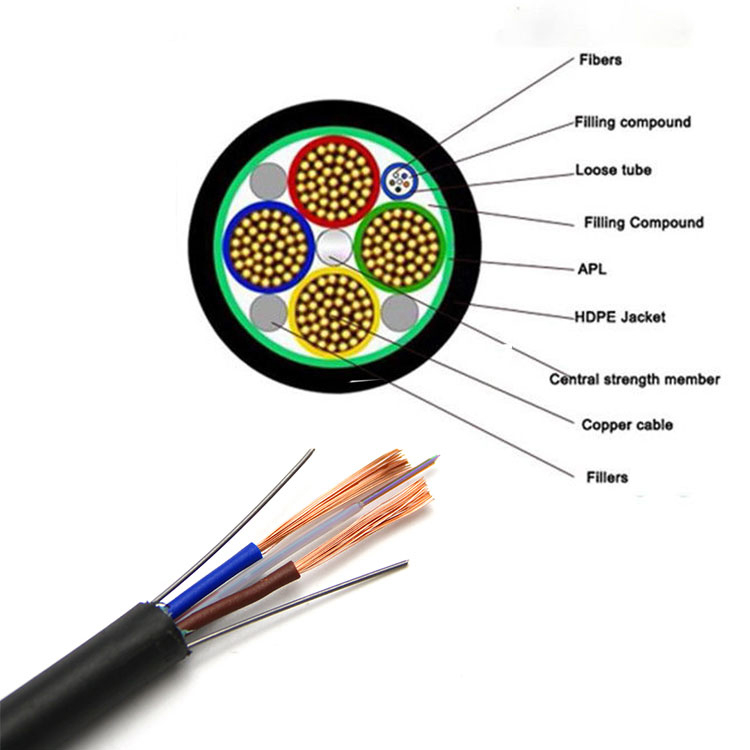
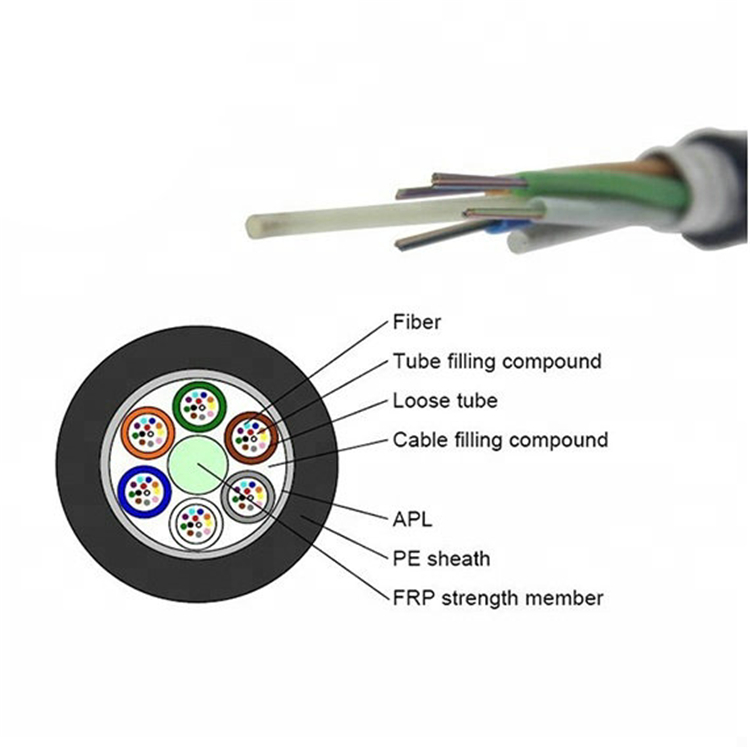
Select a core count that matches current needs plus future expansion. High-density duct cables allow more fibers in smaller diameters, maximizing conduit utilization and lowering your per-fiber cost.
Polyethylene (PE) jackets are standard for outdoor duct runs due to UV and moisture resistance. For indoor-to-outdoor transitions or plenum spaces, consider LSZH (Low Smoke Zero Halogen) jackets to meet fire safety codes.
Ensure the cable has adequate tensile strength for long pulls. Aramid yarn (Kevlar) or fiberglass reinforced plastic (FRP) rods provide the necessary protection against stretching during installation.
Gel-filled loose tubes or water-swellable tapes prevent moisture ingress, which is critical for cables running through potentially wet underground ducts. This extends lifespan and maintains signal integrity.
Confirm ISO 9001 certification and EU RoHS/REACH compliance documentation before ordering.
Request samples for insertion loss and back reflection tests to verify performance specs.
Verify production lead times and shipping schedules to align with your project milestones.
Check if the supplier offers custom jacket colors, printing, or specific core counts for your duct layout.
Ensure the manufacturer provides technical support for installation guidance and troubleshooting.
Review warranty periods for product defects and performance guarantees on attenuation values.
Excessive tension during cable pulling can micro-bend fibers, increasing attenuation. Always use proper pulling grips and maintain tension limits specified by the manufacturer. GT-Optical cables are designed with smooth jackets to reduce friction, but technique remains key.
If duct seals are compromised, water can enter and damage the cable over time. Ensure end caps are sealed immediately after installation and consider using dry-type water-blocking materials for easier maintenance and lower freezing risks.
Rough duct beds with sharp stones can crush the outer jacket. Bedding the duct with sand or using protective sleeving at entry/exit points prevents mechanical stress on the cable structure during and after installation.
ADSS (All Dielectric Self Supporting) cables are for aerial spans without messenger wire. Using them in ducts is inefficient and costly. Always specify duct-specific loose tube cables for underground conduit applications to optimize cost and performance.
With proper installation and environmental conditions, duct fiber optic cables typically have a lifespan of 25-30 years. Regular inspections of manhole seals and cable ends help maximize this duration.
While short runs might be manageable internally, long-distance duct installations require professional equipment like blowers or winches and trained technicians to avoid damaging the cable or exceeding pull tensions.
During installation, the dynamic bend radius should be at least 20 times the cable diameter. For static conditions (after installation), it should be at least 10 times the diameter to prevent signal loss.
Yes, we provide customizable printing on the cable jacket, including length markers, company logos, and date codes, aiding in inventory management and identification within complex duct networks.
Since 2010, GT-Optical has combined research, development, and manufacturing under one roof. This vertical integration allows for faster response times, consistent quality control, and competitive pricing for bulk duct cable orders.
We have successfully exported to America, Europe, the Middle East, Southeast Asia, and Pacific states. Our experience means we understand diverse international standards and logistics requirements, simplifying your procurement process.
Our business philosophy centers on integrity management and attractive quality. We view our clients as loyal partners, providing transparent communication and reliable delivery schedules to support your long-term projects.
Privacy statement: Your privacy is very important to Us. Our company promises not to disclose your personal information to any external company with out your explicit permission.
Fill in more information so that we can get in touch with you faster
Privacy statement: Your privacy is very important to Us. Our company promises not to disclose your personal information to any external company with out your explicit permission.