


Please Leave Us A Message
Privacy statement: Your privacy is very important to Us. Our company promises not to disclose your personal information to any external company with out your explicit permission.


A fiber access terminal box, also known as an Optical Network Terminal (ONT) box or fiber distribution box, is the critical junction point in modern fiber-to-the-home (FTTH) networks. It serves as the termination and distribution hub where the main feeder cable splits into individual drop cables connecting to end-user premises.
For procurement buyers, understanding this component is essential because it represents the final interface between your network infrastructure and the customer's home or business. A well-designed terminal box ensures reliable signal transmission, protects sensitive splices from environmental damage, and simplifies future maintenance operations.
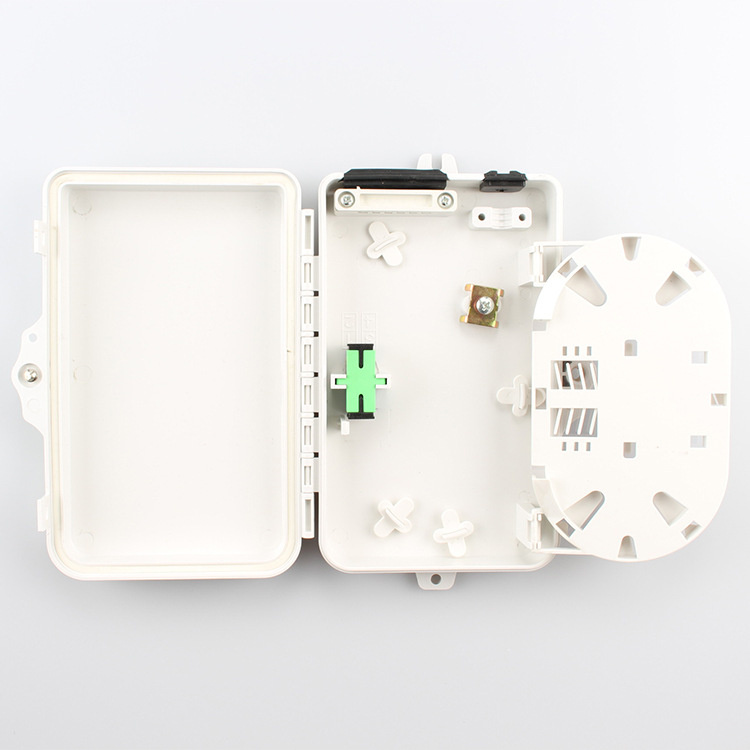
These boxes are typically mounted on walls, poles, or buried underground depending on the deployment scenario. They house splice trays, adapters, and splitters that manage the optical power distribution across multiple user connections. Choosing the right fiber access terminal box directly impacts your network's long-term reliability and total cost of ownership.
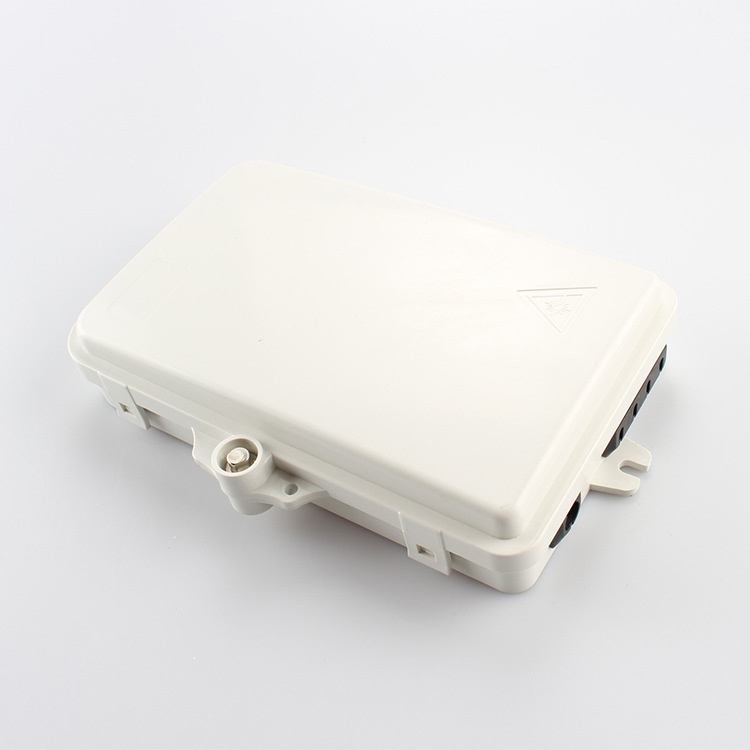
Shenzhen Guangtong Optical Co., Ltd has been manufacturing high-quality fiber communication products since 2010. Our fiber access terminal boxes are produced under strict ISO 9000 quality management systems, ensuring consistent batch-to-batch performance that meets international standards.
Every terminal box undergoes rigorous testing using advanced production and test equipment. Materials comply with European Union directives and various international regulations, reducing compliance risks for global buyers. Our commitment to integrity management guarantees that each unit delivers reliable optical performance in diverse environmental conditions.
Key quality advantages include:
Select a fiber access terminal box with sufficient port capacity for your current needs plus future expansion. Common configurations range from 4 to 48 ports. Over-provisioning slightly reduces per-unit costs and eliminates the need for additional hardware during network growth phases.
Match the ingress protection (IP) rating to your installation environment. Outdoor installations require IP65-rated enclosures to withstand dust, rain, and temperature extremes. Indoor units can use lower ratings, reducing overall project costs while maintaining adequate protection.
Ensure the terminal box supports your preferred mounting approach—wall-mounted, pole-mounted, or underground burial. Proper mounting compatibility prevents costly retrofits and ensures secure installation that meets local utility regulations and safety standards.
Verify that the fiber access terminal box includes integrated splice trays and splitter slots. Pre-configured integration minimizes on-site assembly time, reduces labor costs, and ensures optimal fiber bend radius management for signal integrity preservation.
Choose terminal boxes constructed from UV-resistant, corrosion-proof materials. High-quality polycarbonate or ABS housings extend service life in harsh climates, lowering replacement frequency and protecting your investment over decades of operation.
Prioritize suppliers whose products carry relevant certifications and meet international standards. Certified fiber access terminal boxes simplify customs clearance, reduce regulatory risk, and provide assurance of consistent quality across large procurement orders.
Use this checklist to evaluate potential suppliers and ensure you select the best fiber access terminal box solution for your network deployment requirements.
Fiber access terminal boxes serve diverse deployment scenarios across telecommunications, enterprise networking, and industrial applications. Understanding these use cases helps you select the optimal configuration for your specific project requirements.
The primary application for fiber access terminal boxes is fiber-to-the-home infrastructure. These units terminate feeder cables and distribute signals to residential subscribers through individual drop cables. Wall-mounted and pole-mounted variants dominate urban and suburban deployments.
In multi-dwelling units and commercial complexes, fiber access terminal boxes consolidate distribution at building entry points. They enable efficient fiber routing to individual apartments or offices, supporting high-bandwidth services for dense user populations.
Large corporate campuses use terminal boxes at intermediate distribution points between backbone infrastructure and floor-level patch panels. This architecture simplifies cable management and enables flexible reconfiguration as tenant requirements change over time.
Harsh environments such as oil refineries, mining operations, and remote monitoring stations require ruggedized fiber access terminal boxes with enhanced IP ratings. These units protect critical connections from extreme temperatures, moisture, and physical stress.
Telecommunications operators deploying hybrid fiber-coaxial (HFC) networks use terminal boxes to converge fiber and coaxial segments. They serve as distribution hubs connecting headend facilities to neighborhood nodes, enabling scalable service expansion.
The rollout of 5G small cell infrastructure creates demand for compact fiber access terminal boxes at street-level deployment points. These units provide fiber termination and distribution for backhaul connections linking small cells to the core network.
When sourcing fiber access terminal boxes, prioritize manufacturers with proven track records, comprehensive product lines, and established global distribution channels. The following profile represents the ideal supplier characteristics based on industry best practices.
Look for suppliers founded at least 5+ years ago with verifiable production facilities. Companies like Shenzhen Guangtong Optical Co., Ltd, established in 2010, demonstrate sustained operational stability and accumulated expertise in fiber communication product manufacturing.
Optimal suppliers offer complementary products beyond terminal boxes—including fiber optic cables, fusion splicers, and related accessories. This enables consolidated procurement, simplified logistics, and stronger buyer-supplier relationships through single-source purchasing.
Demand suppliers with documented quality management systems and third-party certifications. ISO 9000 certification indicates systematic quality control processes, while EU material compliance opens doors to regulated markets worldwide.
Choose suppliers with demonstrated export experience across multiple continents. Proven presence in America, Europe, Middle East, Southeast Asia, and Pacific states indicates adaptability to diverse regulatory environments and cultural business practices.
Common questions from procurement professionals about fiber access terminal box selection, specifications, and deployment considerations.
High-quality fiber access terminal boxes manufactured from durable materials like UV-stabilized polycarbonate or ABS plastic typically have a service life of 20-25 years when installed correctly. Environmental factors such as extreme temperatures, direct sunlight exposure, and mechanical stress can affect longevity. Selecting terminal boxes with appropriate IP ratings for your installation environment maximizes operational lifespan and reduces replacement costs.
Standard fiber access terminal boxes range from 4-port to 48-port configurations, with some specialized models supporting up to 144 fibers. The actual fiber capacity depends on the splice tray design, splitter integration method, and cable management architecture. For most FTTH deployments, 12 to 24-port units provide optimal balance between capacity and physical footprint. Always consult with your supplier to match port count to your projected subscriber density.
Indoor fiber access terminal boxes prioritize compact size, lightweight construction, and aesthetic integration with building infrastructure. They typically feature lower IP ratings (IP40-IP54) and use simpler mounting methods. Outdoor units emphasize environmental protection with IP65 or higher ratings, robust weatherproof seals, UV-resistant materials, and reinforced mounting hardware designed to withstand wind, rain, snow, and temperature cycling.
Yes, most fiber access terminal boxes support multiple connector types including SC/APC, SC/UPC, LC, and FC connectors. Many models feature interchangeable adapter panels that allow field conversion between connector types without replacing the entire unit. When placing orders, specify your required connector types to ensure compatibility with existing network infrastructure and minimize on-site adaptation work.
Priority certifications include ISO 9001 for quality management systems, CE marking for European market compliance, and RoHS for hazardous substance restrictions. Additional valuable certifications include Telcordia GR-326-CORE for optical passive components, TIA/EIA standards compliance, and regional approvals such as FCC (USA) or KC (Korea). Shenzhen Guangtong Optical's products meet EU directives and various international regulations, facilitating smooth customs clearance across global markets.
Lead times vary based on order volume, customization requirements, and current production schedules. Standard off-the-shelf configurations typically ship within 7-15 business days for moderate quantities. Large volume orders or custom specifications may require 20-30 business days. Establish clear delivery timelines with your supplier early in the procurement process and consider buffer periods for international shipping logistics.
Privacy statement: Your privacy is very important to Us. Our company promises not to disclose your personal information to any external company with out your explicit permission.
Fill in more information so that we can get in touch with you faster
Privacy statement: Your privacy is very important to Us. Our company promises not to disclose your personal information to any external company with out your explicit permission.