


Please Leave Us A Message
Privacy statement: Your privacy is very important to Us. Our company promises not to disclose your personal information to any external company with out your explicit permission.


A fiber attenuator is a passive optical device designed to reduce the power level of an optical signal. In fiber optic communication systems, excessive light intensity can damage sensitive receivers or cause signal distortion. By introducing precise attenuation, these devices ensure that the signal entering your receiver remains within the optimal operating range.
For procurement managers, understanding this component is critical. Without proper signal management, you risk high error rates, equipment failure, and costly downtime. Whether you are deploying FTTH networks, data centers, or CATV systems, reliable fiber attenuators are the unsung heroes that guarantee stable performance and protect your investment in high-end transceivers.
Shenzhen Guangtong Optical Co., Ltd. specializes in manufacturing high-quality fiber communication products, including precision attenuators that meet international standards for insertion loss and return loss.
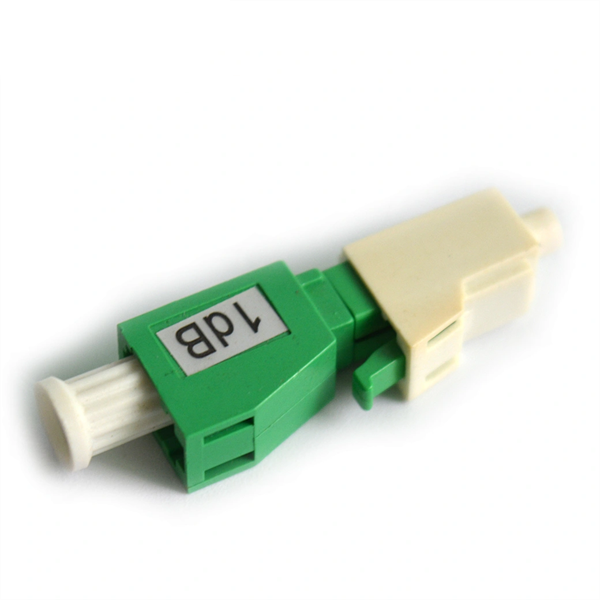
At Shenzhen Guangtong Optical Co., Ltd., quality is not just a department; it is our core philosophy. Founded in 2010, we have built a reputation for integrity and excellence in the fiber optic industry. Our manufacturing process is strictly controlled according to the ISO 9000 quality management system, ensuring every fiber attenuator meets rigorous specifications.
We utilize state-of-the-art production and testing equipment for various fiber cables and components. This ensures consistent batch quality, reducing the variance that often plagues bulk orders from less sophisticated suppliers.
Our materials comply with European Union directives and international regulations. This compliance simplifies your import process and ensures that our products are safe, reliable, and suitable for global deployment.
From raw material sourcing to final packaging, every step is monitored. This attention to detail means you receive products that perform reliably in harsh environments, reducing your after-sales support costs and enhancing your end-customer satisfaction.
Selecting the correct fiber attenuator involves more than just picking a value. As a buyer, you need to consider connector type, attenuation value, tolerance, and physical form factor. Mismatched components can lead to signal reflection, poor connectivity, and system instability.
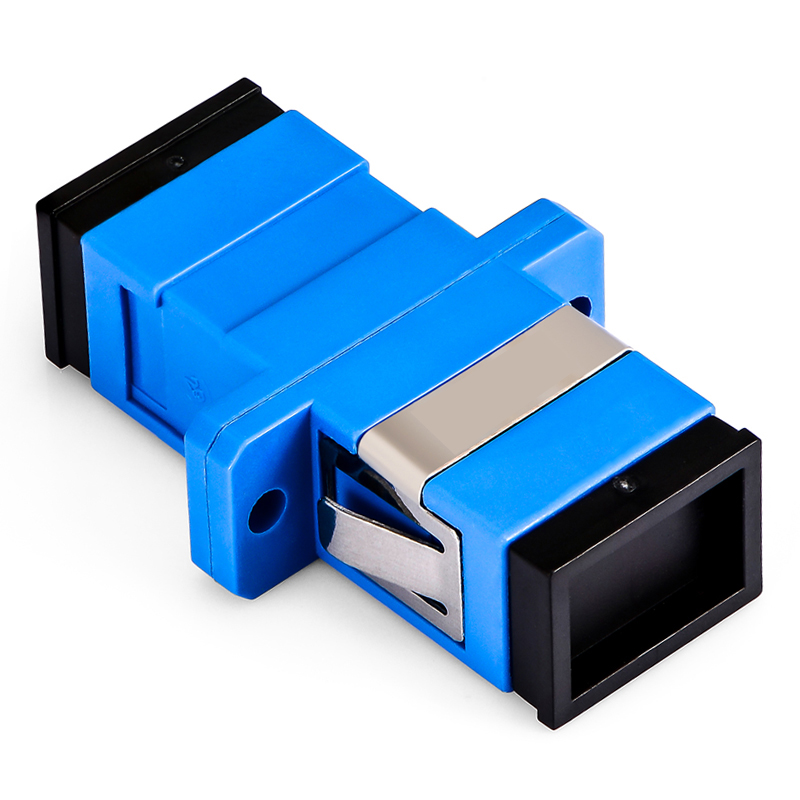
Ensure the attenuator matches your existing infrastructure. Common types include SC, LC, FC, and ST. Mixing connectors requires adapters, which add insertion loss points. Standardizing on one connector type simplifies inventory and installation.
Choose between fixed or variable attenuation. Fixed attenuators offer precise, stable reduction (e.g., 3dB, 5dB, 10dB). Variable attenuators allow for fine-tuning during testing and commissioning. Know your system's power budget before ordering.
Different wavelengths (1310nm, 1550nm) require specific attenuator designs. Using a 1550nm attenuator at 1310nm may result in inaccurate attenuation values. Always verify the wavelength specification for your specific application.
Use this checklist to evaluate potential suppliers and ensure you are making a informed procurement decision. This guide helps mitigate risks associated with quality inconsistencies and supply chain delays.
Procuring fiber optic components can be fraught with challenges. Here are the most common issues buyers face and how to avoid them.
Problem: Cheap attenuators may not provide the exact dB reduction specified, leading to signal overload or dropout.
Solution: Source from manufacturers who test every unit. Guangtong Optical uses precise calibration equipment to guarantee accuracy.
Problem: Low-quality ferrules wear out quickly, increasing insertion loss over time.
Solution: Specify attenuators with ceramic ferrules (zirconia) for durability and consistent performance.
Problem: Inconsistent lead times disrupt project schedules.
Solution: Partner with established manufacturers like Guangtong Optical, who have robust production lines and inventory management systems.
Fiber attenuators are versatile components used across various industries. Understanding their applications helps you identify the right specifications for your specific needs.
In FTTH deployments, attenuators are used to balance signal levels between the OLT and ONT. This prevents receiver saturation and ensures stable broadband speeds for end-users.
High-speed data links in data centers require precise power management. Attenuators protect sensitive transceivers in switches and routers, ensuring low bit-error rates.
Cable television networks use attenuators to manage signal strength across long distances, ensuring consistent picture quality and channel availability.
During network testing and commissioning, variable attenuators allow engineers to simulate long-distance fiber runs and verify system performance under various load conditions.
When selecting a supplier for fiber attenuators, reliability and quality are paramount. Shenzhen Guangtong Optical Co., Ltd. stands out as a trusted partner for global buyers.
Since 2010, we have served customers in America, Europe, the Middle East, Southeast Asia, and the Pacific. Our extensive export experience means we understand international standards and shipping requirements.
As a high-tech company specializing in R&D, production, and sales, we control the entire supply chain. This integration allows us to offer competitive pricing without compromising on quality.
Our business philosophy centers on "integrity management." We prioritize clear communication, transparent pricing, and timely delivery. We aim to be your loyal friend and ideal partner in the fiber optic industry.
Get answers to the most common questions about fiber attenuators, sourcing, and specifications.
Fixed attenuators provide a constant, predetermined amount of signal reduction (e.g., 5dB, 10dB). They are compact, cost-effective, and ideal for permanent installations where the signal level is known. Variable attenuators allow you to adjust the attenuation level manually, making them perfect for testing, troubleshooting, and applications where signal levels may change.
The connector type must match your existing fiber patch cords and equipment. Common types include SC (square push-pull), LC (small form-factor, latching), FC (threaded), and ST (bayonet). Using the wrong connector can lead to poor connection and signal loss. Always verify the connector type on your current hardware before ordering.
No, it is not recommended. Single-mode and multi-mode fibers have different core sizes and operate at different wavelengths. Using a single-mode attenuator in a multi-mode system can result in inaccurate attenuation values and increased insertion loss. Always match the attenuator type to your fiber type.
Insertion loss is the amount of signal power lost when the attenuator is inserted into the optical path. While the attenuator's purpose is to reduce signal power, it should not add unnecessary loss beyond its rated value. Low insertion loss ensures that the signal remains strong enough for reliable transmission after attenuation.
Yes, we understand that branding and organization are important for distributors and integrators. We offer custom packaging options for bulk orders, including branded boxes, labels, and protective cases. Contact our sales team to discuss your specific packaging requirements.
Privacy statement: Your privacy is very important to Us. Our company promises not to disclose your personal information to any external company with out your explicit permission.
Fill in more information so that we can get in touch with you faster
Privacy statement: Your privacy is very important to Us. Our company promises not to disclose your personal information to any external company with out your explicit permission.