


Please Leave Us A Message
Privacy statement: Your privacy is very important to Us. Our company promises not to disclose your personal information to any external company with out your explicit permission.


A fiber patch panel is a critical hardware component in modern optical networks, serving as the termination point for fiber optic cables and providing a structured environment for splicing and managing fiber connections. For network engineers and procurement specialists, understanding the role of a fiber patch panel is essential for designing reliable, scalable, and maintainable infrastructure.
Think of it as the central hub where all your fiber cables converge. Inside the panel, individual fibers are spliced to pigtails, which then connect to adapters. This allows for flexible patch cord connections to active equipment like switches or routers. The right panel ensures low signal loss, protects delicate connections, and simplifies troubleshooting.
At Shenzhen Guangtong Optical Co., Ltd, we specialize in high-quality fiber communication products that meet rigorous international standards. Our fiber patch panels are engineered for durability, ease of installation, and optimal performance in various environments, from data centers to FTTH deployments.
Cable Termination: Securely terminates incoming feeder cables.
Fiber Management: Organizes fibers to prevent bending and damage.
Connection Point: Provides adapter ports for patch cord interconnection.
As a leading manufacturer of fiber optic cable and related products, Guangtong Optical brings decades of expertise to every fiber patch panel we produce. Our commitment to integrity, quality, and innovation makes us a trusted partner for global distributors and system integrators.
Equipped with state-of-the-art production and testing equipment, we ensure every panel meets precise specifications for SZ stranded, central tube, ADSS, and drop cables.
Our products are strictly controlled under ISO 9000 quality management systems, ensuring consistent batch quality and compliance with EU directives and international regulations.
Trusted by customers in America, Europe, the Middle East, Southeast Asia, and Pacific states, our panels are designed for diverse environmental and operational needs.
Quality is not just a department at Guangtong Optical; it's our philosophy. Every fiber patch panel undergoes rigorous testing to ensure reliability and performance. We adhere to strict material controls, including compliance with European Union directives, to guarantee safety and durability.
Our manufacturing process integrates advanced technology with skilled craftsmanship. From raw material inspection to final product testing, each step is monitored to prevent defects and ensure consistency. This meticulous approach reduces your risk of field failures and minimizes maintenance costs.
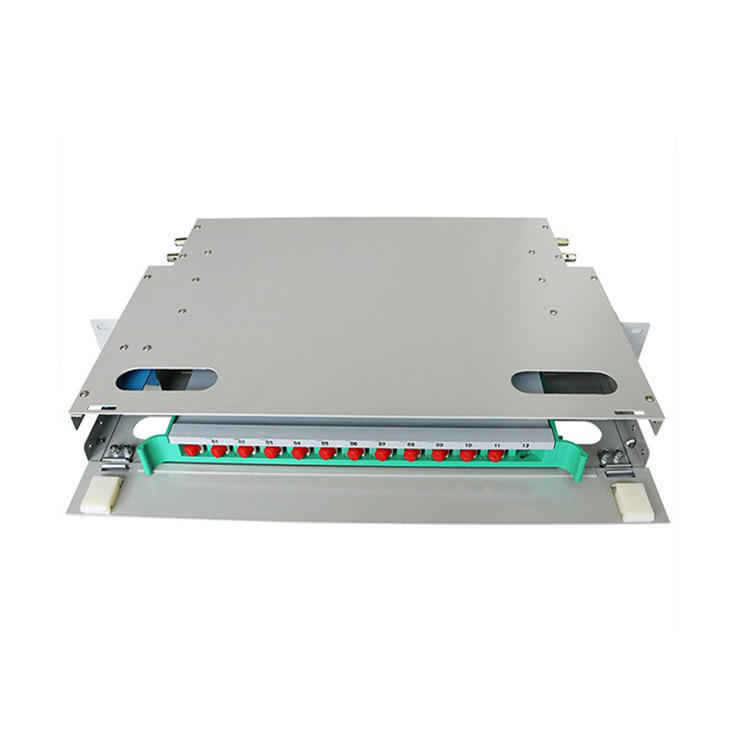
Selecting the appropriate fiber patch panel requires careful consideration of several factors, including port count, connector type, mounting configuration, and environmental conditions. Making the wrong choice can lead to costly rework or suboptimal network performance.
Ensure the panel supports the connectors used in your network, such as SC, LC, FC, or ST. LC connectors are popular for high-density applications due to their small form factor. Match the polish type (UPC vs. APC) to your system's requirements for optimal return loss.
Choose between 12-port, 24-port, or higher density options based on current needs and future growth. Wall-mount panels are ideal for last-mile distribution, while rack-mount panels suit data centers. Consider the available space and airflow requirements.
Wall-mount panels are suitable for indoor/outdoor distribution points, offering IP65 protection against dust and water. Rack-mount panels fit standard 19-inch racks, providing organized management for large-scale installations. Select based on your deployment environment.
For outdoor or harsh environments, look for panels with robust enclosures, UV resistance, and wide temperature operating ranges. Guangtong's panels are designed to withstand challenging conditions, ensuring long-term reliability.
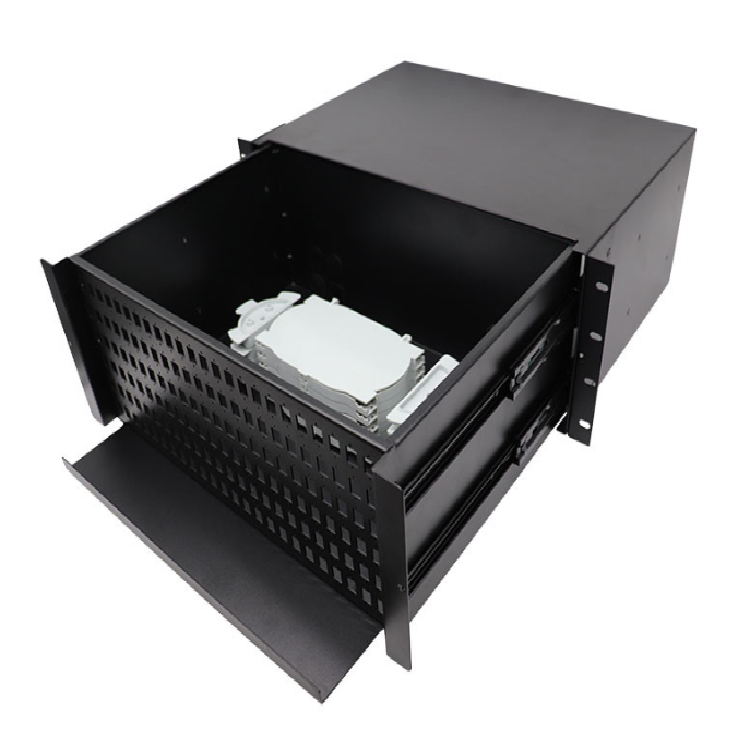
Use this checklist to evaluate potential suppliers and ensure you select the best fiber patch panel solution for your project. Each item addresses a critical aspect of procurement, from technical specs to supplier reliability.
Fiber patch panels are versatile components used across various industries, enabling efficient fiber optic network deployment. Their ability to organize, protect, and connect fibers makes them indispensable in modern telecommunications infrastructure.
High-density patch panels manage thousands of connections in server rooms, supporting high-speed data transmission and easy reconfiguration for changing workloads.
Wall-mount and cabinet panels terminate fibers in fiber-to-the-home deployments, providing reliable connections for residential and commercial broadband services.
Central office and street cabinet panels support backbone and distribution networks, ensuring stable connectivity for mobile and fixed-line services.
Campus and building-level patch panels connect horizontal cabling to backbone infrastructure, supporting LAN/WAN applications and VoIP systems.
Distribution frames manage fiber signals for video and data services, enabling high-bandwidth delivery for cable operators and ISPs.
IP65-rated outdoor cabinets protect fiber connections in harsh environments, ensuring reliability for rural and suburban network extensions.
When selecting a supplier for fiber patch panels, consider companies with proven manufacturing capabilities, global export experience, and strong quality management systems. Guangtong Optical stands out as a reliable partner, offering comprehensive solutions tailored to diverse market needs.
Strengths: 10+ years of experience, ISO 9000 certified, advanced production lines, global customer base.
Product Range: Fiber patch panels, fiber optic cables, fusion splicers, ADSS cables, FTTH drop cables.
Best For: Distributors seeking a one-stop supplier for fiber communication products with consistent quality and competitive pricing.
The main difference lies in the connector polish type. UPC (Ultra Physical Contact) connectors have a curved end-face with lower back reflection, typically used in most data and voice applications. APC (Angled Physical Contact) connectors have an 8-degree angled end-face, reducing back reflection significantly, making them ideal for high-performance applications like video and RF signal transmission. APC connectors are usually green, while UPC are blue.
Wall-mount panels are compact and designed for installation on walls or poles, commonly used in FTTH last-mile distribution. They offer IP65 protection for outdoor use. Rack-mount panels fit into standard 19-inch equipment racks, suitable for data centers and central offices where space efficiency and organization are priorities. Choose based on your deployment environment and available infrastructure.
Fiber patch panels come in various port counts, typically ranging from 12 to 48 ports, with some high-density options offering up to 96 ports. The choice depends on your network size and future expansion plans. Smaller panels (12-24 ports) are common for edge distribution, while larger panels (48+ ports) are used in core networks. Modular designs allow for flexible configurations.
Yes, all our products are manufactured under ISO 9000 quality management systems and comply with European Union directives and international regulations. We conduct rigorous testing to ensure performance metrics meet industry standards, providing peace of mind for global buyers.
Absolutely. Guangtong Optical offers customization services, including special port configurations, connector types, and labeling options. Our R&D team works closely with clients to tailor solutions that meet unique project requirements, ensuring optimal performance and integration.
Standard lead times are typically 7-15 business days for stock items and 15-30 days for customized orders, depending on quantity and complexity. We maintain a robust inventory of common models to ensure quick delivery for urgent requirements.
Privacy statement: Your privacy is very important to Us. Our company promises not to disclose your personal information to any external company with out your explicit permission.
Fill in more information so that we can get in touch with you faster
Privacy statement: Your privacy is very important to Us. Our company promises not to disclose your personal information to any external company with out your explicit permission.