


Please Leave Us A Message
Privacy statement: Your privacy is very important to Us. Our company promises not to disclose your personal information to any external company with out your explicit permission.


An LC fiber patch panel is a critical hardware unit designed to house and manage fiber optic connectors, specifically those utilizing the Lucent Connector (LC) form factor. These panels serve as the central termination point for fiber cables in data centers, enterprise networks, and FTTH (Fiber To The Home) deployments. By providing a structured environment for splicing and connecting fibers, they ensure signal integrity while minimizing physical strain on delicate glass strands.
The LC connector's small form-factor allows for higher port density compared to older SC or ST connectors. This means you can achieve more connections within a smaller footprint, which is essential for modern high-density rack spaces. A well-designed LC patch panel not only organizes your cabling but also protects these connections from dust and physical damage, ensuring consistent network performance over time.
A typical LC patch panel includes the main chassis, adapter plates (patch panels), splice trays for organizing fusion splices, and cable management arms. Each component plays a role in maintaining bend radius limits and signal quality.
Beyond simple connectivity, the patch panel acts as a demarcation point. It separates the outside plant cabling from the inside plant wiring, allowing for easier troubleshooting, reconfiguration, and maintenance without disrupting the entire network infrastructure.
At Shenzhen Guangtong Optical Co., Ltd., our manufacturing process for LC fiber patch panels is governed by strict ISO 9000 quality management systems. We understand that in high-speed data transmission, even minor deviations can lead to signal loss or downtime. Therefore, every panel undergoes rigorous testing before leaving our facility.
Our production lines are equipped with advanced testing equipment to verify insertion loss and return loss values. We use high-quality ceramic ferrules for our LC adapters, ensuring precise alignment of the fiber cores. This attention to detail guarantees that our products meet international standards for low attenuation and high durability, reducing your long-term maintenance costs.
All materials used in our LC patch panels comply with European Union directives and relevant international regulations. This ensures environmental safety and facilitates smooth customs clearance for global shipments.
We utilize state-of-the-art optical testing instruments to verify performance metrics. Every batch is tested for insertion loss and return loss, guaranteeing consistent signal quality across all ports.
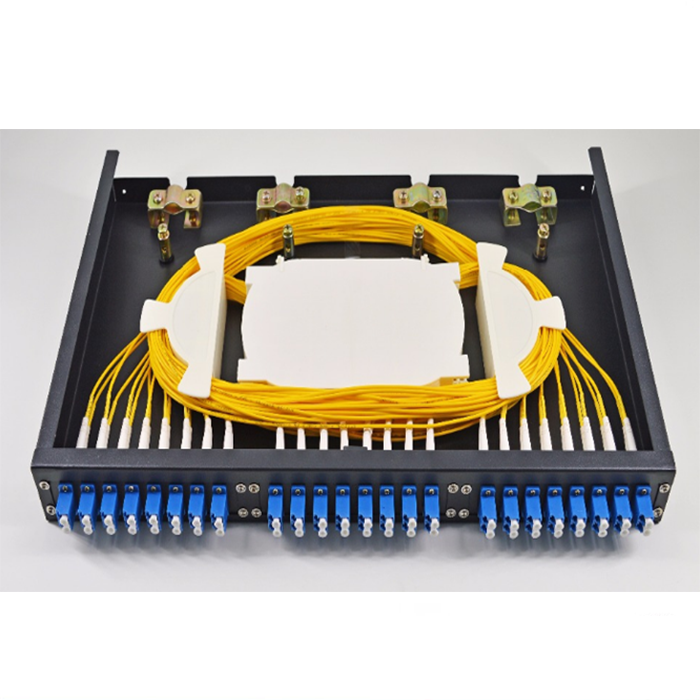
Selecting the appropriate LC fiber patch panel requires a clear understanding of your network's current and future needs. With various configurations available, making the wrong choice can lead to space constraints or compatibility issues down the line. Here is a guide to help you evaluate the best option for your specific application.
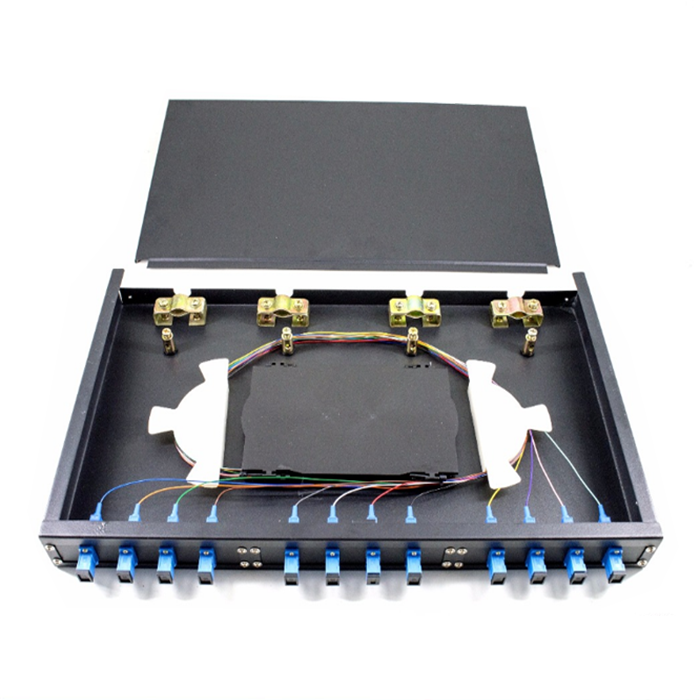
Wall-mount panels are ideal for FTTH applications where space is limited and easy access is required. They are typically smaller and designed to be mounted on walls or poles. Rack-mount panels, on the other hand, are built for data centers and server rooms, fitting into standard 19-inch racks. They offer higher port densities and better cable management options for large-scale deployments.
Consider the number of fibers you need to terminate. Common densities include 12-port, 24-port, and 48-port configurations. Higher density panels allow you to maximize your rack space, but ensure there is enough room for cable bending and management. Guangtong Optical offers a range of densities to suit both small office setups and massive data center infrastructures.
Ensure the panel supports the specific type of LC adapters you need, such as UPC (Ultra Physical Contact) or APC (Angled Physical Contact). APC connectors are green-colored and used for applications requiring lower back reflection, like video services, while UPC is standard for general data networking.
Before finalizing your procurement order for LC fiber patch panels, use this checklist to ensure you are getting the best value and quality. This guide helps you avoid common pitfalls and ensures the product meets your technical specifications.
Verify that the LC adapters use high-grade ceramic ferrules. Check for consistent insertion loss values (typically < 0.2dB) and high return loss (> 50dB for UPC).
Inspect the chassis material. Steel or high-impact plastic casings provide better protection. Ensure the panel has secure mounting brackets and durable latches.
Check for adequate strain relief and cable routing channels. Good management prevents fiber bending and reduces the risk of breakage during installation.
Ensure the supplier provides relevant certifications such as ISO 9001, CE, and RoHS. These confirm compliance with international quality and environmental standards.
Choose a manufacturer with a proven track record. Look for companies with positive customer feedback and a history of reliable exports to your region.
Check if the supplier offers OEM/ODM services. Custom labeling, packaging, and specific port configurations can streamline your inventory and branding efforts.
LC fiber patch panels are versatile components used across various industries due to their compact size and high performance. Their ability to support high-density connections makes them indispensable in modern telecommunications and data infrastructure.
In large-scale data centers, space is at a premium. LC patch panels allow for dense cabling solutions, supporting high-bandwidth applications like cloud computing, big data analytics, and virtualization. Their low insertion loss ensures minimal signal degradation over long runs.
For last-mile connectivity, wall-mounted LC patch panels are commonly used in residential and commercial buildings. They provide a neat and secure termination point for drop cables, simplifying the connection process for end-users and technicians.
Corporate LANs and WANs rely on LC patch panels for backbone connections between switches and routers. The reliability of LC connectors ensures stable network performance for business-critical applications like VoIP, video conferencing, and database access.
Internet Service Providers (ISPs) use LC patch panels in their central offices and distribution points. The high durability and environmental resistance of these panels make them suitable for both indoor and outdoor installations, ensuring long-term network stability.
When sourcing LC fiber patch panels, buyers often encounter several common issues that can impact project timelines and network performance. Being aware of these problems helps you ask the right questions and select a reliable supplier.
One of the most frequent issues is high insertion loss, which can result from poor quality adapters or misaligned ferrules. Cheap panels may use plastic ferrules that wear out quickly, leading to signal degradation. Always request test reports and opt for suppliers who use ceramic ferrules and adhere to strict tolerance standards.
Insufficient internal organization can cause fibers to be bent too tightly or crushed, leading to micro-bends and eventual breakage. When evaluating panels, check for robust splice trays and proper strain relief mechanisms. A good design should allow for easy cable routing without kinking.
Mixing different brands or types of connectors can sometimes lead to fitment issues. Ensure that the LC patch panels you purchase are compatible with your existing cabling and adapter types (UPC vs. APC). Mismatching UPC and APC connectors can cause significant signal loss and potential damage to the connectors.
Low-quality chassis materials can warp or break over time, especially in harsh environments. Look for panels made from durable steel or high-impact plastics. Check the finish of the panel for any sharp edges or rough surfaces that could damage fibers during installation.
As a trusted manufacturer in the communication cables industry, Shenzhen Guangtong Optical Co., Ltd. offers distinct advantages for buyers seeking high-quality LC fiber patch panels. Our commitment to integrity and excellence has earned us a loyal customer base worldwide.
Founded in 2010, we have over a decade of experience in R&D and production. Our products are exported to America, Europe, the Middle East, Southeast Asia, and Pacific states, demonstrating our ability to meet diverse international standards.
We invest in advanced production and test equipment to ensure precision and consistency. From SZ stranded cables to central tube cables, our capabilities extend to comprehensive fiber optic solutions, including patch panels.
Our ISO 9000 certified quality management system ensures that every product meets rigorous standards. We prioritize material compliance and performance testing, giving you peace of mind regarding the reliability of your supply chain.
We believe in building long-term partnerships. Our team is dedicated to providing excellent pre-sales and after-sales support, helping you navigate technical challenges and find the best solutions for your projects.
Here are answers to some of the most common questions buyers have about LC fiber patch panels and related procurement considerations.
The primary difference lies in the angle of the connector ferrule. LC UPC (Ultra Physical Contact) connectors have a flat polish and are typically blue, used for general data applications. LC APC (Angled Physical Contact) connectors have an 8-degree angle polish and are green, designed to minimize back reflection, making them ideal for sensitive analog video signals or high-speed data networks.
Yes, many manufacturers, including Guangtong Optical, offer customization options. You can choose from various port densities such as 12, 24, 48, or even higher depending on your space requirements. Custom labeling and packaging are also available to meet your brand identity.
To ensure longevity, always keep dust caps on unused ports and clean connectors regularly with appropriate cleaning tools. Avoid excessive bending of fibers and ensure proper cable management to prevent strain. Using high-quality panels from reputable manufacturers also plays a crucial role in long-term reliability.
Look for suppliers with ISO 9001 certification for quality management, CE marking for European compliance, and RoHS certification for environmental safety. These certifications indicate that the manufacturer adheres to international standards for quality and environmental responsibility.
Standard LC patch panels are designed for indoor use. However, there are ruggedized, weatherproof versions available for outdoor applications. If you need outdoor deployment, ensure you specify this requirement to your supplier so they can provide panels with appropriate IP ratings and durable materials.
Privacy statement: Your privacy is very important to Us. Our company promises not to disclose your personal information to any external company with out your explicit permission.
Fill in more information so that we can get in touch with you faster
Privacy statement: Your privacy is very important to Us. Our company promises not to disclose your personal information to any external company with out your explicit permission.