


Please Leave Us A Message
Privacy statement: Your privacy is very important to Us. Our company promises not to disclose your personal information to any external company with out your explicit permission.
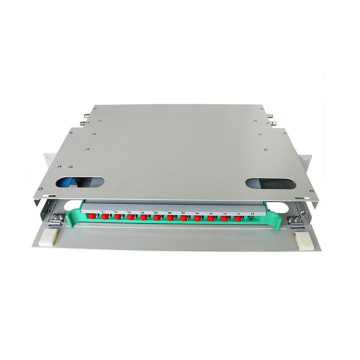


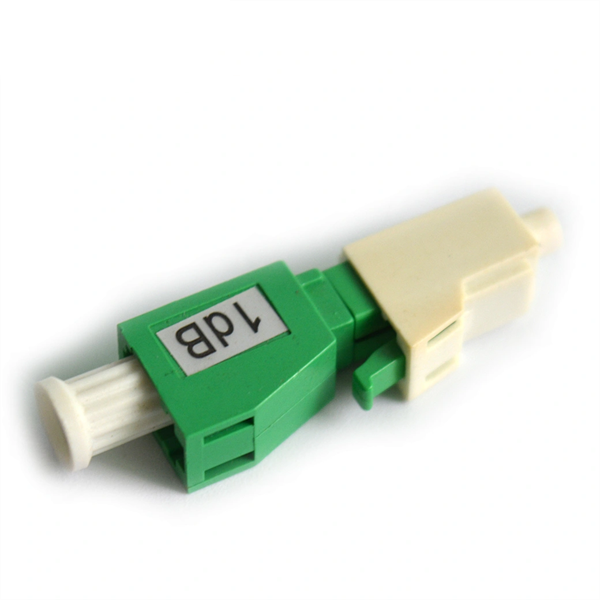
An optical attenuator is a passive device used in fiber optic networks to reduce the power level of an optical signal. Whether fixed or variable, these components are essential for preventing receiver overload and maintaining signal integrity across your infrastructure.
For procurement managers and network engineers, understanding attenuation is critical. Without proper signal management, high-power signals can saturate receivers, leading to bit errors and network instability. By integrating reliable attenuators, you ensure consistent performance and protect expensive terminal equipment from damage.
Shenzhen Guangtong Optical Co., Ltd provides high-quality fiber communication products designed to meet rigorous international standards. Our attenuators support various connector types and attenuation values, ensuring compatibility with your existing deployment requirements.
Guangtong Optical operates under a strict ISO 9000 quality management system. This certification guarantees that every step of our manufacturing process, from raw material sourcing to final testing, meets internationally recognized standards for consistency and reliability.
Our facility is equipped with advanced production and test equipment specifically designed for fiber communication products. We conduct rigorous insertion loss and return loss tests on every batch of optical attenuators to ensure they perform within specification limits.
All materials comply with European Union directives and international environmental regulations. This ensures that your supply chain remains compliant with global trade laws and reduces the risk of regulatory hurdles during importation.
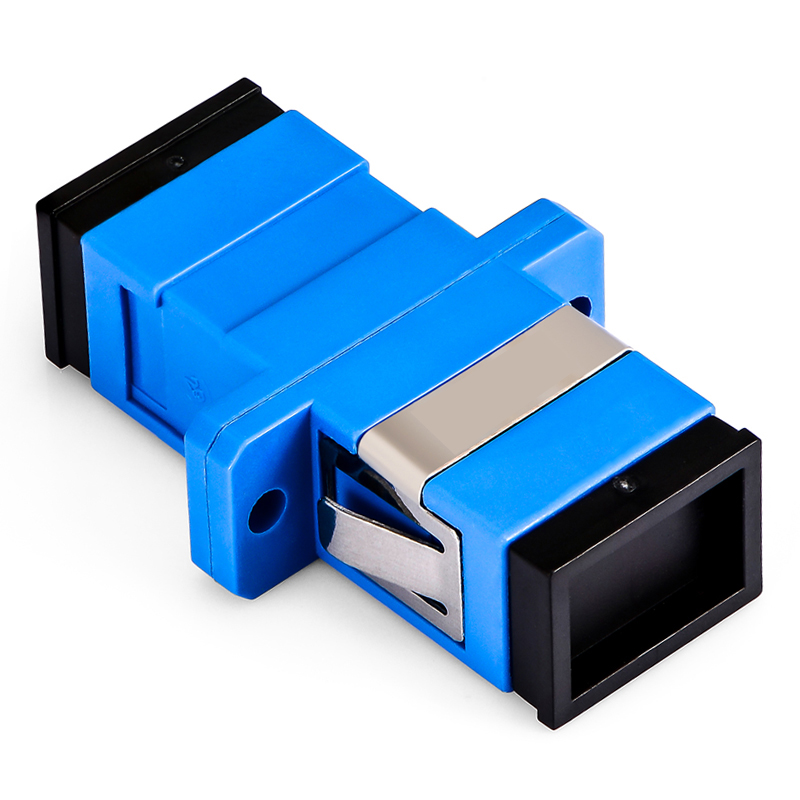
The first step in selection is matching the connector interface. Common options include SC, LC, FC, and ST. Ensure the attenuator connector matches your patch panels and transceiver ports to avoid adapter usage, which can introduce additional insertion loss.
Select attenuators based on your fiber type (Single-mode vs. Multi-mode) and operating wavelength (1310nm, 1550nm, etc.). Using a multi-mode attenuator in a single-mode application can lead to inaccurate power levels and signal degradation.
Fixed attenuators provide a set reduction value (e.g., 5dB, 10dB) and are ideal for permanent installations where signal levels are stable. Variable attenuators allow for adjustable power reduction, useful for testing and troubleshooting scenarios where precise power leveling is required.
In Fiber-to-the-Home networks, optical attenuators are crucial for balancing signal strength between the OLT and ONT. They prevent receiver saturation in short-reach scenarios, ensuring stable broadband connectivity for end-users.
Long-distance telecom infrastructure relies on precise power management. Attenuators help maintain optimal signal-to-noise ratios across amplifiers and multiplexers, reducing error rates and increasing overall network capacity.
Cable television distribution systems use optical attenuators to equalize signal levels across multiple branches. This ensures consistent video quality and data transmission speeds for all subscribers connected to the network.
Verify that the typical insertion loss meets your tolerance requirements (usually <0.2dB for precision components).
High return loss indicates better signal reflection management. Check specs for SM (>55dB) vs MM (>35dB) requirements.
Ensure the device maintains accuracy across your operational temperature range (-5°C to +70°C is standard).
Confirm APC (Angled Physical Contact) vs UPC (Ultra Physical Contact) polish to match your system's backreflection needs.
Check supplier availability for bulk orders. Guangtong Optical supports scalable production to meet urgent project timelines.
Request ISO 9000 certificates and RoHS compliance reports before placing large volume orders.
As a high-tech company founded in 2010, Guangtong Optical controls the entire value chain. From research and development to mass production, we eliminate third-party dependencies, ensuring faster turnaround times and consistent quality for your optical attenuator orders.
With a strong presence in America, Europe, the Middle East, Southeast Asia, and the Pacific, we understand international logistics and compliance. Our experience simplifies cross-border procurement, reducing administrative burdens on your team.
We adhere to a philosophy of "integrity management as the basic." This translates to transparent pricing, accurate delivery estimates, and proactive communication. We aim to be a loyal partner, not just a transactional vendor.
Beyond attenuators, we supply fiber optic cables, ADSS cables, and fusion splicers. Consolidating your procurement with one supplier streamlines your supply chain and reduces vendor management complexity.
A fixed optical attenuator provides a specific, non-adjustable reduction in signal power (e.g., exactly 10dB). It is cost-effective for permanent installations. A variable optical attenuator allows the user to adjust the attenuation level within a certain range (e.g., 0-30dB), making it ideal for testing labs and dynamic network environments.
To calculate the required attenuation, subtract the receiver's maximum input power (sensitivity) from the transmitter's output power, accounting for cable losses. The formula is: Required Attenuation = Tx Power - Rx Sensitivity - Cable Loss Margin. Always add a small safety margin to ensure the receiver is not overloaded.
Yes. All materials used in our fiber communication products comply with the directive of the European Union and other international environmental regulations. We prioritize eco-friendly manufacturing processes to support sustainable procurement goals.
Absolutely. We offer customization services for connector types (SC, LC, FC, ST, MU) and housing styles to match your specific network infrastructure. Our production lines are flexible enough to handle both standard and custom specifications efficiently.
Lead times depend on order volume and customization requirements. Standard stock items typically ship within 1-3 business days. Custom or large-volume orders may require 7-15 business days for production and quality assurance. Contact our sales team for precise scheduling.
Privacy statement: Your privacy is very important to Us. Our company promises not to disclose your personal information to any external company with out your explicit permission.
Fill in more information so that we can get in touch with you faster
Privacy statement: Your privacy is very important to Us. Our company promises not to disclose your personal information to any external company with out your explicit permission.