


Please Leave Us A Message
Privacy statement: Your privacy is very important to Us. Our company promises not to disclose your personal information to any external company with out your explicit permission.


Aerial fiber optic cable is a specialized telecommunications medium designed for overhead installation using poles, towers, or other elevated structures. Unlike underground cables that require trenching or conduit, these cables are engineered to withstand significant tensile loads and environmental stressors such as wind, ice, and temperature fluctuations.
The defining feature of aerial fiber optic cable is its structural integrity. It typically incorporates high-strength elements like aramid yarn (Kevlar) or glass-reinforced plastic (GRP) rods to support the weight of the cable itself during suspension. This ensures that the delicate glass fibers inside remain protected from micro-bending and physical strain.
Furthermore, these cables are built with robust outer jackets made from materials like HDPE (High-Density Polyethylene) or LSZH (Low Smoke Zero Halogen). These materials provide critical protection against UV radiation, moisture ingress, and chemical exposure, ensuring long-term reliability in harsh outdoor environments without the buffer of soil or concrete.
For procurement managers and network planners, choosing aerial deployment often comes down to speed and cost-efficiency. Aerial routes bypass the need for expensive civil works associated with underground burial, significantly reducing project lead times and initial capital expenditure (CAPEX).
Additionally, aerial cables simplify maintenance and troubleshooting. Fault locations are visually accessible, allowing technicians to perform repairs faster than accessing buried splices. This accessibility translates to lower operational expenditures (OPEX) over the lifecycle of the network, making it an ideal choice for FTTH (Fiber to the Home) expansions and last-mile connectivity projects.
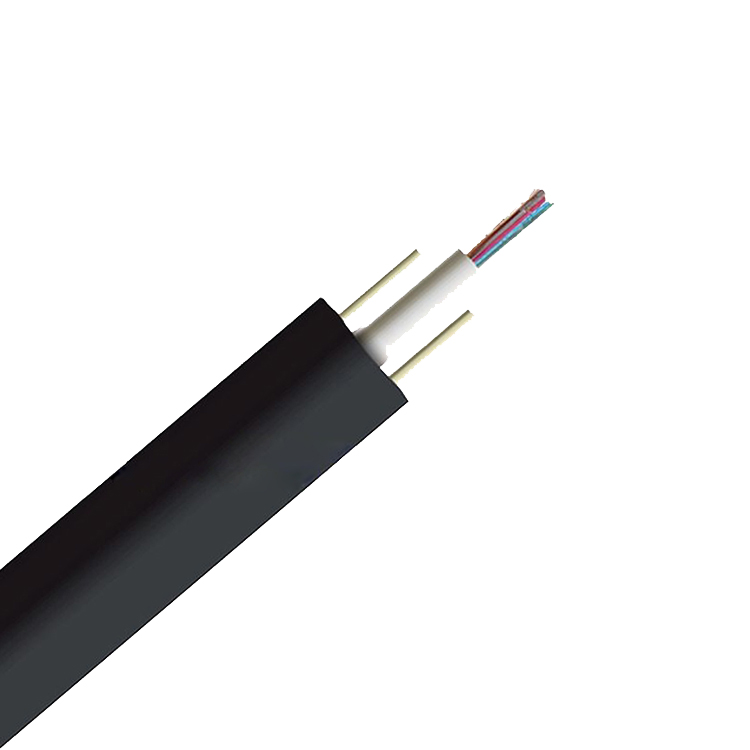
At Shenzhen Guangtong Optical Co., Ltd, we understand that the reliability of your network depends entirely on the quality of the components you procure. Our manufacturing process for aerial fiber optic cables is governed by strict ISO 9000 quality management systems, ensuring every meter of cable meets international performance standards.
We utilize advanced SZ stranding and central tube technologies to protect optical fibers from mechanical stress. Our facilities are equipped with state-of-the-art testing equipment capable of verifying attenuation levels, tensile strength, and environmental resistance before products leave our factory. This proactive quality control minimizes the risk of field failures, protecting your reputation and reducing warranty claims.
All raw materials used in our aerial fiber optic cables comply with European Union directives and global safety regulations. We prioritize eco-friendly, low-smoke zero-halogen (LSZH) options where required, ensuring safer installations in dense urban areas or indoor-to-outdoor transitions. This compliance simplifies your regulatory approval processes when deploying networks in regulated markets.
Selecting the correct aerial cable begins with understanding your span lengths and environmental conditions. For short spans between existing poles, a self-supporting drop cable with integrated aramid yarn may suffice. However, for longer spans or heavy ice/wind zones, you will need an All Dielectric Self-Supporting (ADSS) cable or an armored cable with a stronger dielectric member.
Pro Tip: Always calculate the maximum working tension (MTV) and ultimate strength (UTS) based on your specific pole spacing. Under-specifying tensile strength can lead to cable sagging or breakage during storms, resulting in costly downtime.
If your installation route involves proximity to high-voltage power lines, an all-dielectric (non-metallic) cable is essential to prevent electromagnetic interference (EMI) and ensure worker safety. Conversely, if the aerial route is prone to rodent damage or physical impact, a steel-armored aerial cable provides superior mechanical protection.
Consider the jacket material carefully: standard HDPE offers excellent durability for general outdoor use, while UV-resistant black PE is mandatory for direct sunlight exposure. Matching these technical specifications to your site survey data ensures a robust, future-proof infrastructure investment.

Before finalizing your procurement order, use this checklist to ensure you are selecting the most reliable and cost-effective solution for your network deployment.
Verify that the cable's Ultimate Tensile Strength (UTS) exceeds the expected load from span length, ice accumulation, and wind pressure. Ensure the manufacturer provides certified test reports for these metrics.
Confirm the jacket material is specifically rated for prolonged UV exposure. Ask about the cable's operating temperature range to ensure it won't become brittle in cold climates or soften in extreme heat.
If installing near power lines, strictly specify all-dielectric (ADSS) cables. Ensure there are no metallic strength members that could conduct electricity or cause signal interference.
Match the fiber count to current needs plus future expansion capacity. Specify single-mode (G.657D) for long-distance aerial runs to ensure bend resistance and low attenuation.
Request documentation proving compliance with IEC, Telcordia, or ISO standards. Ensure materials meet RoHS and REACH directives if exporting to Europe or North America.
Confirm production lead times align with your project schedule. Check Minimum Order Quantities (MOQ) to avoid tying up capital in excess inventory that may sit in storage.
Procuring aerial fiber optic cables can present unique challenges. Understanding these common pitfalls helps buyers mitigate risk and avoid costly mistakes during deployment.
The Problem: Buyers often select cables based solely on price without considering the physical span between poles.
The Solution: Always engage with your supplier's engineering team to validate span lengths. Using a cable with insufficient tensile strength for long spans leads to excessive sagging, increased tension on splice closures, and potential failure during adverse weather.
The Problem: Standard outdoor jackets may degrade quickly under intense sunlight, becoming brittle and cracking.
The Solution: Specify cables with carbon-black loaded HDPE jackets, which offer superior UV resistance. Request accelerated aging test data from the manufacturer to verify longevity.
The Problem: Moisture entering the cable core can freeze in cold climates, expanding and damaging the fibers.
The Solution: Choose cables with water-swelling gel filling or dry water-swellable tape/band technology. This ensures hermetic sealing against moisture even if the jacket is compromised.
The Problem: Procuring the cable separately from clamps, suspension hardware, and drip loops, leading to compatibility issues.
The Solution:
Aerial fiber optic cables are versatile solutions deployed across various sectors where overhead infrastructure is preferred or necessary. Their ability to be installed rapidly on existing utility poles makes them indispensable for modern connectivity projects.
Telecommunications providers extensively use aerial drop cables and distribution cables to connect end-users to the main network. This method allows ISPs to expand broadband coverage to rural and suburban areas quickly and cost-effectively, bridging the digital divide.
Utility companies integrate ADSS (All Dielectric Self-Supporting) cables onto high-voltage transmission and distribution lines. These cables enable smart grid monitoring, SCADA systems, and real-time data exchange without risking electrical interference or safety hazards associated with metallic cables.
Railway networks utilize ruggedized aerial cables along tracks to support signaling systems, passenger Wi-Fi, and surveillance cameras. The high tensile strength and environmental resilience of these cables ensure reliable operation in exposed outdoor environments along extensive rail corridors.
Choosing the right manufacturing partner is as critical as selecting the right cable product. When evaluating suppliers for aerial fiber optic cables, look for partners who offer comprehensive technical support and proven reliability.
Shenzhen Guangtong Optical Co., Ltd stands out as a reliable partner for global buyers due to our integrated approach to research, development, and production. Since 2010, we have built a reputation for integrity and excellence, serving clients across America, Europe, the Middle East, Southeast Asia, and the Pacific.
We invite you to leverage our experience to secure a resilient, high-performance fiber optic network. Contact us today to discuss your project requirements and receive a tailored quotation.
ADSS (All Dielectric Self-Supporting) cable is designed for long-span installations between utility poles, often running parallel to high-voltage power lines. It features a strong dielectric member (like FRP) to bear the tension. Standard aerial drop cable is typically used for shorter spans connecting the distribution point to the customer's premises and relies on aramid yarn for strength. ADSS is heavier and more robust, suitable for backbone or feeder segments, while drop cable is lighter and easier to install manually.
Yes, but only if you use ADSS (All Dielectric Self-Supporting) cable. Because ADSS contains no metallic components, it is immune to electromagnetic interference and safe to attach near live electrical conductors. Standard cables with metallic strength members should never be attached to power poles due to the risk of electrocution and signal interference.
Span length depends on several factors including cable weight, wind load, ice accumulation, and the tensile strength of the cable. Generally, standard drop cables are suited for spans under 50 meters, while ADSS cables can handle spans ranging from 100 meters to over 500 meters, depending on the electric field strength and mechanical design. Consult with your supplier's engineering team to calculate the precise allowable span for your specific cable type and local environmental conditions.
Standard aerial cables may not offer specific rodent protection. If your aerial route passes through areas with high rodent activity, consider using armored aerial cable with a corrugated steel tape (CST) or aluminum tape armor underneath the outer jacket. This additional layer prevents rodents from chewing through the cable and damaging the internal fibers.
Yes, as a high-tech manufacturer specializing in R&D and production, we offer customized solutions. We can adjust fiber counts, jacket materials, tensile strength elements, and overall cable diameter to meet your specific project requirements. Our team works closely with procurement buyers to ensure the final product aligns perfectly with your network design and budget.
Privacy statement: Your privacy is very important to Us. Our company promises not to disclose your personal information to any external company with out your explicit permission.
Fill in more information so that we can get in touch with you faster
Privacy statement: Your privacy is very important to Us. Our company promises not to disclose your personal information to any external company with out your explicit permission.