


Please Leave Us A Message
Privacy statement: Your privacy is very important to Us. Our company promises not to disclose your personal information to any external company with out your explicit permission.


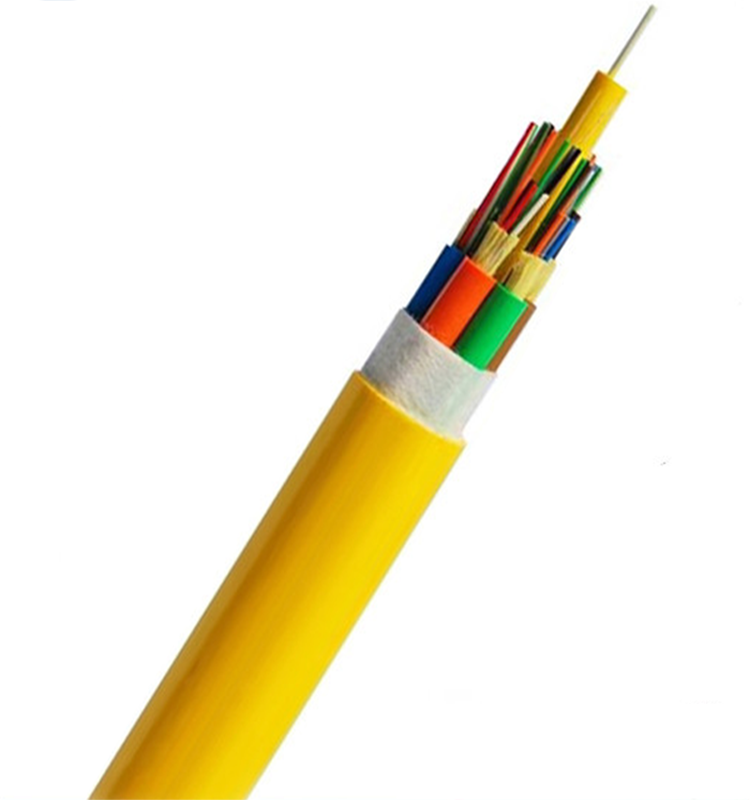
Break-out fiber cable is a specialized type of fiber optic cabling designed to provide immediate access to individual fiber strands within a bundle. Unlike loose tube cables where fibers are contained inside a central buffer that requires stripping and splicing at the termination point, break-out cables feature individual fiber pairs enclosed in their own color-coded, reinforced jackets.
Each fiber pair acts as a self-contained mini-cable with its own strength member and jacket. This design ensures that if one fiber path is damaged or terminated, it does not compromise the integrity of the other fibers. For procurement managers, this translates to lower risk during installation and maintenance.
The primary advantage of break-out cables is the elimination of complex breakout kits and splice trays at the patch panel. The fibers are pre-terminated with connectors or pigtails ready for direct insertion into equipment. This significantly reduces labor time and installation costs on-site.
Selecting the correct break-out fiber cable depends heavily on your specific deployment environment and performance requirements. Buyers must evaluate factors such as fiber count, cable diameter constraints, and environmental durability before placing an order.
Determine the exact number of fibers needed (e.g., 2, 4, 6, 12). Also, decide between Single Mode (OS2) for long-distance transmission or Multi-Mode (OM3/OM4) for shorter, high-bandwidth data center runs.
Indoor cables typically use LSZH (Low Smoke Zero Halogen) for safety. Outdoor or ruggedized indoor applications may require PVC or ripcord-enhanced jackets for tensile strength and crush resistance.

At Shenzhen Guangtong Optical Co., Ltd, we understand that consistent quality is the backbone of reliable fiber optic networking. Our manufacturing process is governed by strict ISO 9000 quality management systems, ensuring every meter of break-out fiber cable meets international standards.
Our facility is equipped with state-of-the-art SZ stranding machines, central tube cable extruders, and precise test equipment. This allows us to maintain tight tolerances on cable diameter and attenuation, reducing signal loss issues for end-users.
All materials used in our break-out cables comply with European Union directives (RoHS, REACH) and global environmental regulations. This ensures that your supply chain remains compliant with sustainability goals and avoids regulatory hurdles during import.
Before finalizing your purchase order for break-out fiber cables, use this checklist to verify that your supplier can meet your technical and logistical needs. This helps mitigate procurement risks and ensures project timelines are met.
Confirm the supplier holds valid ISO 9001 certification and product certifications like CE, RoHS, or UL depending on your region.
Request samples for insertion loss and return loss testing before committing to bulk orders to ensure compatibility with your existing gear.
Verify production lead times and stock availability. Custom jacket colors or connector types may extend delivery schedules.
Ensure packaging protects against moisture and physical damage during transit, especially for international shipping.
Check if the supplier offers engineering support for cable routing diagrams or termination guidance.
Review warranty coverage for material defects and performance guarantees over the product lifecycle.
Procuring fiber optic components can present unexpected challenges. Below are common issues buyers face when sourcing break-out fiber cables and how to resolve them effectively.
Insertion loss failures are often caused by poor connector polishing or micro-bending during cable assembly. Ensure your supplier uses precision ceramic ferrules and performs 100% OTDR testing before shipment. Ask for test reports with your order.
Break-out cables are durable but can be damaged if bent too tightly. Always adhere to the minimum bend radius specified in the datasheet (typically 10x the cable diameter). Use proper pull tension limits and avoid kinking the cables in tight conduit runs.
Inconsistent color coding can lead to cross-connections. Reputable manufacturers follow TIA-598 standard color codes for fiber identification. Verify that the supplier adheres to these standards to ensure easy troubleshooting and patching.
Choosing the right partner is as important as choosing the right product. When evaluating suppliers for break-out fiber cables, look for companies that combine manufacturing capability with strong quality assurance processes.
Prioritize suppliers who manufacture their own cables rather than trading companies. Direct factories offer better price control, faster turnaround for custom orders, and direct accountability for quality issues.
A supplier with a proven track record of exporting to regions like North America, Europe, and Southeast Asia will be familiar with international logistics, documentation, and compliance requirements.
Look for partners investing in R&D. They can provide innovative solutions for high-density applications or specialized environmental protections that standard off-the-shelf products cannot offer.
Reliable suppliers provide clear, prompt communication regarding order status, production updates, and technical queries. This reduces the administrative burden on your procurement team.
Get answers to the most common questions regarding break-out fiber cable specifications, applications, and ordering processes.
There is no technical difference; "break-out" and "breakout" are simply two ways to spell the same term. Both refer to cables where individual fiber pairs are independently buffered and jacketed.
Yes, many manufacturers offer customization for jacket colors to help with visual identification in complex patch panels. Standard colors usually include white, blue, yellow, or orange, but custom requests are often accommodated for bulk orders.
Standard indoor break-out cables are not weather-resistant. However, outdoor-rated break-out cables with UV-resistant jackets and water-blocking gel are available for direct burial or aerial deployment.
Lead times vary based on order volume and specifications. Stock items may ship within a few days, while custom configurations typically require 7-15 business days for production and testing.
Privacy statement: Your privacy is very important to Us. Our company promises not to disclose your personal information to any external company with out your explicit permission.
Fill in more information so that we can get in touch with you faster
Privacy statement: Your privacy is very important to Us. Our company promises not to disclose your personal information to any external company with out your explicit permission.