


Please Leave Us A Message
Privacy statement: Your privacy is very important to Us. Our company promises not to disclose your personal information to any external company with out your explicit permission.


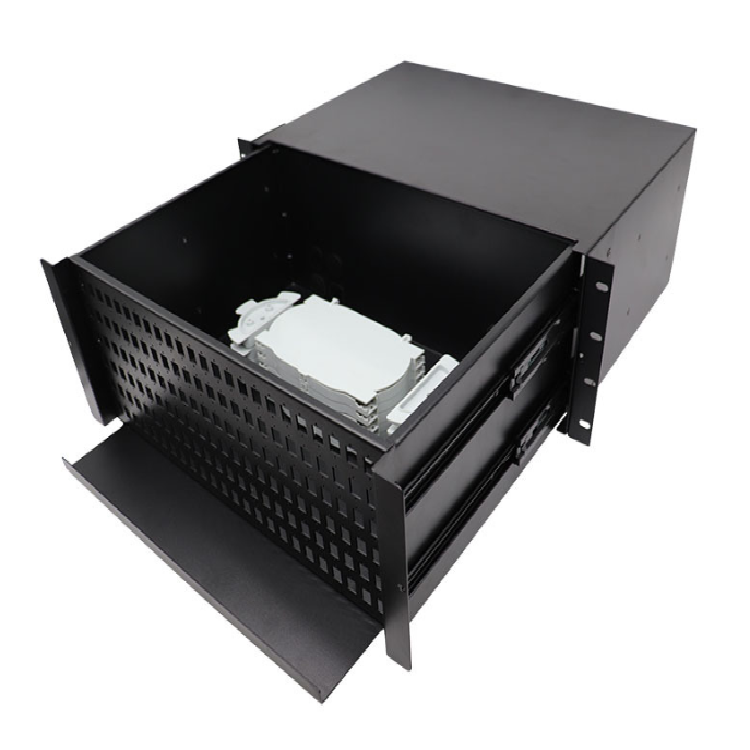
A fiber optic patch panel is a passive hardware device designed to terminate and distribute fiber optic cables in structured cabling systems. Acting as the central hub for your network infrastructure, it provides a secure environment for splicing, organizing, and managing fiber connections while protecting delicate components from environmental damage.
For telecommunications engineers and procurement specialists, understanding patch panel specifications is crucial for designing scalable networks. These panels facilitate efficient cable management, reduce signal loss through organized routing, and simplify troubleshooting during maintenance operations. Whether deploying FTTH solutions or enterprise data centers, selecting the right fiber optic patch panel ensures optimal network performance and future-proofing capabilities.
Protective enclosures that house fiber splices and manage cable entry points, ensuring long-term reliability in various installation environments.
Precision-machined plates that hold fiber optic adapters, providing stable connections between patch cords and backbone fibers.
Organized storage for fused splices, maintaining bend radius requirements and facilitating easy access for testing and maintenance.
Shenzhen Guangtong Optical Co., Ltd brings over a decade of expertise in fiber communication products to every fiber optic patch panel project. As a high-tech enterprise founded in 2010, we combine advanced manufacturing capabilities with rigorous quality control to deliver reliable networking solutions.
Our state-of-the-art production facility features cutting-edge equipment for fiber cable manufacturing and testing. From SZ stranded cables to ADSS cables and drop cables, our comprehensive production line ensures consistent quality across all product categories.
Our commitment to integrity management and attractive quality has earned us recognition across international markets. We serve customers in America, Europe, Middle East, Southeast Asia, and Pacific states, delivering fiber communication products that meet diverse regulatory requirements and technical specifications.
Every fiber optic patch panel manufactured by Guangtong Optical undergoes stringent quality control procedures aligned with ISO 9000 standards. Our commitment to excellence begins with material selection and extends through every stage of production, testing, and final inspection.
All raw materials comply with European Union directives and international safety regulations. We source premium-grade components that ensure long-term durability and optimal optical performance in demanding environments.
Advanced CNC machining and automated assembly processes guarantee precise dimensional accuracy. Each patch panel meets tight tolerances for adapter alignment, ensuring minimal insertion loss and consistent signal transmission.
Comprehensive testing protocols include insertion loss measurement, return loss verification, and environmental stress testing. Every unit is validated before shipment to ensure it meets or exceeds industry performance standards.
Our fiber optic patch panels are engineered to withstand harsh operating conditions. From temperature fluctuations to humidity exposure, each unit maintains structural integrity and optical performance throughout its operational lifespan, reducing total cost of ownership for network operators.
Selecting the appropriate fiber optic patch panel requires careful consideration of your network architecture, capacity requirements, and deployment environment. The right choice impacts not only current performance but also scalability for future expansion.
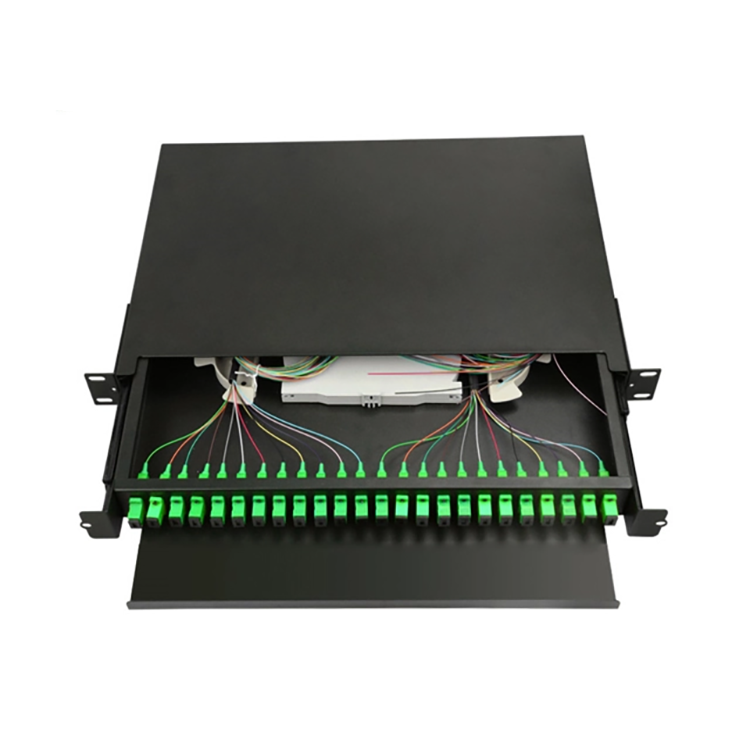
Evaluate port density requirements based on current needs and projected growth. Wall-mount configurations suit space-constrained environments, while rack-mount options provide higher capacity for data center deployments. Consider adapter types (SC, LC, FC) that match your existing infrastructure.
When evaluating fiber optic patch panels, prioritize units with low insertion loss characteristics and high repeatability. Premium adapters maintain consistent optical performance across multiple mating cycles, reducing maintenance costs and ensuring reliable network operation over time.
Use this comprehensive checklist when sourcing fiber optic patch panels to ensure you select products that meet your technical requirements and business objectives. Each criterion addresses critical factors that impact network performance, installation efficiency, and total cost of ownership.
Finding reliable suppliers for fiber optic patch panels requires evaluating manufacturers based on production capability, quality certifications, and global service experience. Guangtong Optical stands out as a trusted partner for buyers seeking consistent quality and competitive pricing.
With over 14 years of specialized experience in fiber communication products, Guangtong Optical offers comprehensive solutions including fiber optic patch panels, cables, and fusion splicers. Their integrated manufacturing approach ensures quality control from raw materials to finished products.
When comparing fiber optic patch panel suppliers, prioritize manufacturers with verified quality systems and comprehensive product portfolios. Look for partners who invest in advanced testing equipment and maintain strict material compliance standards.
Fiber optic patch panels serve as critical infrastructure components across diverse industries, enabling high-speed data transmission and reliable network connectivity. Understanding application-specific requirements helps buyers select optimal solutions for their unique deployment scenarios.
Telcos deploy fiber optic patch panels in central offices and distribution points to manage extensive fiber networks. High-density configurations support growing bandwidth demands while maintaining organized cable routing for efficient maintenance operations.
Enterprise data centers utilize rack-mount patch panels for structured cabling systems. These installations support server interconnections, storage area networks, and backbone infrastructure with precise cable management and minimal signal degradation.
Fiber-to-the-home networks rely on wall-mount patch panels at distribution points and subscriber locations. Compact designs accommodate residential installations while providing reliable connections for broadband services and smart home applications.
Corporate campuses and office buildings implement fiber optic patch panels for backbone connections between floors and buildings. Scalable solutions support evolving network architectures and technology upgrades without major infrastructure changes.
Manufacturing facilities use ruggedized patch panels for industrial Ethernet and control systems. Environmental protection features ensure reliable operation in challenging conditions including temperature extremes and electromagnetic interference.
Broadcast infrastructure employs fiber optic patch panels for signal distribution and routing. Low-loss connections maintain signal integrity for high-definition video transmission and live event broadcasting applications.
Procurement professionals often encounter challenges when sourcing fiber optic patch panels from unfamiliar suppliers. Being aware of common pitfalls helps buyers make informed decisions and avoid costly mistakes in network infrastructure investments.
Inconsistent adapter performance and poor dimensional accuracy plague low-quality patch panels. Buyers may experience intermittent connection failures, excessive insertion loss, and premature component degradation, leading to network downtime and increased maintenance costs.
Solution: Request sample units for testing and verify supplier quality certifications before placing bulk orders. Establish clear acceptance criteria in purchase agreements.
Incorrect adapter types or fiber count configurations can render patch panels incompatible with existing infrastructure. This results in additional procurement costs, installation delays, and potential network redesign requirements.
Solution: Provide detailed technical specifications to suppliers and request confirmation of compatibility. Verify adapter types, fiber counts, and mounting configurations before ordering.
Unreliable suppliers may fail to meet delivery schedules, causing project delays and budget overruns. Limited production capacity or poor inventory management exacerbates these issues during peak demand periods.
Solution: Work with established manufacturers like Guangtong Optical that have proven track records in meeting delivery commitments. Maintain buffer stock for critical spare parts.
Lack of engineering support during installation and troubleshooting creates operational challenges. Buyers need responsive technical assistance for complex deployments and custom requirements.
Solution: Evaluate supplier technical capabilities during vendor selection. Choose partners with dedicated engineering teams and comprehensive documentation resources.
Get answers to frequently asked questions about fiber optic patch panels, helping you make informed purchasing decisions and optimize your network infrastructure investments.
SC (Subscriber Connector) patch panels use larger square connectors suitable for single-mode applications, while LC (Lucent Connector) panels feature smaller form-factor connectors ideal for high-density installations. LC connectors offer twice the port density compared to SC, making them preferred for modern data center deployments where space optimization is critical.
Port quantity depends on your current fiber count and projected growth. Common configurations range from 12 to 144 ports. For FTTH deployments, 24-48 port panels typically suffice at distribution points. Data centers often require 96-144 port panels for backbone infrastructure. Always plan for 20-30% excess capacity to accommodate future expansion without requiring immediate replacement.
Premium fiber optic patch panels should maintain insertion loss below 0.3dB per connection point. Single-mode applications typically achieve 0.2dB or lower, while multi-mode variants may reach 0.3-0.4dB. Return loss should exceed 40dB for UPC polish and 50dB for APC polish connectors. These specifications ensure minimal signal degradation across your network infrastructure.
Most standard patch panels support uniform adapter types per row or module, though some manufacturers offer hybrid configurations. Mixing SC and LC adapters requires specialized adapter plates or modular designs. While technically possible, mixing connector types increases complexity and potential for misconnection. Standardizing on one connector type simplifies inventory management and reduces operational errors.
Prioritize suppliers with ISO 9000 quality management certification, demonstrating systematic quality control processes. EU directive compliance ensures materials meet environmental and safety standards. Additional certifications like UL, CE, and TIA/EIA compliance indicate adherence to international performance standards. Guangtong Optical maintains ISO 9000 certification and EU material compliance for all products.
Wall-mount panels suit space-constrained environments like residential FTTH installations and small office deployments. They offer capacities up to 48 ports with compact footprints. Rack-mount panels provide higher densities (up to 144+ ports) and integrate seamlessly into standard 19-inch equipment racks. Choose rack-mount for data centers and telecommunications facilities where scalability and organization are priorities.
Privacy statement: Your privacy is very important to Us. Our company promises not to disclose your personal information to any external company with out your explicit permission.
Fill in more information so that we can get in touch with you faster
Privacy statement: Your privacy is very important to Us. Our company promises not to disclose your personal information to any external company with out your explicit permission.