


Please Leave Us A Message
Privacy statement: Your privacy is very important to Us. Our company promises not to disclose your personal information to any external company with out your explicit permission.


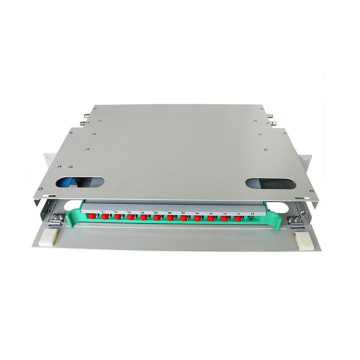


A fiber patch panel is the backbone of your network infrastructure. It serves as a central termination point where fiber optic cables are spliced, organized, and connected to active equipment via adapters. For procurement buyers, this means simplified cable management, reduced downtime during maintenance, and scalable connectivity for future expansion.
Shenzhen Guangtong Optical Co., Ltd. manufactures high-performance patch panels designed for FTTH, data centers, and enterprise networks. Our units ensure low insertion loss and reliable signal transmission, reducing your total cost of ownership by minimizing rework and service calls.
Our manufacturing facility operates under strict ISO 9000 quality management systems. Every fiber optic cable and patch panel undergoes rigorous testing before shipment. This ensures consistent batch quality and reduces the risk of receiving defective units that could compromise your network integrity.
We utilize state-of-the-art production and test equipment for SZ stranded cables, central tube cables, and ADSS cables. Precision machinery guarantees accurate ferrule alignment and connector polish, directly translating to lower insertion loss and higher return loss for your end-users.
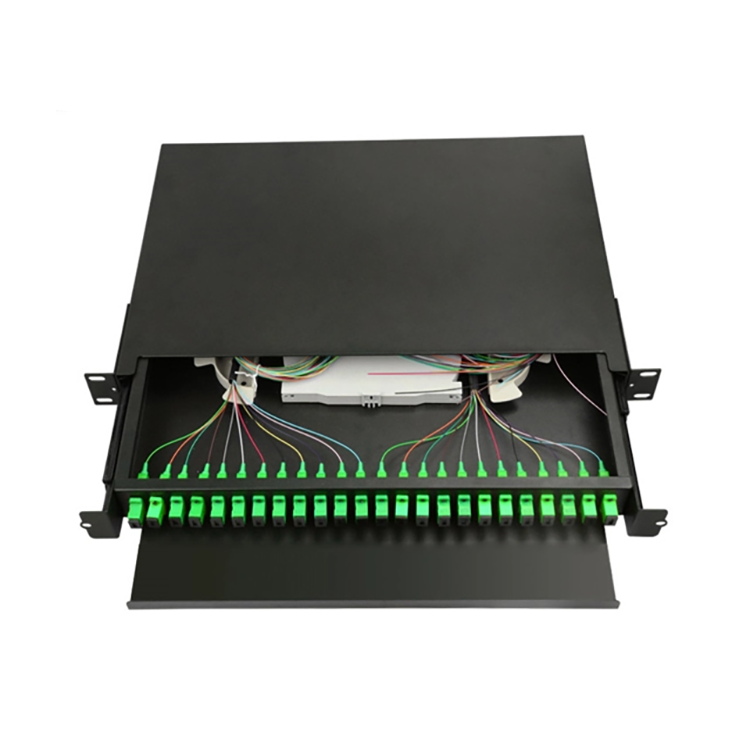
Selecting the right port count (e.g., 12, 24, 48 ports) depends on your current cabling needs and projected growth. High-density panels save rack space in crowded server rooms, while modular designs allow you to mix adapter types (LC, SC, ST) in one unit for maximum flexibility.
Ensure the panel fits your existing infrastructure. Wall-mount panels are ideal for FTTH drop points, while 19-inch rack-mount panels suit central offices and data centers. Proper mounting compatibility prevents costly retrofitting and installation delays.
The adapter is the heart of the connection. We use premium ceramic ferrules that maintain precision over thousands of mating cycles. Choosing the correct adapter type (UPC vs APC polish) is critical for minimizing signal reflection, especially in high-speed GPON networks.
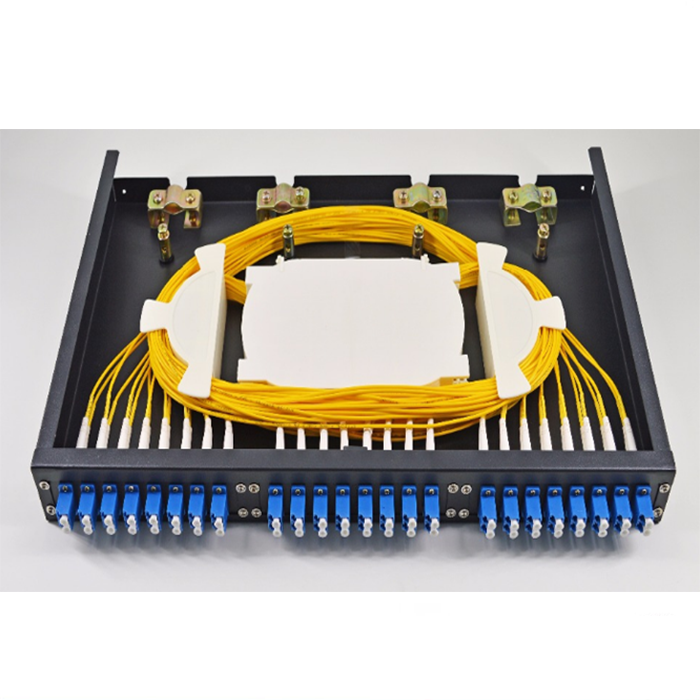
Effective strain relief and fiber storage are vital. Look for panels with built-in splice trays, bend-insensitive fiber routing, and clear labeling areas. Good cable management reduces tangling, simplifies troubleshooting, and extends the lifespan of your fiber links.
Essential for Fiber-to-the-Home deployments, connecting distribution lines to individual subscriber drops. Our lightweight wall-mount panels simplify last-mile installations.
High-density rack-mounted solutions support massive interconnectivity requirements. Ensures low latency and high bandwidth for cloud computing and enterprise storage.
Robust construction handles heavy traffic loads and frequent reconfiguration. Provides reliable protection for sensitive optical equipment in harsh environments.
Facilitates structured cabling within office buildings. Simplifies network upgrades and expansions without disrupting daily business operations.
Supports hybrid fiber-coaxial networks for video and broadband services. Ensures stable signal distribution to residential and commercial endpoints.
Connects district hubs across cities. Durable outdoor-rated options withstand environmental stressors while maintaining signal integrity.
Founded in 2010, we control the entire process from raw material sourcing to final testing. This vertical integration allows us to offer competitive pricing without compromising quality.
With a strong export presence in America, Europe, the Middle East, and Southeast Asia, we understand international shipping requirements, customs documentation, and delivery timelines.
Our philosophy centers on "integrity management." We provide transparent communication, honest lead times, and reliable after-sales support, making us an ideal long-term partner for distributors and contractors.
Problem: Signal attenuation causes network instability.
Solution: Source panels with precision-ceramic ferrules and verify factory test reports for loss values.
Problem: Different batches have varying adapter colors or fits.
Solution: Work with ISO-certified manufacturers who maintain strict QC processes throughout production runs.
Problem: Fibers tangle or bend too sharply inside the panel.
Solution: Choose panels with dedicated splice trays and adequate fiber storage volume to maintain bend radius.
Problem: Suppliers miss deadlines due to poor planning.
Solution: Partner with established factories like GT-Optical that have proven track records and advanced equipment.
Problem: Ordering SC when LC is needed, causing project stoppages.
Solution: Double-check BOMs and request sample kits to verify physical compatibility before bulk ordering.
Problem: Missing certificates or test data upon arrival.
Solution: Specify required documentation (ISO, RoHS, Test Reports) in the purchase contract upfront.
UPC (Ultra Physical Contact) connectors have a polished end-face that minimizes insertion loss. APC (Angled Physical Contact) connectors feature an 8-degree angled polish to reduce back reflection. APC is typically used in high-bandwidth applications like GPON and CATV where signal reflection can cause interference.
Port density depends on your fiber count and rack space. For FTTH drops, 12 or 24-port wall boxes are standard. For data centers, 48-port high-density racks maximize space efficiency. Consider future expansion; it's often cheaper to install a higher capacity panel now than to retrofit later.
Yes, as a manufacturer with R&D capabilities, we support OEM and ODM services. We can customize panel housings, labeling, and packaging to match your brand identity, helping you build a loyal customer base.
Look for ISO 9001 certification for quality management. Additionally, products should comply with EU directives (RoHS, REACH) if exporting to Europe. Factory audit reports and product test certificates (insertion loss, return loss) are also essential verification documents.
Standard lead times vary based on order quantity and customization. Typically, stock items ship within 3-5 days. Custom orders or large volumes may take 2-4 weeks. We recommend discussing your timeline with our sales team early to ensure timely delivery.
Privacy statement: Your privacy is very important to Us. Our company promises not to disclose your personal information to any external company with out your explicit permission.
Fill in more information so that we can get in touch with you faster
Privacy statement: Your privacy is very important to Us. Our company promises not to disclose your personal information to any external company with out your explicit permission.